
Multichain Router

Multichain Router: Cross-Chain Navigation

Multichain routers find optimal paths for moving assets between different blockchain networks. They’re like GPS for cross-chain transactions, finding the cheapest and fastest routes.

A multichain router is a protocol that automatically finds the best path for transferring assets between different blockchain networks. It compares routes across multiple bridges and chains to optimize for cost, speed, or security based on user preferences.

How Multichain Routers Work

Route optimization analyzes available bridges, liquidity levels, fees, and transfer times across different paths to recommend the best option for specific transfers.

Liquidity aggregation combines multiple bridges and cross-chain protocols to provide better rates and availability than any single bridge could offer.

Automated execution handles the complex multi-step process of cross-chain transfers, including approvals, bridge interactions, and destination chain operations.
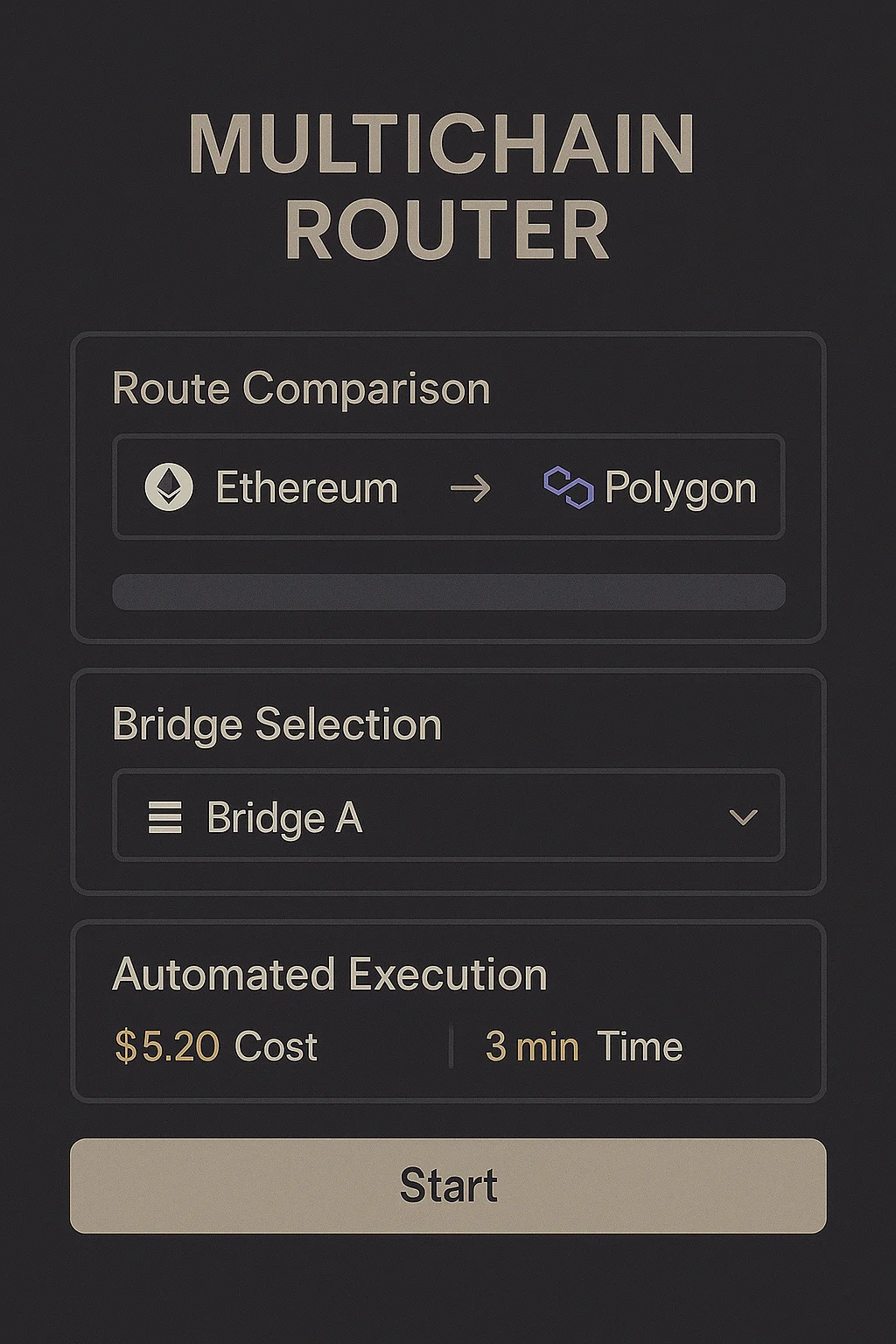
Multichain router interface displaying route comparison, bridge selection dropdown, cost and time metrics, and automated execution start button.

Real-World Examples

  • Li.Fi aggregates dozens of bridges and chains to find optimal cross-chain routes
  • Socket provides routing infrastructure for wallets and dApps to integrate cross-chain functionality
  • Bungee offers user-friendly interfaces for comparing and executing cross-chain transfers

Why Beginners Should Care

Simplified complexity of cross-chain transfers through automated routing eliminates the need to understand dozens of different bridge protocols.

Cost savings from route optimization can significantly reduce fees compared to using random bridges without comparison shopping.

Risk diversification across multiple bridges and protocols reduces dependence on any single cross-chain infrastructure provider.

Related Terms: Cross-Chain Bridge, Bridge Aggregator, Interoperability, Multi-Chain

Back to Crypto Glossary

Similar Posts

  • Avatar

    Avatar: Digital Identity RepresentationAn avatar is a digital representation of a user's identity in virtual worlds, games, or online platforms. In crypto, avatars often take the form of NFTs that represent unique digital identities.An avatar is a digital representation of a user's identity or persona, often taking the form of NFTs or profile pictures that…

  • Payment Channel

    Payment Channel: Off-Chain Transaction RoutingPayment channels enable fast, cheap cryptocurrency transactions between parties without recording every transaction on the blockchain. They're like running a tab at a restaurant instead of paying for each item separately.A payment channel is an off-chain mechanism that allows two parties to conduct multiple cryptocurrency transactions without broadcasting each one to…

  • Verifiable Credentials

    Verifiable Credentials: Tamper-Proof Digital DocumentsVerifiable credentials are digital documents that can be cryptographically verified without contacting the issuing authority. They're like diplomas that anyone can authenticate instantly.Verifiable credentials are digital documents that use cryptographic techniques to enable instant verification of authenticity without requiring contact with the issuing organization. These credentials enable trusted digital identity and qualification…

  • Sybil Attack

    Sybil Attack: Fake Identity Manipulation Sybil attacks involve creating multiple fake identities to gain disproportionate influence in networks that assume one person equals one vote. It’s like stuffing the ballot box with imaginary voters. A Sybil attack is when an individual or entity creates multiple fake identities to gain unfair influence over a network, voting…

  • Consensus Layer

    Consensus Layer: Network Agreement FoundationThe consensus layer handles how blockchain networks achieve agreement on valid transactions and network state. It's the democratic voting system that keeps everyone on the same page.The consensus layer is the component of blockchain architecture responsible for coordinating agreement among network participants about transaction validity and blockchain state. This layer ensures all…

  • Hard Fork

    Hard Fork: Splitting the Blockchain Hard forks create permanent splits in blockchain networks, often resulting in two separate cryptocurrencies. They’re like corporate divorces – messy, dramatic, and usually involving lots of arguing about money. A hard fork is a permanent change to a blockchain’s protocol that makes previously invalid blocks valid, or vice versa, requiring…