
Liquidity Bootstrapping

Liquidity Bootstrapping: Fair Token Launch Mechanism

Liquidity bootstrapping uses gradually declining prices to enable fair token distribution while building trading liquidity. It’s like having a reverse auction that creates a fair market price.

Liquidity bootstrapping is a token launch mechanism that starts with high prices that gradually decrease over time, allowing market forces to discover fair value while building trading liquidity. This prevents bots from capturing all tokens at launch.

How Liquidity Bootstrapping Works

Descending price auctions start with high token prices that automatically decrease until market demand matches the declining price curve.

Automated market making provides continuous liquidity throughout the price discovery process rather than relying on order book matching.

Bot resistance through high initial prices and gradual decreases makes it unprofitable for bots to extract value from early price inefficiencies.
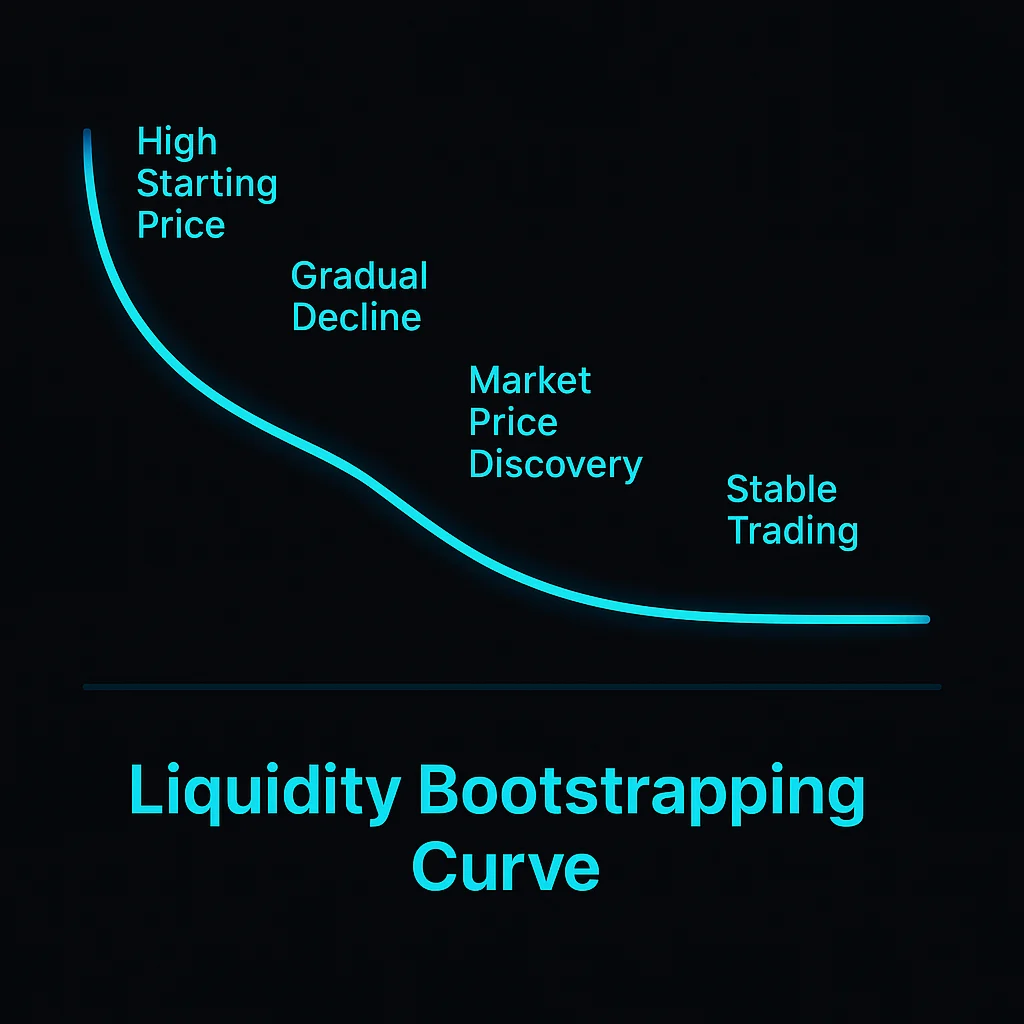
Liquidity bootstrapping curve showing high starting price, gradual decline, market price discovery, and stable trading

Real-World Examples

  • Balancer LBPs have launched hundreds of projects with fair price discovery mechanisms
  • Copper Launch provides liquidity bootstrapping infrastructure for new tokens
  • Major DeFi projects use LBPs to avoid the problems of traditional fixed-price token sales

Why Beginners Should Care

Fairer distribution compared to fixed-price sales where bots often capture most tokens before regular users can participate.

Price discovery through market mechanisms rather than arbitrary pricing by project teams who may not understand market demand.

Participation timing flexibility allows users to buy at any point during the bootstrap period rather than competing for limited fixed-price allocations.

Related Terms: Token Launch, Price Discovery, Fair Distribution, Automated Market Maker

Back to Crypto Glossary

Similar Posts

  • Token Burn

    Token Burn: Destroying Supply for Value Token burns permanently remove cryptocurrency from circulation by sending it to addresses where it can never be recovered. It’s digital deflation in action. Token burn is the permanent removal of cryptocurrency tokens from circulation by sending them to an unusable address or smart contract that destroys them. This reduces…

  • Layer 1

    Layer 1: The Foundation Blockchain Layer 1 refers to the base blockchain protocol that processes transactions and maintains consensus. It’s the foundation that everything else builds on top of. Layer 1 (L1) is the main blockchain network that handles transaction processing, consensus, and security independently without relying on other blockchains. These are the foundational networks…

  • Profit Taking

    Profit Taking: Realizing Investment GainsProfit taking involves selling cryptocurrency holdings to lock in gains and convert unrealized profits into actual cash or other assets. It's like cashing out your casino chips while you're ahead.Profit taking refers to the strategic sale of cryptocurrency positions to realize gains and reduce exposure when investments have appreciated in value. This…

  • Smart Contract Risk

    Smart Contract Risk: Code-Based VulnerabilitiesSmart contract risk encompasses potential losses from bugs, exploits, or unexpected behavior in automated blockchain programs. It's like the risk that the software controlling your digital money might malfunction or be hacked.Smart contract risk refers to potential vulnerabilities, bugs, exploits, or failures in smart contract code that could result in loss…

  • Circulating Supply

    Circulating Supply: Tokens Available for TradingCirculating supply represents the number of cryptocurrency tokens currently available for public trading and use. It's like counting how much money is actually in circulation versus locked away.Circulating supply refers to the number of cryptocurrency tokens that are publicly available and actively trading in the market. This excludes tokens that are…

  • Project Vetting

    Project Vetting: Investment Due DiligenceProject vetting involves thoroughly researching and evaluating cryptocurrency projects before investing to identify legitimate opportunities and avoid scams. It's like inspecting a house before buying it to check the foundation, plumbing, and electrical systems.Project vetting refers to the comprehensive research and analysis process used to evaluate cryptocurrency projects, including team credentials,…