
Chain Reorg (Reorganization)

Chain Reorg (Reorganization): Blockchain History Changes

Chain reorgs occur when a blockchain adopts a different version of transaction history, potentially reversing confirmed transactions. It’s like time travel, but messier and more expensive.

A chain reorganization (reorg) happens when a blockchain network adopts an alternative chain of blocks as the canonical history, potentially reversing previously confirmed transactions. This can occur due to network splits, competing miners, or consensus failures.

How Chain Reorgs Work

Competing chains develop when different groups of miners or validators work on different versions of blockchain history simultaneously.

Longest chain rule (or other consensus mechanisms) eventually determines which chain becomes official, potentially orphaning blocks from the alternative chain.

Transaction reversal affects any transactions that were included in orphaned blocks, requiring them to be re-confirmed in the new canonical chain.
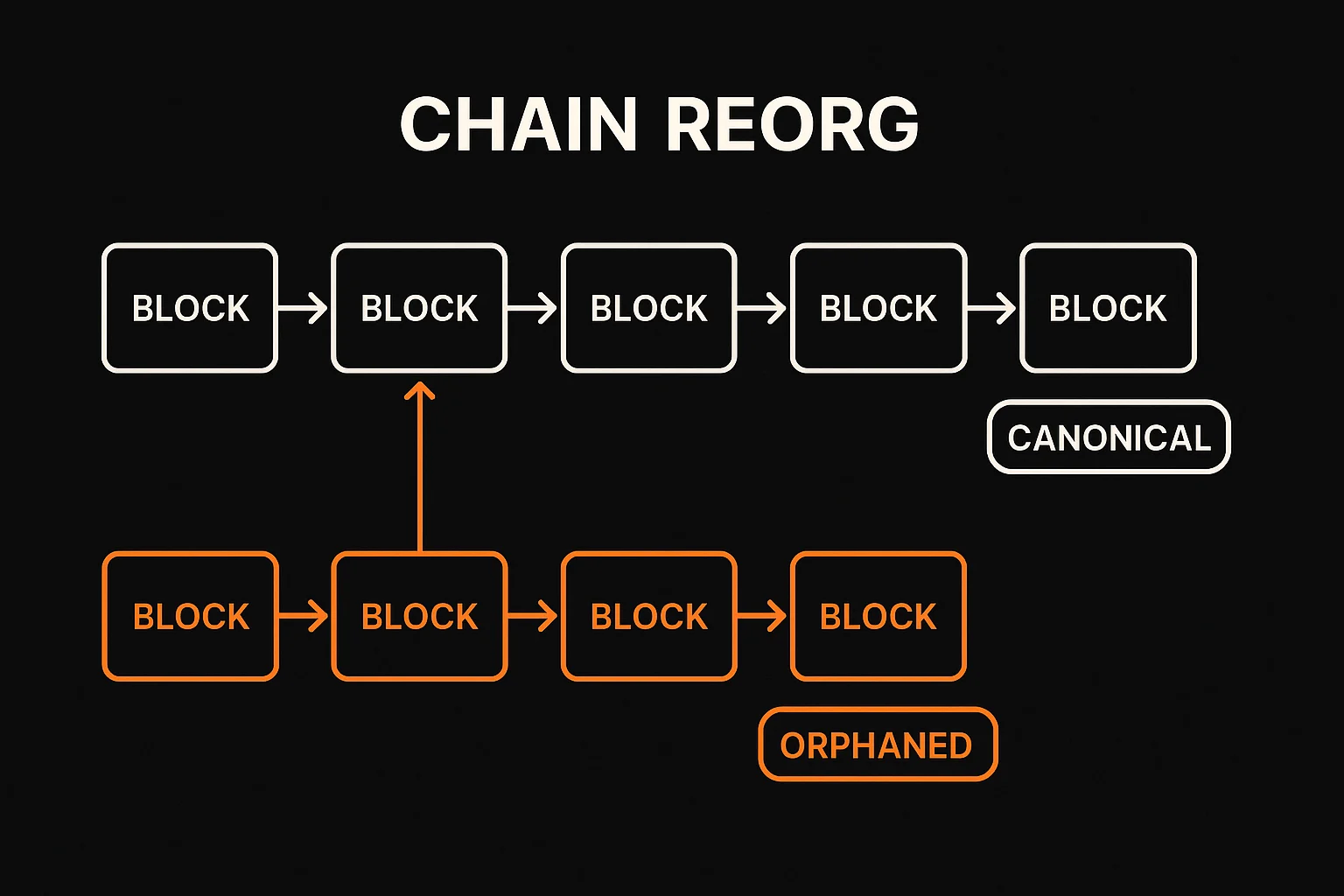
Chain reorganization diagram showing canonical blockchain branch versus orphaned competing branch

Real-World Examples

  • Ethereum Classic experienced deep reorgs during 51% attacks that reversed thousands of blocks
  • Bitcoin Cash has had several reorgs during periods of hash rate instability
  • Polygon faced a 157-block reorg in 2023 due to infrastructure issues

Why Beginners Should Care

Confirmation security requires waiting for multiple block confirmations to reduce the risk of transaction reversal from reorgs.

Exchange impacts as platforms may halt deposits/withdrawals during suspected reorgs to prevent double-spending attacks.

Network stability indicators include reorg frequency and depth, which signal overall blockchain health and security.

Related Terms: 51% Attack, Block Confirmation, Consensus Mechanism, Double Spending

Back to Crypto Glossary

Similar Posts

  • Bear Market

    Bear Market: When Reality Hits Crypto Bear markets separate tourists from residents. Prices fall, optimism dies, and everyone learns who was swimming naked when the tide goes out. A bear market is a sustained period of declining cryptocurrency prices accompanied by widespread investor pessimism. During bear markets, even strong projects can lose 80-90% of their…

  • Smart Contract Risk

    Smart Contract Risk: Code-Based VulnerabilitiesSmart contract risk encompasses potential losses from bugs, exploits, or unexpected behavior in automated blockchain programs. It's like the risk that the software controlling your digital money might malfunction or be hacked.Smart contract risk refers to potential vulnerabilities, bugs, exploits, or failures in smart contract code that could result in loss…

  • DeFi Security

    DeFi Security: Protecting Decentralized FinanceDeFi security involves protecting decentralized finance protocols and users from smart contract vulnerabilities, economic attacks, and operational risks. It's cybersecurity for programmable money.DeFi security encompasses the practices, technologies, and protocols used to protect decentralized finance applications from hacks, exploits, and other security threats. This includes smart contract auditing, economic security, and user…

  • Diamond Hands

    Diamond Hands: Unshakeable Conviction Diamond hands represent the ultimate HODLer mentality – holding through extreme volatility without selling. It’s a badge of honor in crypto communities. Diamond hands refers to the unwavering determination to hold cryptocurrency positions through significant price volatility and market stress. It celebrates investors who resist selling during crashes or euphoric peaks….

  • Bull Market

    Bull Market: When Everything Goes Up Bull markets are when crypto investors feel like geniuses. Prices rise, optimism soars, and everyone becomes a trading expert. Until they don’t. A bull market is a sustained period of rising cryptocurrency prices accompanied by widespread investor optimism. During bull runs, even terrible projects can see massive gains as…

  • DeFi Aggregator

    DeFi Aggregator: Finding the Best Yields DeFi aggregators automatically find the best rates across multiple protocols for lending, borrowing, or trading. They’re like Expedia for decentralized finance. A DeFi aggregator is a platform that searches multiple protocols to find the best rates, yields, or liquidity for users’ specific needs. Instead of manually checking dozens of…