
Optimistic Rollup

Optimistic Rollup: Trust but Verify Scaling

Optimistic rollups assume transactions are valid by default but allow challenges during dispute periods. It’s like innocent until proven guilty for blockchain transactions.

An optimistic rollup is a Layer 2 scaling solution that assumes transactions are valid by default and only verifies them if someone submits a fraud proof during a challenge period. This enables fast, cheap transactions while maintaining security through economic incentives.

How Optimistic Rollups Work

Optimistic execution processes transactions immediately without validation, posting transaction data to the main chain for availability.

Challenge periods allow anyone to submit fraud proofs if they detect invalid transactions, with economic penalties for false challenges.

Fraud proofs enable verification of specific transactions without re-executing entire blocks, making dispute resolution efficient.
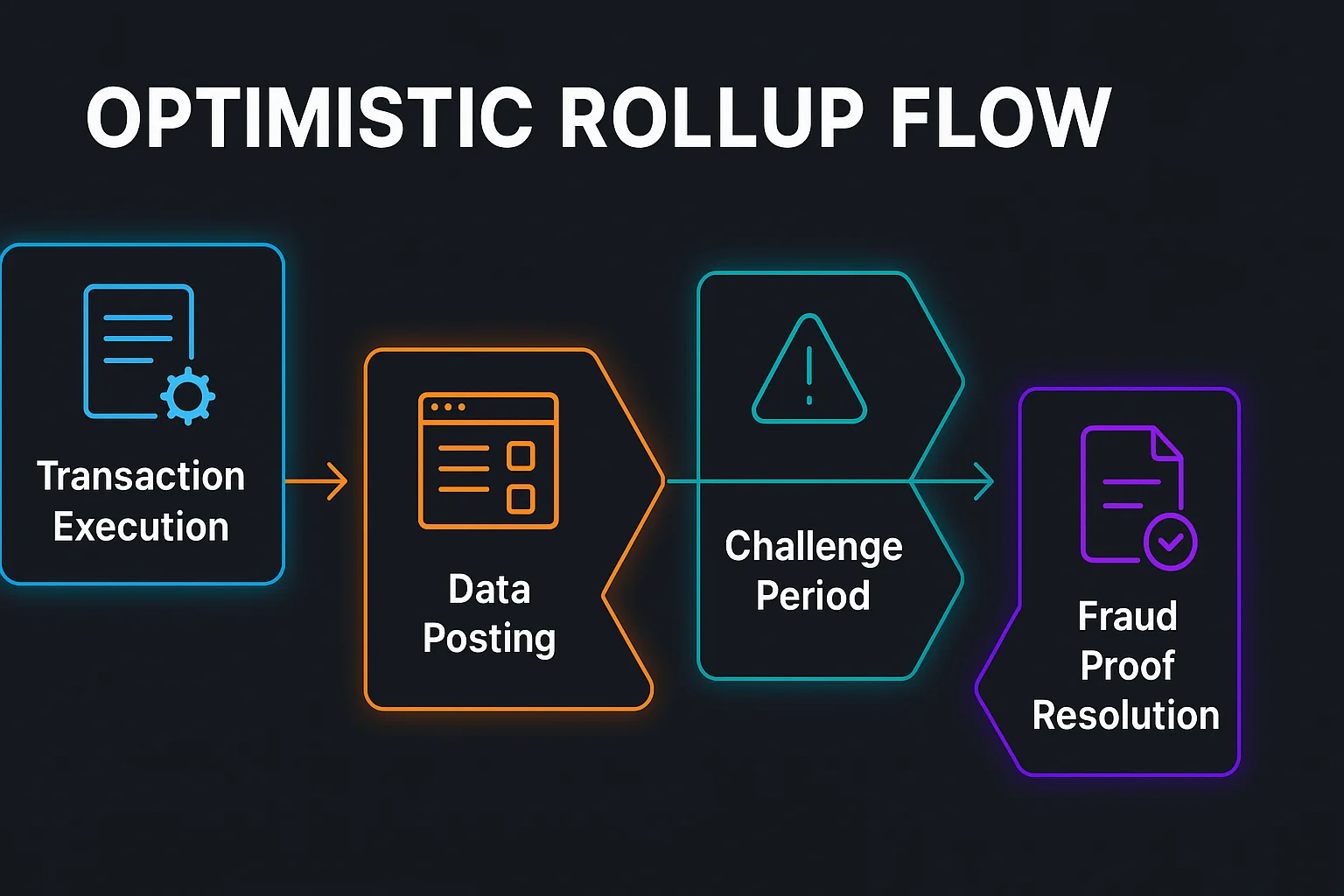
Optimistic rollup process showing transaction execution, data posting, challenge period, and fraud proof resolution

Real-World Examples

  • Arbitrum is the largest optimistic rollup with billions in TVL and major DeFi protocols
  • Optimism focuses on public goods funding and retroactive rewards for ecosystem development
  • Polygon Hermez (now zkEVM) started as an optimistic rollup before transitioning to ZK proofs

Why Beginners Should Care

Fast finality for most transactions since optimistic assumptions allow immediate execution without waiting for complex validation.

Withdrawal delays typically require 7-day challenge periods before funds can be moved back to Ethereum mainnet.

Lower costs compared to Ethereum mainnet while maintaining strong security guarantees through fraud proof mechanisms.

Related Terms: Layer 2, Fraud Proof, Challenge Period, Rollups

Back to Crypto Glossary

Similar Posts

  • Systemic Risk

    Systemic Risk: Widespread System FailureSystemic risk refers to the potential for localized failures to cascade throughout the entire cryptocurrency ecosystem. It's like how one falling domino can knock down all the others in a chain reaction.Systemic risk describes the possibility that failure in one part of the cryptocurrency ecosystem could trigger widespread failures across multiple…

  • Sustainable Yield

    Sustainable Yield: Long-Term Return GenerationSustainable yield refers to returns that can be maintained long-term without depleting the underlying value source. It's like earning interest that doesn't eventually destroy the principal.Sustainable yield represents returns generated from real economic activity and value creation rather than unsustainable token emissions or Ponzi-like mechanisms. These yields can theoretically continue indefinitely.How Sustainable…

  • Public Ledger

    Public Ledger: Transparent Transaction Records Public ledgers record all transactions transparently where anyone can verify the complete history of asset movements. It’s like having a bank statement that everyone can read but no one can forge. A public ledger is a distributed database that records all transactions transparently, allowing anyone to verify and audit the…

  • Sharding

    Sharding: Splitting Networks for Speed Sharding divides blockchain networks into smaller pieces that process transactions in parallel. It’s like adding more checkout lanes at the grocery store – same capacity, faster service. Sharding is a scaling technique that splits a blockchain network into smaller, parallel chains called shards that process transactions independently. Each shard handles…

  • Dark Web

    Dark Web: Hidden Internet NetworksThe dark web consists of encrypted online networks accessible only through specialized software like Tor. It's where privacy advocates and criminals both hang out, but for very different reasons.The dark web refers to encrypted online content that exists on overlay networks requiring specific software, configurations, or authorization to access. Unlike the regular…

  • Launchpad

    Launchpad: The Crypto Startup Accelerator Launchpads are platforms that help new crypto projects raise funds and launch tokens. They’re like Kickstarter for cryptocurrencies, but with more speculation and less product delivery. A launchpad is a platform that facilitates fundraising and token launches for new cryptocurrency projects. They provide infrastructure, marketing, and community access to help…