
Validator Jailing

Validator Jailing: Temporary Network Punishment

Validator jailing temporarily removes misbehaving validators from consensus participation while allowing them to return after penalties. It’s like being sent to the penalty box in hockey.

Validator jailing is a punishment mechanism that temporarily excludes validators from consensus participation and rewards due to violations like extended downtime or rule infractions. Jailed validators can typically return after meeting specific conditions.

How Validator Jailing Works

Automated enforcement detects violations like missing too many blocks, extended offline periods, or consensus rule violations that trigger jailing procedures.

Temporary exclusion removes jailed validators from the active set, preventing them from earning rewards or participating in consensus until released.

Release conditions may require waiting periods, paying penalties, or demonstrating corrected behavior before validators can rejoin the active set.
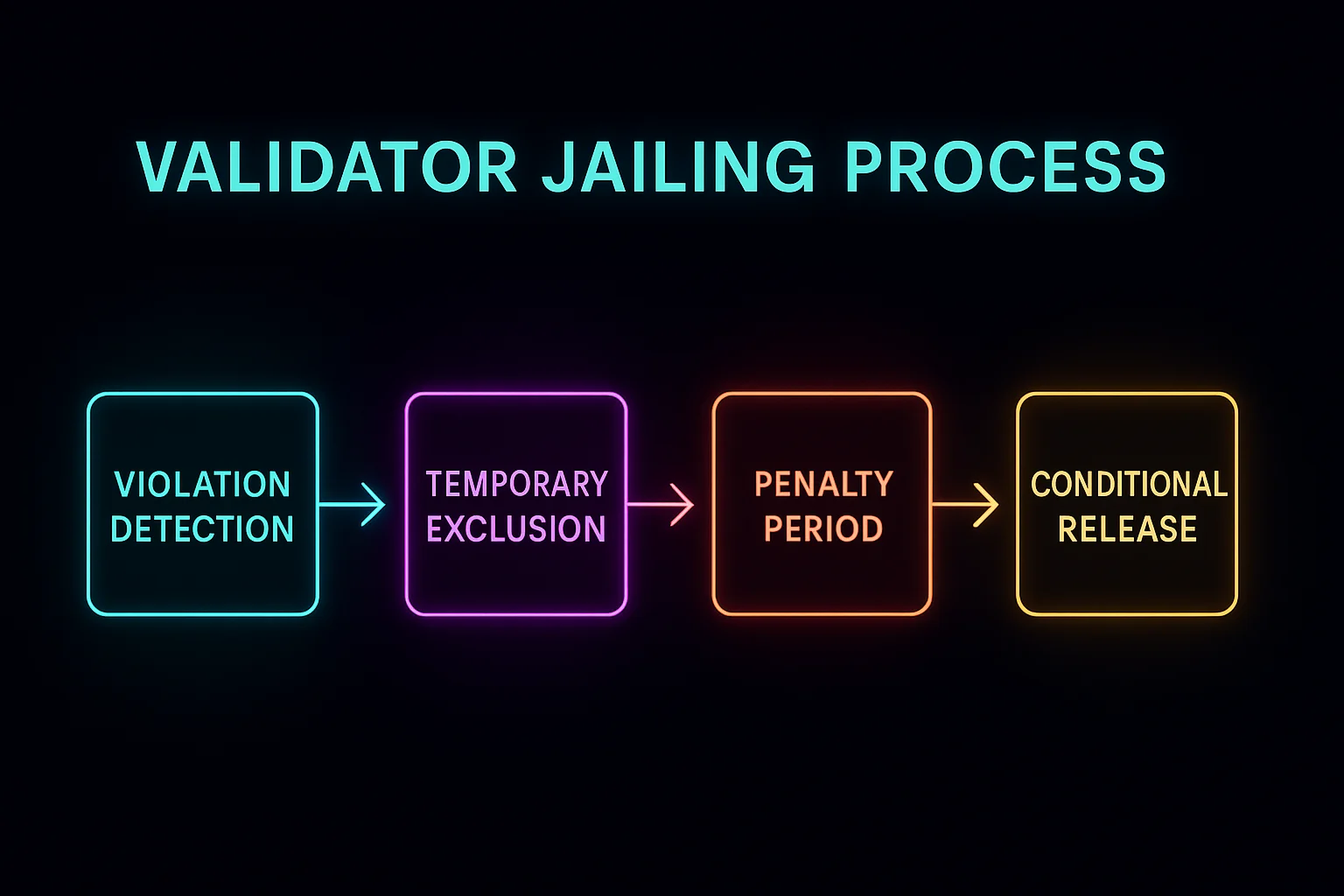
Validator jailing process showing violation detection, temporary exclusion, penalty period, and conditional release

Real-World Examples

  • Cosmos networks jail validators for missing blocks or double-signing, requiring unjailing transactions
  • Solana has similar mechanisms for removing poor-performing validators temporarily
  • Various PoS chains implement jailing to maintain network quality without permanent validator removal

Why Beginners Should Care

Network health maintenance through jailing mechanisms that remove problematic validators while allowing redemption opportunities.

Delegation risks as stakers may lose rewards when their chosen validators get jailed for poor performance or violations.

Validator selection considerations include uptime history and operational competence to avoid delegation to frequently jailed validators.

Related Terms: Validator, Slashing, Proof of Stake, Network Governance

Back to Crypto Glossary

Similar Posts

  • Network Governance

    Network Governance: Blockchain Decision MakingNetwork governance encompasses the processes and mechanisms for making decisions about blockchain protocol changes and upgrades. It's like the constitutional system that determines how a digital nation changes its laws.Network governance refers to the systems and processes through which blockchain networks make decisions about protocol upgrades, parameter changes, and strategic direction. This…

  • Decentralized Exchange (DEX)

    Decentralized Exchange (DEX): Trading Without Middlemen DEXs are what happens when you remove the corporate overlords from crypto trading. No account required, no permission needed – just you, your wallet, and the market. A decentralized exchange (DEX) is a cryptocurrency trading platform that operates without a central authority controlling user funds. You trade directly from…

  • LayerZero

    LayerZero: Omnichain Interoperability Protocol LayerZero is an interoperability protocol that enables applications to send messages and transfer assets across different blockchains. It’s like having a universal translator for blockchain networks. LayerZero is a cross-chain communication protocol that enables decentralized applications to operate across multiple blockchains seamlessly. It provides infrastructure for omnichain applications that can access…

  • Metaverse

    Metaverse: Digital Worlds Meet Real Money The metaverse promises persistent digital worlds where your avatar’s clothes cost more than your real ones. It’s part virtual reality, part speculation, part genuine innovation. The metaverse refers to interconnected virtual worlds where users can work, play, socialize, and own digital assets through avatars and blockchain-based economies. Think Ready…

  • Finality

    Finality: Transaction IrreversibilityFinality refers to the point when blockchain transactions become irreversible and permanently confirmed. It's like when ink dries on a signed contract – the deal is done and can't be changed.Finality is the property of blockchain transactions that ensures they cannot be reversed, modified, or cancelled once confirmed. Different blockchain networks achieve finality through…

  • Front Running

    Front Running: Trading Ahead of OthersFront running involves placing trades ahead of known pending transactions to profit from anticipated price movements. It's like cutting in line when you know someone behind you will move the market.Front running is the practice of placing trades based on advance knowledge of pending transactions that will likely affect asset…