
Rebase Token
Rebase Token: Algorithmic Supply Adjustment
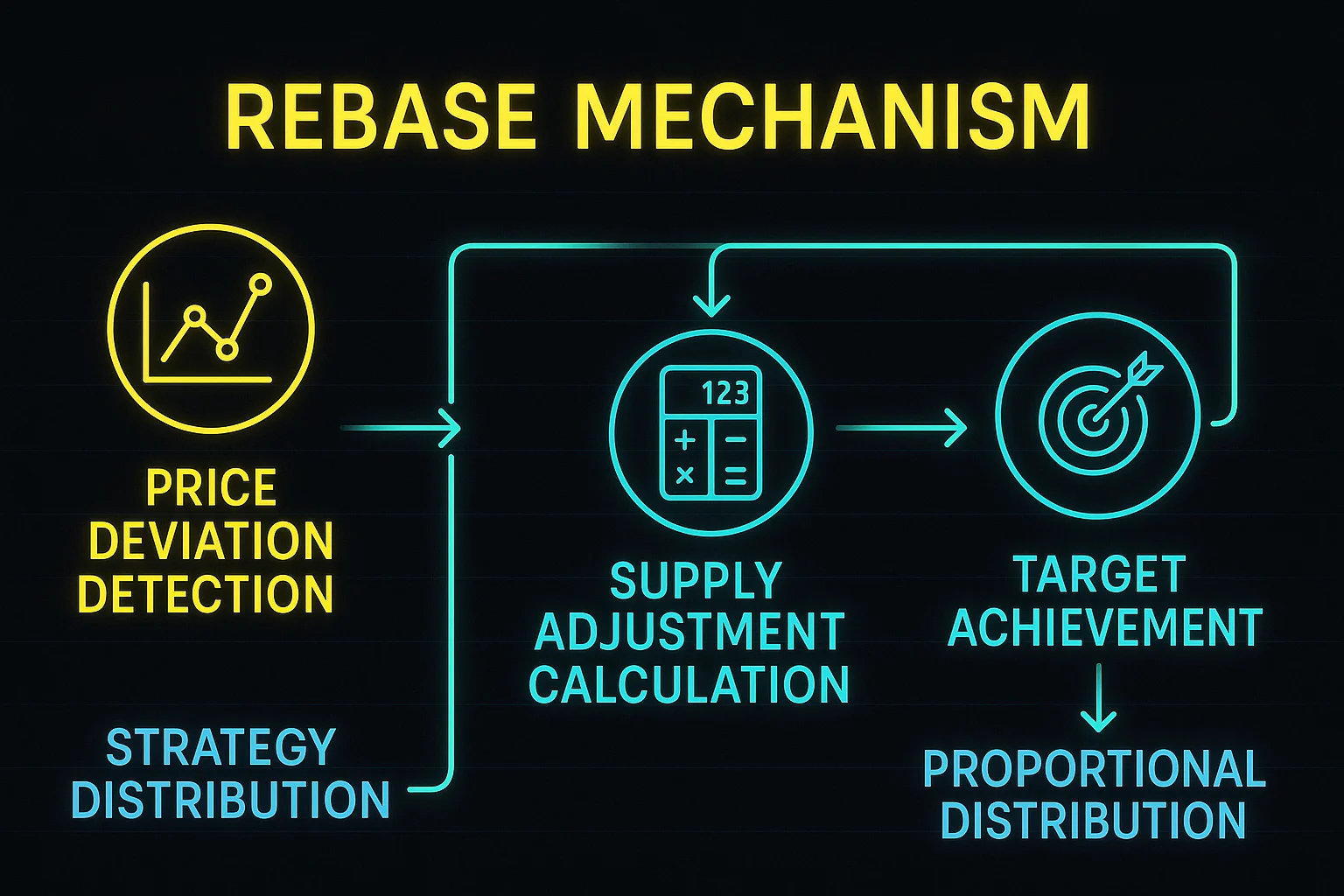
Rebase tokens automatically adjust their total supply to maintain target prices or economic conditions. It’s like having money that multiplies or divides to keep its buying power constant.
A rebase token automatically increases or decreases the total token supply held by all users proportionally to achieve specific economic targets like price stability or inflation tracking. Supply changes affect all wallets simultaneously.
How Rebase Tokens Work
Supply adjustment happens automatically based on predetermined algorithms that respond to price deviations, time periods, or other triggers.
Proportional changes affect all token holders equally, maintaining their percentage ownership while changing absolute token amounts.
Target maintenance uses supply expansion or contraction to influence token price toward desired levels or economic conditions.
Real-World Examples
- Ampleforth (AMPL) adjusts supply daily to maintain purchasing power parity
- Base Protocol rebases to track the total market cap of cryptocurrencies
- Olympus DAO used rebasing mechanisms to incentivize staking and protocol growth
Why Beginners Should Care
Wallet surprises as token balances change automatically without any action from holders, which can be confusing for new users.
Price dynamics work differently than normal tokens since supply changes affect price relationships and market behavior.
Tax implications may be complex since supply changes could be treated as taxable events in some jurisdictions.
Related Terms: Algorithmic Stablecoin, Token Supply, Price Stability, Monetary Policy