
dApp Browser

dApp Browser: Gateway to Decentralized Apps

dApp browsers enable easy access to decentralized applications through integrated wallet functionality and Web3 connectivity. They’re like having a web browser that speaks cryptocurrency natively.

A dApp browser is a specialized web browser or application that integrates cryptocurrency wallet functionality to seamlessly interact with decentralized applications. These browsers handle Web3 connections, transaction signing, and blockchain interactions automatically.

How dApp Browsers Work

Wallet integration provides built-in cryptocurrency wallet functionality, eliminating the need for separate browser extensions or external wallet applications.

Web3 connectivity enables automatic connection to decentralized applications with integrated transaction signing and blockchain interaction capabilities.

Security features include transaction preview, dApp permission management, and protection against malicious websites or smart contracts.
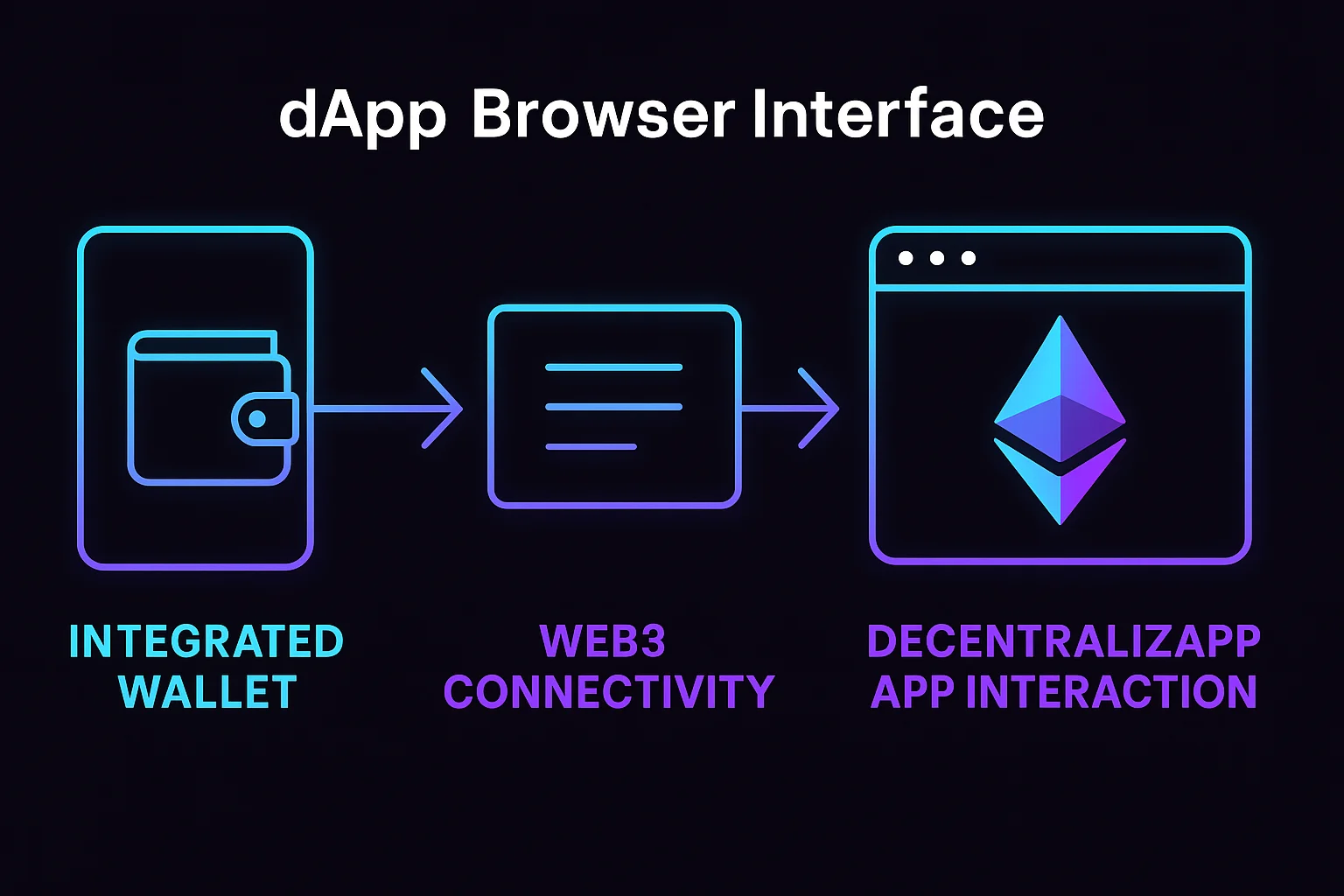
dApp browser interface showing integrated wallet, Web3 connectivity, transaction signing, and decentralized app interaction

  • MetaMask mobile browser combines wallet functionality with Web3-enabled browsing
  • Trust Wallet browser provides integrated access to DeFi protocols and dApps
  • Brave browser includes built-in crypto wallet and Web3 functionality

Why Beginners Should Care

Simplified onboarding eliminates complex setup procedures for accessing decentralized applications and DeFi protocols.

Integrated security provides better protection than manually managing wallet connections and transaction approvals across multiple applications.

Mobile accessibility enables smartphone users to access the full range of Web3 applications without desktop computer requirements.

Related Terms: dApp, Web3, Wallet Integration, Transaction Signing

Back to Crypto Glossary

Similar Posts

  • Bitcoin (BTC)

    Bitcoin (BTC): Digital Money That Banks Can’t Control Bitcoin isn’t just another investment – it’s the financial revolution that started it all. When traditional banks failed us in 2008, Bitcoin emerged as the answer. Bitcoin is digital money that operates without banks, governments, or middlemen controlling it. Think of it as cash for the internet…

  • Wei

    Wei: Ethereum's Smallest UnitWei is the smallest denomination of Ethereum, similar to how cents are the smallest unit of dollars. It's like measuring distances in millimeters when you need precision, even though we usually think in meters or kilometers.Wei represents the smallest possible unit of Ethereum (ETH), with one ETH equal to 1,000,000,000,000,000,000 (10^18) wei. This…

  • Inter Chain Protocol

    Inter Chain Protocol: Cross-Blockchain CommunicationInter-chain protocols enable different blockchain networks to communicate and exchange data or assets securely. They're like universal translators that help different blockchain languages understand each other.Inter-chain protocols are standardized communication systems that enable different blockchain networks to exchange information, transfer assets, and coordinate actions across network boundaries. These protocols create interoperability between…

  • Scaling

    Scaling: Handling More TransactionsScaling refers to increasing a blockchain network's capacity to handle more transactions per second without sacrificing security or decentralization. It's the holy grail of blockchain development.Scaling in blockchain technology involves improving transaction throughput, reducing costs, and maintaining performance as networks grow in size and usage. This typically requires technical solutions that balance speed,…

  • Gas Token

    Gas Token: Optimizing Transaction Costs Gas tokens store cheap gas for later use when network fees are high. It’s like buying gasoline when prices are low and using it when prices spike. A gas token is a cryptocurrency designed to optimize transaction costs by storing cheap gas during low-demand periods for use when fees are…

  • Governance Participation

    Governance Participation: Active Protocol InvolvementGovernance participation involves actively engaging in decision-making processes for cryptocurrency projects and protocols. It's like being an active citizen who votes and participates in community decisions.Governance participation refers to active involvement in protocol decision-making through voting, proposal creation, delegation, and other governance mechanisms. This enables community members to influence project direction and…