
Private Key

Private Key: Your Crypto’s Secret Password

Your private key is the most important thing you’ll ever own in crypto. Lose it, and your money’s gone forever. No customer service number to call.

A private key is a secret code that proves you own your cryptocurrency and allows you to spend it. It’s like the combination to a safe – except this safe holds digital money and there’s no locksmith if you forget the combination.

How Private Keys Work

Think of your private key as a super-long password – typically 256 characters of random letters and numbers. This key mathematically generates your wallet address (where people send you crypto) and creates digital signatures to authorize transactions.

Your private key never leaves your device when done right. It signs transactions locally, then broadcasts the signed transaction to the network.
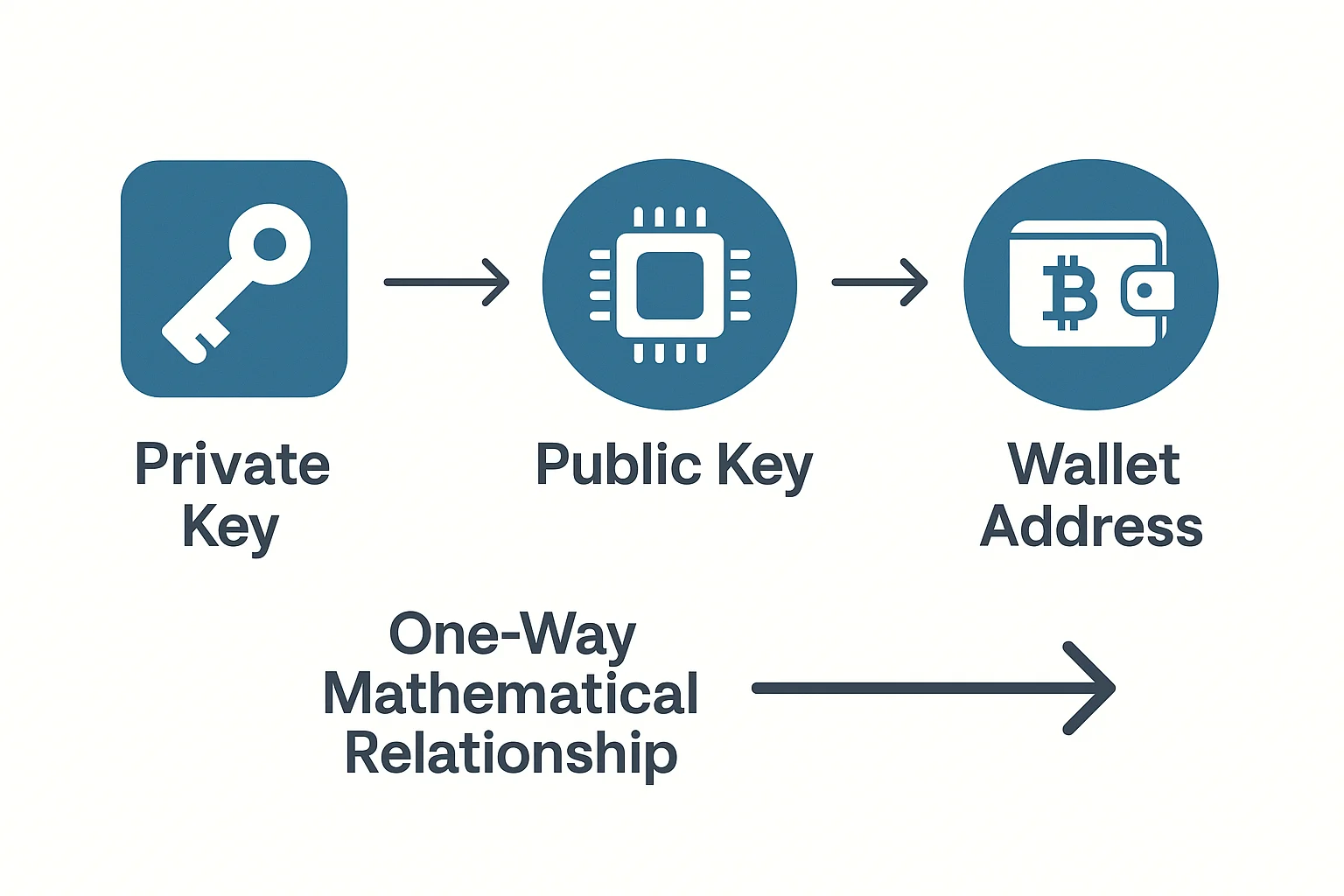
Diagram showing how a private key generates a public key and wallet address in a one-way relationship

Real-World Examples

  • Hardware wallets like Ledger store your private keys offline in secure chips
  • Paper wallets have private keys printed as QR codes
  • Software wallets encrypt your private keys with passwords

Why Beginners Should Care

“Not your keys, not your crypto” – this phrase exists because exchanges and online wallets hold your private keys for you. If they get hacked, go bankrupt, or freeze your account, you’re out of luck.

Smart crypto users graduate from exchanges to self-custody. Hardware wallets like the Ledger Nano series keep your private keys secure and offline, giving you true ownership of your funds.

Related Terms: Public Key, Seed Phrase, Hardware Wallet, Cold Storage

Back to Crypto Glossary

Similar Posts

  • Interoperability

    Interoperability: Blockchain Networks Working TogetherInteroperability enables different blockchain networks to communicate and share information seamlessly. It's like having universal translators for blockchain languages.Interoperability refers to the ability of different blockchain networks to communicate, share data, and interact with each other without requiring centralized intermediaries. This enables cross-chain applications and unified user experiences.How Blockchain Interoperability WorksCross-chain protocols enable…

  • Secondary Market

    Secondary Market: Resale Trading VenuesSecondary markets enable trading of assets after their initial issuance, providing liquidity and price discovery for existing holdings. They're like used car lots for digital assets.A secondary market is where previously issued assets are bought and sold between investors rather than being purchased directly from the original issuer. These markets provide liquidity…

  • Protocol Security

    Protocol Security: Protecting Blockchain InfrastructureProtocol security involves designing and maintaining blockchain networks to resist attacks, prevent exploits, and ensure reliable operation. It's like building a fortress with multiple defensive layers.Protocol security encompasses all measures taken to protect blockchain networks from technical attacks, economic manipulation, and operational failures. This includes consensus security, smart contract auditing, and network…

  • Team Doxxing

    Team Doxxing: Revealing Anonymous IdentitiesTeam doxxing involves revealing the real identities of previously anonymous cryptocurrency project team members. It's like unmasking superheroes to show who's really behind the project.Team doxxing refers to the disclosure of real identities, backgrounds, and personal information of cryptocurrency project team members who were previously anonymous or pseudonymous. This can be voluntary…

  • Diamond Hands

    Diamond Hands: Unshakeable Conviction Diamond hands represent the ultimate HODLer mentality – holding through extreme volatility without selling. It’s a badge of honor in crypto communities. Diamond hands refers to the unwavering determination to hold cryptocurrency positions through significant price volatility and market stress. It celebrates investors who resist selling during crashes or euphoric peaks….

  • Mining Pool

    Mining Pool: Collaborative Block Mining Mining pools combine computational power from multiple miners to increase chances of finding blocks and earning rewards. It’s like joining a lottery syndicate to improve your odds. A mining pool is a collaborative group of cryptocurrency miners who combine their computational resources to increase their chances of successfully mining blocks…