
Pump and Dump

Pump and Dump: Coordinated Market Manipulation

Pump and dump schemes are crypto’s version of old-school stock manipulation. Coordinated groups artificially inflate prices, then dump on unsuspecting victims.

A pump and dump is a form of market manipulation where a group artificially inflates an asset’s price through coordinated buying and false promotion, then sells at peak prices while others lose money. It’s illegal in traditional markets but common in unregulated crypto spaces.

How Pump and Dumps Work

Coordination happens through private Telegram groups, Discord servers, or social media. Organizers choose low-cap tokens that are easy to manipulate with relatively small amounts of capital.

The pump phase involves simultaneous buying to rapidly increase price while spreading hype through social media. FOMO kicks in as external buyers see the rapid price increase.

The dump phase sees coordinated selling by insiders while continuing to promote the token publicly. Late buyers are left holding worthless tokens as organizers cash out.
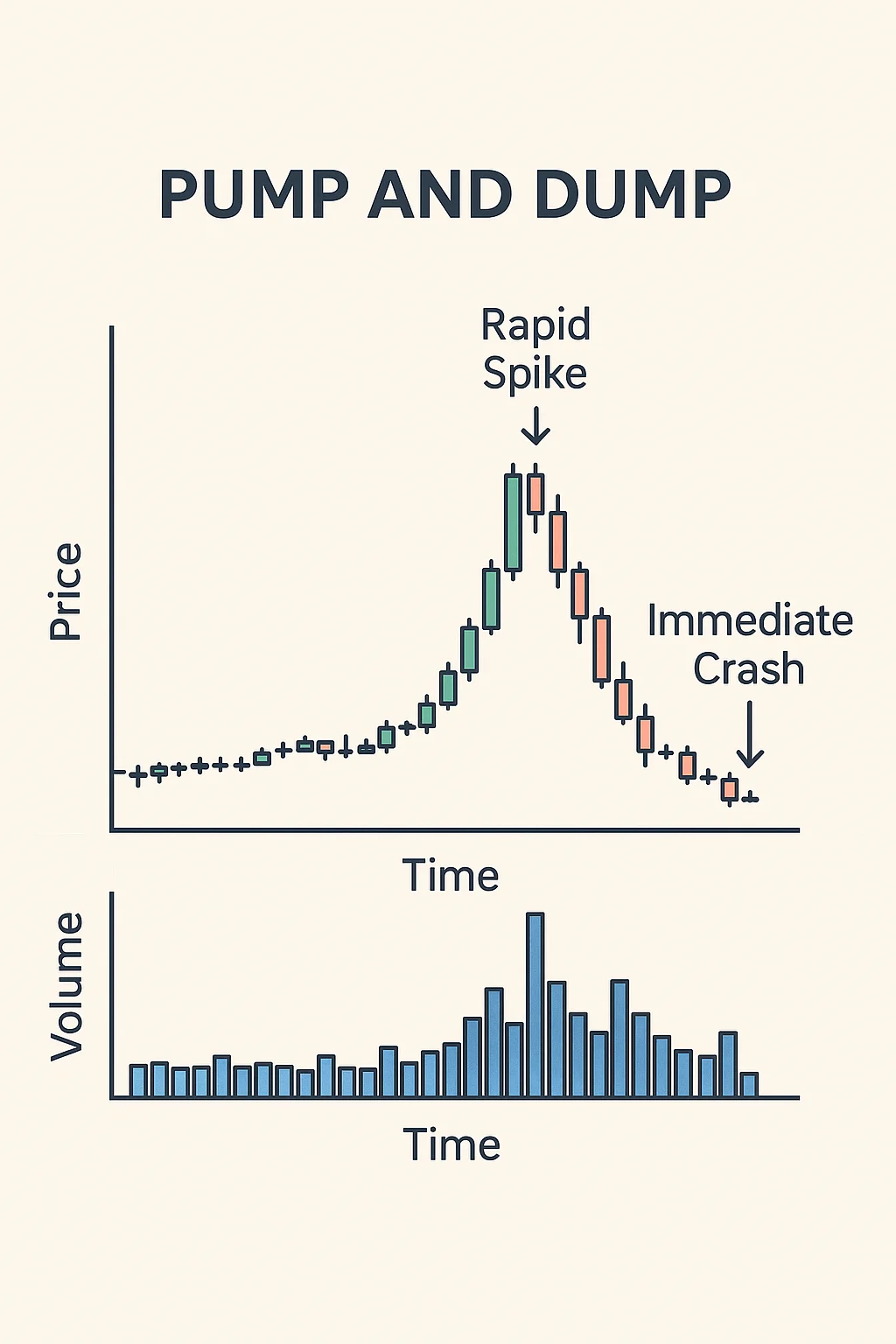
Price chart showing pump and dump pattern with rapid spike, immediate crash, and volume bars

Real-World Examples

  • Telegram pump groups targeting small-cap altcoins with coordinated buy signals
  • Celebrity endorsements of meme coins followed by immediate selling
  • Social media campaigns using bots to create artificial buzz around chosen tokens

Why Beginners Should Care

Pump and dumps prey on FOMO and inexperienced traders. If you see sudden 500%+ price increases with no fundamental news, it’s likely manipulation.

Red flags include anonymous teams, no real utility, sudden social media buzz, and promises of guaranteed returns. Legitimate projects build value gradually through development and adoption.

Never chase parabolic price movements or join groups promising coordinated buying. You’re more likely to be the exit liquidity than the profiteer.

Related Terms: FOMO, Market Manipulation, Whale, Rug Pull

Back to Crypto Glossary

Similar Posts

  • Encrypted Mempool

    Encrypted Mempool: Private Transaction Pools Encrypted mempools hide transaction details until inclusion in blocks, preventing front-running and MEV extraction. It’s like sending sealed bids instead of announcing your strategy publicly. An encrypted mempool contains pending transactions that are cryptographically hidden from public view until block inclusion. This prevents sophisticated actors from front-running or extracting MEV…

  • Threshold Encryption

    Threshold Encryption: Shared Secret ProtectionThreshold encryption requires multiple parties to collaborate to decrypt information, preventing single points of failure. It's like having a safe that needs multiple people to turn their keys simultaneously.Threshold encryption is a cryptographic technique where encrypted data can only be decrypted when a minimum number of participants collaborate with their individual…

  • Risk Assessment

    Risk Assessment: Evaluating Investment DangersRisk assessment involves systematically analyzing potential losses and their probabilities before making investment decisions. It's like checking the weather and road conditions before planning a trip.Risk assessment is the process of identifying, analyzing, and evaluating potential risks associated with cryptocurrency investments or activities to make informed decisions. This includes technical, market, regulatory,…

  • L2 Sequencer

    L2 Sequencer: Transaction Ordering Engine L2 sequencers determine transaction order on Layer 2 networks, controlling which transactions get included and how they’re arranged. They’re like traffic controllers for blockchain highways. An L2 sequencer is a specialized node that collects, orders, and batches transactions for Layer 2 networks before submitting them to the main blockchain. Sequencers…

  • Systemic Risk

    Systemic Risk: Widespread System FailureSystemic risk refers to the potential for localized failures to cascade throughout the entire cryptocurrency ecosystem. It's like how one falling domino can knock down all the others in a chain reaction.Systemic risk describes the possibility that failure in one part of the cryptocurrency ecosystem could trigger widespread failures across multiple…

  • Fungibility

    Fungibility: Equal Value InterchangeabilityFungibility means that individual units of currency are interchangeable and hold equal value regardless of their history. It's like how any dollar bill has the same value as any other dollar bill, regardless of where it's been or who owned it previously.Fungibility describes the property where individual units of currency or assets…