
Hot Wallet

Hot Wallet: Convenience Over Security

Hot wallets are your everyday crypto spending accounts. They’re connected to the internet for easy access, but that convenience comes with security trade-offs.

A hot wallet is a cryptocurrency wallet that maintains an active internet connection, allowing for quick and easy transactions. Think of it as your crypto checking account – convenient for daily use but not where you store your life savings.

How Hot Wallets Work

Software wallets on your phone or computer are the most common hot wallets. Apps like MetaMask, Trust Wallet, and Coinbase Wallet connect to the internet for seamless DeFi interactions.

Exchange wallets are also hot wallets, though you don’t control the private keys. The exchange manages the wallet infrastructure while you access funds through their interface.

Browser extensions like MetaMask inject wallet functionality into websites, enabling one-click connections to DeFi protocols and NFT marketplaces.
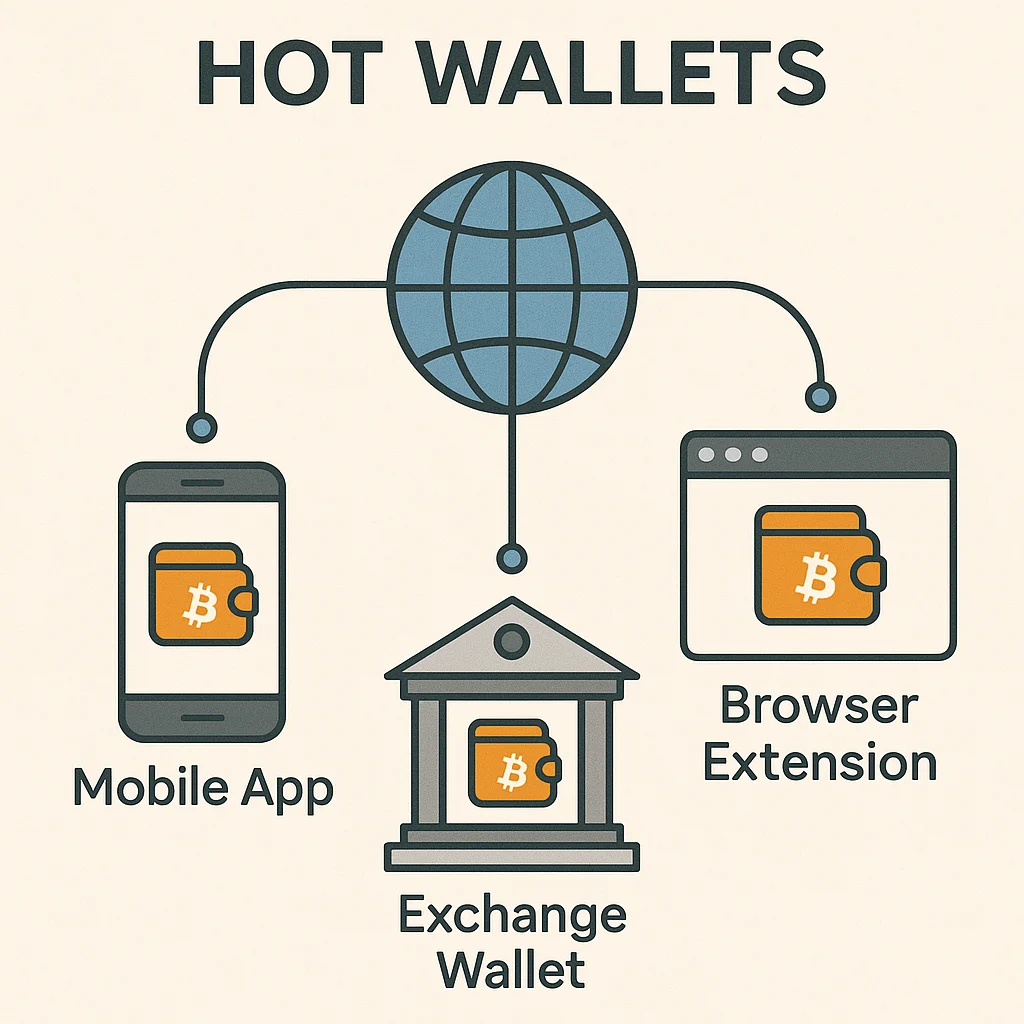
Diagram showing hot wallets like mobile apps, browser extensions, and exchange wallets connected to the internet

Real-World Examples

  • MetaMask – Most popular browser extension wallet for Ethereum DeFi
  • Trust Wallet – Mobile-first wallet supporting multiple blockchains
  • Phantom – Leading Solana ecosystem hot wallet

Why Beginners Should Care

Hot wallets make crypto usable for daily transactions and DeFi interactions. Without them, every transaction would require connecting hardware wallets – tedious for active trading.

Security trade-offs are real. Hot wallets are vulnerable to malware, phishing attacks, and device theft. Never store large amounts in hot wallets long-term.

Best practice: Use hot wallets for small amounts and active trading, cold storage for long-term holdings. It’s like carrying spending money in your physical wallet while keeping savings in the bank.

Related Terms: Cold Wallet, MetaMask, Private Key, DeFi

Back to Crypto Glossary

Similar Posts

  • Price Feed

    Price Feed: Real-Time Market DataPrice feeds provide real-time cryptocurrency market data to applications and smart contracts that need current asset values. They're like financial news tickers that continuously update with the latest stock prices, but for digital assets and automated systems.Price feed refers to continuous streams of current market prices and trading data that supply…

  • Avatar

    Avatar: Digital Identity RepresentationAn avatar is a digital representation of a user's identity in virtual worlds, games, or online platforms. In crypto, avatars often take the form of NFTs that represent unique digital identities.An avatar is a digital representation of a user's identity or persona, often taking the form of NFTs or profile pictures that…

  • EVM Compatibility

    EVM Compatibility: Ethereum Code EverywhereEVM compatibility allows blockchain networks to run Ethereum applications without modification. It's like having different computers that can all run the same software.EVM compatibility refers to blockchain networks that can execute Ethereum smart contracts and support Ethereum-based applications without requiring code changes. This enables easy migration and cross-deployment of Ethereum applications.How EVM…

  • Batch Verification

    Batch Verification: Efficient Bulk ProcessingBatch verification processes multiple transactions or proofs together to improve efficiency and reduce computational costs. It's like grading a stack of tests all at once instead of one by one.Batch verification refers to techniques that verify multiple cryptographic proofs, transactions, or operations simultaneously rather than processing each individually. This approach significantly improves…

  • |

    Bridgeless Interop

    Bridgeless Interop: Direct Cross-Chain Communication Bridgeless interoperability enables direct communication between blockchains without traditional bridge infrastructure. It’s like having chains that can talk directly to each other instead of using translators. Bridgeless interoperability refers to cross-chain communication methods that don’t rely on traditional bridge protocols, instead using native blockchain features or specialized infrastructure for direct…

  • Sybil Attack

    Sybil Attack: Fake Identity Manipulation Sybil attacks involve creating multiple fake identities to gain disproportionate influence in networks that assume one person equals one vote. It’s like stuffing the ballot box with imaginary voters. A Sybil attack is when an individual or entity creates multiple fake identities to gain unfair influence over a network, voting…