
Multi-Signature (Multisig)

Multi-Signature (Multisig): Shared Control for Enhanced Security

Multisig wallets require multiple signatures to authorize transactions. It’s like requiring multiple keys to open a safe – no single person can move funds alone.

Multi-signature (multisig) is a wallet configuration that requires signatures from multiple private keys to authorize transactions. Common setups include 2-of-3 (any 2 signatures from 3 possible) or 3-of-5 configurations.

How Multisig Works

Smart contracts enforce the signature requirements. When someone initiates a transaction, the contract waits for the required number of valid signatures before executing.

Key distribution among trusted parties or devices prevents single points of failure. Even if one key is compromised, attackers can’t steal funds without additional signatures.

Business applications use multisig for treasury management, requiring approval from multiple executives before spending company funds.
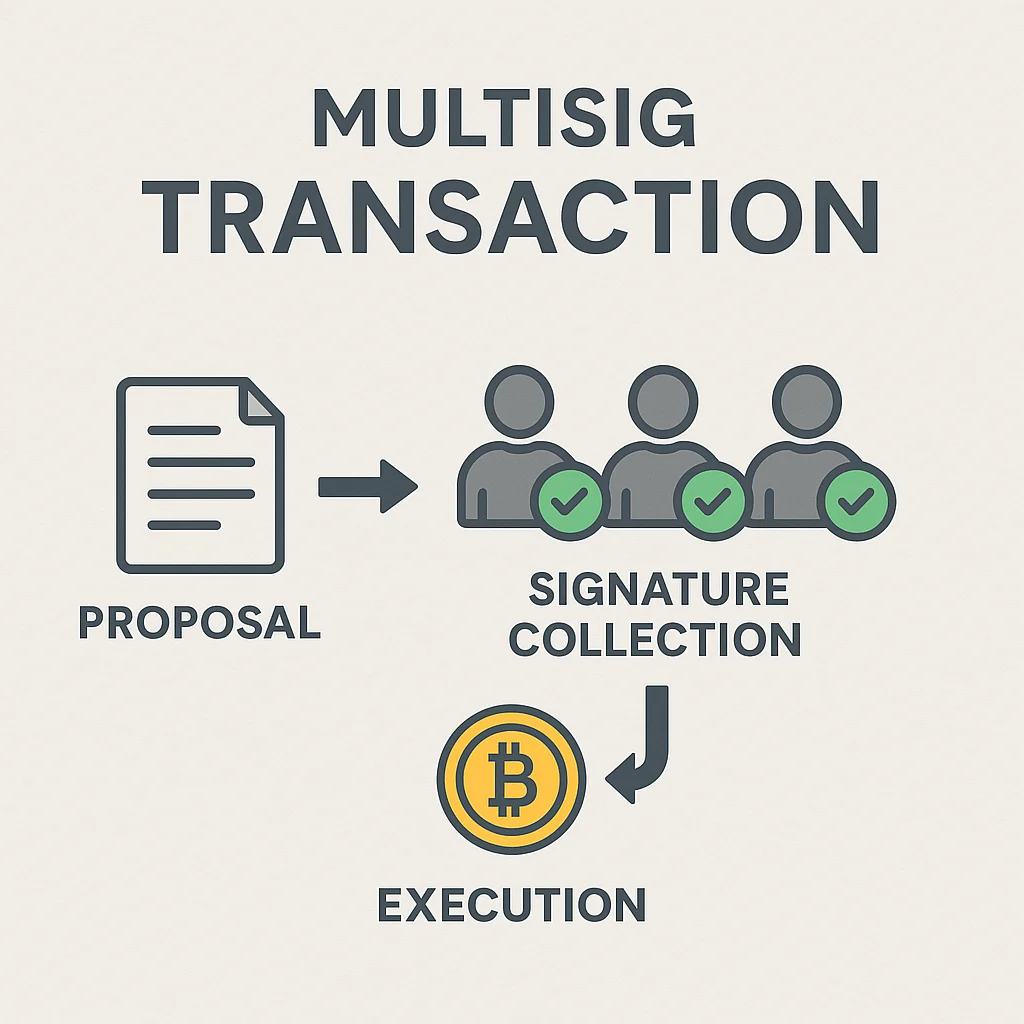
Infographic showing the multisig transaction flow: proposal, multiple signatures collected, and automatic execution

Real-World Examples

  • Gnosis Safe – Popular multisig platform managing billions in DeFi treasuries
  • Corporate treasuries often require 3-of-5 signatures from board members
  • Personal security setups with keys split between hardware wallets and trusted contacts

Why Beginners Should Care

Multisig eliminates single points of failure that plague most crypto security. If you lose one key or device, you can still access funds with remaining signatures.

Setup complexity requires technical knowledge and coordination between signers. Losing too many keys simultaneously can permanently lock funds.

For large holdings, multisig provides institutional-grade security that exceeds what most individuals can achieve with single-signature wallets.

Related Terms: Hardware Wallet, Smart Contract, Private Key, Cold Storage

Back to Crypto Glossary

Similar Posts

  • Anti-Sybil Mechanism

    Anti-Sybil Mechanism: Preventing Fake Identity Attacks Anti-Sybil mechanisms prevent individuals from creating multiple fake identities to gain unfair advantages in voting, airdrops, or governance systems. They’re like requiring photo ID to prevent ballot stuffing. Anti-Sybil mechanisms are systems designed to prevent or detect when single entities create multiple fake identities to manipulate voting, governance, or…

  • Monero

    Monero: Privacy-Focused CryptocurrencyMonero is a privacy-focused cryptocurrency that hides transaction details by default. It's like having a completely private bank account where no one can see your balance or transaction history.Monero is a privacy-focused cryptocurrency that uses advanced cryptographic techniques to hide transaction amounts, sender addresses, and recipient addresses by default. This provides strong financial privacy…

  • Delegated Proof of Stake (DPoS)

    Delegated Proof of Stake (DPoS): Democratic Validation DPoS lets token holders vote for validators who secure the network on their behalf. It’s like electing representatives to Congress, but for blockchain consensus. Delegated Proof of Stake (DPoS) is a consensus mechanism where token holders vote for a limited number of delegates who validate transactions and secure…

  • Block Confirmation

    Block Confirmation: Transaction Security VerificationBlock confirmation refers to the number of blocks added to the blockchain after a transaction, indicating its security level. It's like waiting for concrete to fully harden before considering construction complete.Block confirmation is the number of blocks that have been added to the blockchain after the block containing a specific transaction. More…

  • EIP-2612

    EIP-2612: Permit Function for Token ApprovalsEIP-2612 introduces permit functions that allow token approvals through signatures instead of transactions. It's like giving someone permission to spend your money without having to make a separate payment for the permission slip.EIP-2612 is an Ethereum Improvement Proposal that adds permit functionality to ERC-20 tokens, enabling approvals through off-chain signatures…

  • DeFi Lending

    DeFi Lending: Decentralized Borrowing and LendingDeFi lending enables cryptocurrency borrowing and lending without traditional financial intermediaries through smart contracts. It's like peer-to-peer banking powered by code instead of humans.DeFi lending refers to decentralized finance protocols that enable users to lend and borrow cryptocurrencies through smart contracts without requiring traditional banks or credit checks. These systems operate…