
Yield Farming

Yield Farming: Crypto’s High-Risk, High-Reward Game

Yield farming is DeFi’s answer to traditional investing – except the yields are higher, the risks are bigger, and the game changes daily.

Yield farming is the practice of lending, staking, or providing liquidity with your cryptocurrency to earn maximum returns across multiple DeFi protocols. It’s like playing musical chairs with your money, constantly moving to wherever yields are highest.

How Yield Farming Works

Farmers deploy capital across different DeFi protocols to maximize returns. This might involve providing liquidity to DEXs, lending on money markets, or staking governance tokens.

Strategy matters. Smart farmers compound their rewards, reinvesting earnings to grow their positions. They also chase new opportunities as yields shift between protocols.

Advanced farmers use leverage, borrowing against collateral to increase their farming positions. This amplifies both gains and losses dramatically.
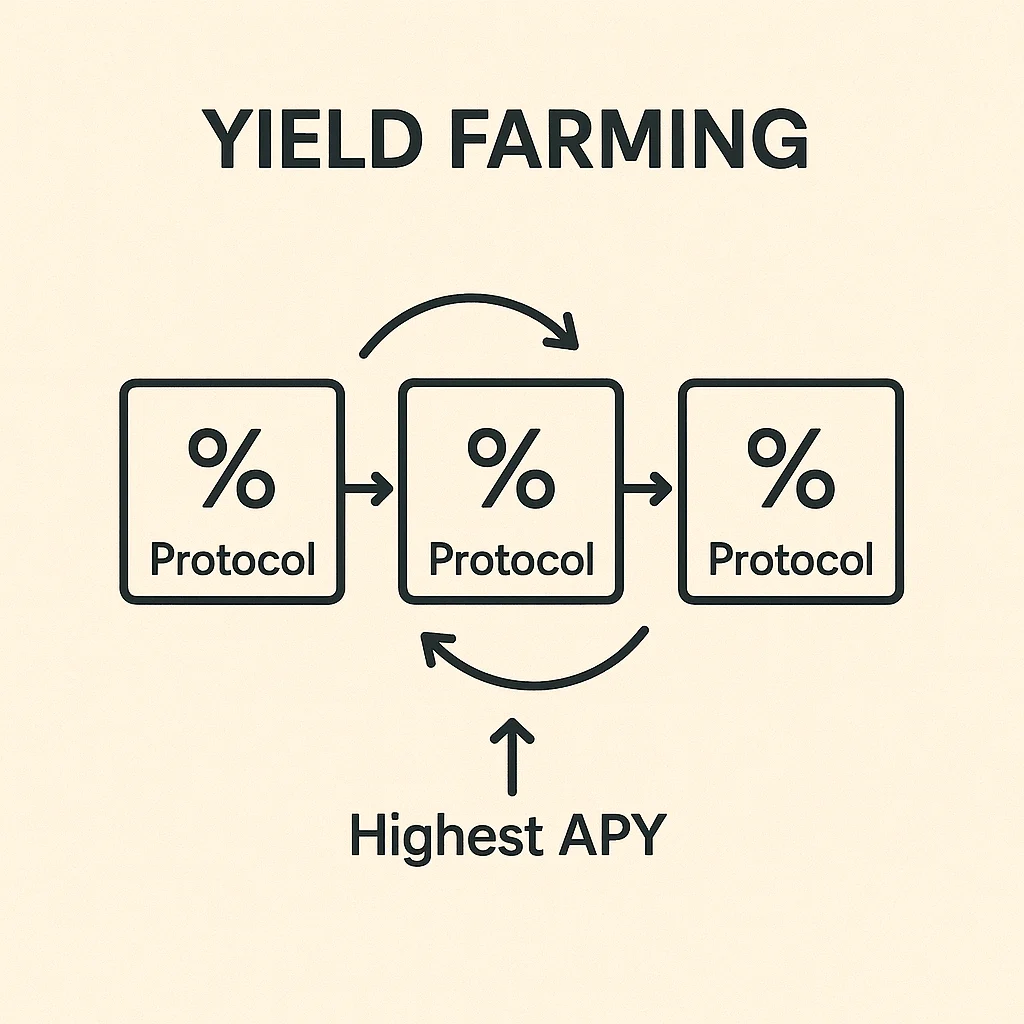
Flowchart showing a yield farming strategy with capital moving between protocols seeking the highest APY

Real-World Examples

  • Compound – Lend USDC at 5% APY, earn COMP tokens worth another 3%
  • Curve – Provide stablecoin liquidity for 8% base APY plus CRV rewards
  • Convex – Boost Curve yields through optimized staking strategies

Why Beginners Should Care

Yield farming can generate impressive returns – 20-100%+ APY isn’t uncommon during bull markets. But these protocols are experimental and uninsured.

Smart contracts can have bugs. Tokens can lose value overnight. Regulations can change. Only farm with money you can afford to lose completely.

Related Terms: Liquidity Pool, Staking, DeFi, Impermanent Loss

Back to Crypto Glossary

Similar Posts

  • Solver Network

    Solver Network: Optimized Transaction ExecutionA solver network consists of specialized entities that find optimal execution paths for complex transactions across multiple protocols and chains. They're like GPS systems that find the best routes for your crypto transactions.A solver network comprises specialized services that analyze and execute complex transactions by finding optimal paths across multiple protocols,…

  • Governance Attack

    Governance Attack: Exploiting Democratic Decision SystemsA governance attack involves manipulating blockchain governance mechanisms to make malicious changes to protocols. It's like rigging an election to pass laws that benefit you at everyone else's expense.A governance attack refers to exploiting voting or decision-making mechanisms in blockchain protocols to implement changes that benefit attackers while harming other…

  • Exit Scam

    Exit Scam: When Projects Disappear With Your Money Exit scams occur when project teams abandon their platforms after raising funds, taking investor money and disappearing. It’s the digital equivalent of skipping town with the cash register. An exit scam is when cryptocurrency project developers abandon their project after raising funds from investors, typically taking user…

  • Digital Currency

    Digital Currency: Electronic Money SystemsDigital currency refers to money that exists only in electronic form, including both centralized and decentralized varieties. It's like having money that lives entirely in computers and phones instead of physical bills and coins in your wallet.Digital currency encompasses all forms of money that exist exclusively in electronic format, including cryptocurrencies,…

  • Transaction Fees

    Transaction Fees: Network Processing CostsTransaction fees are payments made to network validators for processing and confirming cryptocurrency transactions. They're like postage stamps that you need to attach to letters, except the cost varies depending on how quickly you want your mail delivered.Transaction fees refer to payments made to miners, validators, or network operators who process…

  • Merkle Tree

    Merkle Tree: Efficient Data Verification Merkle trees enable efficient verification of large datasets without downloading everything. They’re like having a fingerprint for an entire library that proves any book belongs. A Merkle tree is a binary tree structure where each leaf represents a data element and each branch contains cryptographic hashes of its children. The…