
Governance Token

Governance Token: Voting Rights in Digital Form

Governance tokens turn users into stakeholders with voting power over protocol decisions. It’s democracy meets DeFi, with mixed results.

A governance token grants holders voting rights on protocol decisions like parameter changes, upgrade proposals, treasury spending, and strategic direction. Token weight typically determines voting power – more tokens mean stronger influence.

How Governance Tokens Work

Proposal systems allow token holders to suggest changes to protocols. Proposals typically require minimum token thresholds to prevent spam and ensure serious consideration.

Voting mechanisms vary from simple majority rules to complex systems requiring different quorum levels for different decision types. Some protocols implement time delays before executing approved changes.

Delegation options let smaller holders combine their voting power by delegating to trusted community members who actively participate in governance decisions.
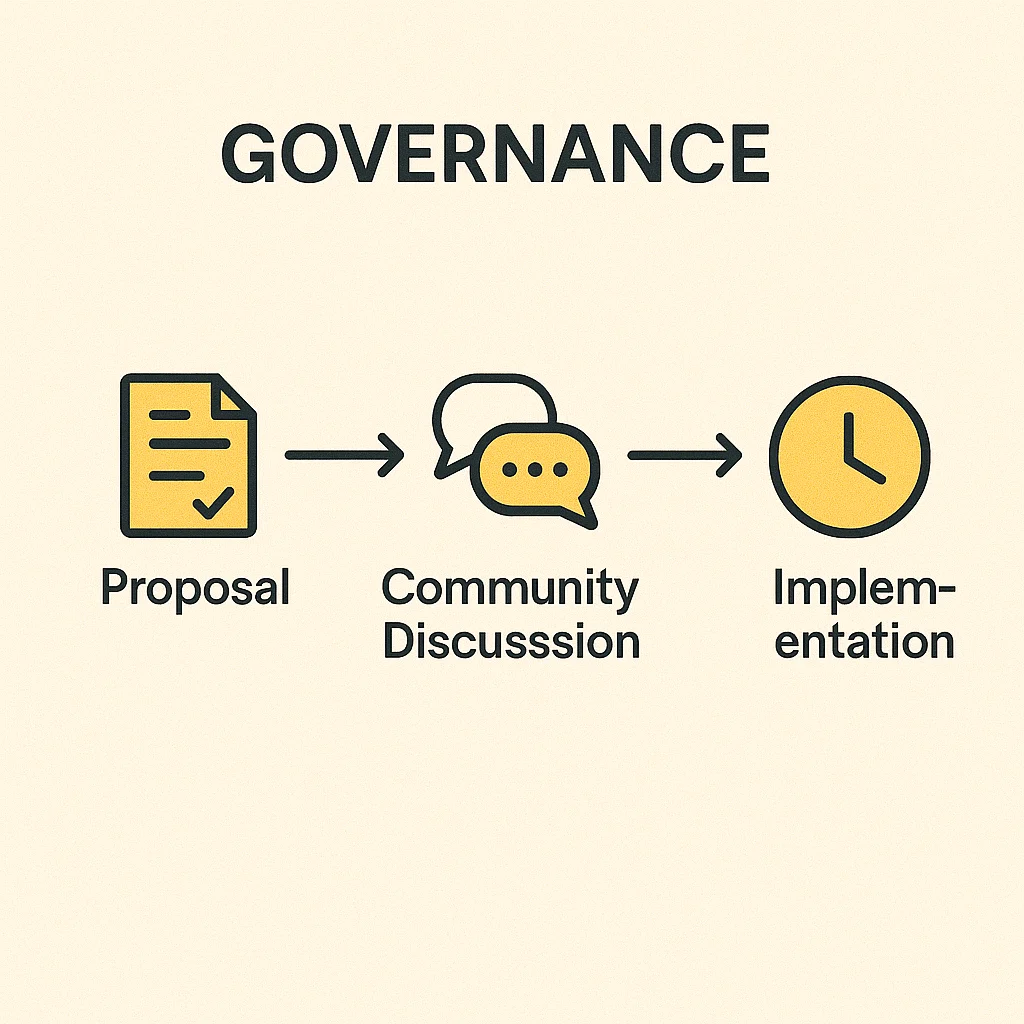
Infographic showing the governance process from proposal to community discussion, token voting, and implementation

Real-World Examples

  • UNI tokens govern Uniswap protocol fees, treasury allocation, and partnership decisions
  • COMP tokens control Compound lending protocol interest rates and collateral factors
  • MKR tokens manage the MakerDAO system backing the DAI stablecoin

Why Beginners Should Care

Governance participation can be profitable when protocols vote to distribute treasury funds or change fee structures that benefit token holders.

Whale dominance is common – large holders often control governance outcomes regardless of smaller holder preferences. True decentralization remains elusive for most protocols.

Regulatory uncertainty surrounds governance tokens. Some might be classified as securities, affecting their legal status and exchange listings.

Related Terms: DAO, Voting, Tokenomics, Decentralization

Back to Crypto Glossary

Similar Posts

  • Transaction Ordering

    Transaction Ordering: Sequence Control SystemsTransaction ordering determines the sequence in which transactions get processed within blockchain blocks. It's like controlling the line at a busy restaurant.Transaction ordering refers to the process by which blockchain networks determine the sequence of transactions within blocks. This ordering can significantly affect transaction outcomes, especially in DeFi applications sensitive to price…

  • Public Key

    Public Key: Cryptographic Identity VerificationA public key is the openly shareable part of a cryptographic key pair that enables others to send you cryptocurrency or verify your digital signatures. It's like your mailing address that you can give to anyone who wants to send you mail.Public key refers to the cryptographic component of a key…

  • Cross-Chain Communication

    Cross-Chain Communication: Blockchain InteroperabilityCross-chain communication enables different blockchain networks to exchange information and coordinate actions seamlessly. It's like having universal translators that allow people speaking completely different languages to have detailed conversations and work together on complex projects.Cross-chain communication refers to protocols and technologies that enable different blockchain networks to share data, transfer assets, and…

  • Token Emissions

    Token Emissions: New Cryptocurrency CreationToken emissions refer to the creation and distribution of new cryptocurrency tokens over time according to predetermined schedules. It's like a factory that produces new money at controlled rates rather than printing it all at once.Token emissions describe the systematic creation and release of new cryptocurrency tokens into circulation according to…

  • Team Incentives

    Team Incentives: Aligning Development with SuccessTeam incentives structure compensation and motivation for cryptocurrency project developers and founders. They align team interests with long-term project success rather than short-term gains.Team incentives refer to compensation structures that motivate project teams to work toward long-term success rather than quick profits. These typically include token allocations with vesting schedules and…

  • Social Engineering

    Social Engineering: Manipulating People for AccessSocial engineering involves manipulating people psychologically to reveal sensitive information or perform actions that compromise security. It's hacking humans instead of computers.Social engineering refers to psychological manipulation techniques used to trick people into revealing confidential information, performing actions, or making security mistakes that benefit attackers. These attacks exploit human psychology rather…