
Total Value Locked (TVL)

Total Value Locked (TVL): DeFi’s Scorecard

TVL measures how much money is deposited in DeFi protocols. It’s like measuring the size of a bank by its total deposits – bigger usually means more trust and activity.

Total Value Locked (TVL) is the aggregate value of all assets deposited in a DeFi protocol or across the entire DeFi ecosystem. It represents how much capital users have entrusted to smart contracts for lending, trading, or yield farming.

How TVL Works

Asset valuation uses current market prices to calculate the dollar value of all deposited tokens. A protocol holding 1000 ETH at $2000 per ETH has $2 million TVL.

Double counting can inflate numbers when protocols build on each other. If Protocol A deposits funds into Protocol B, both might count the same assets toward their TVL.

TVL growth indicates increasing user confidence and adoption. Protocols with growing TVL typically offer competitive yields or innovative features attracting more deposits.
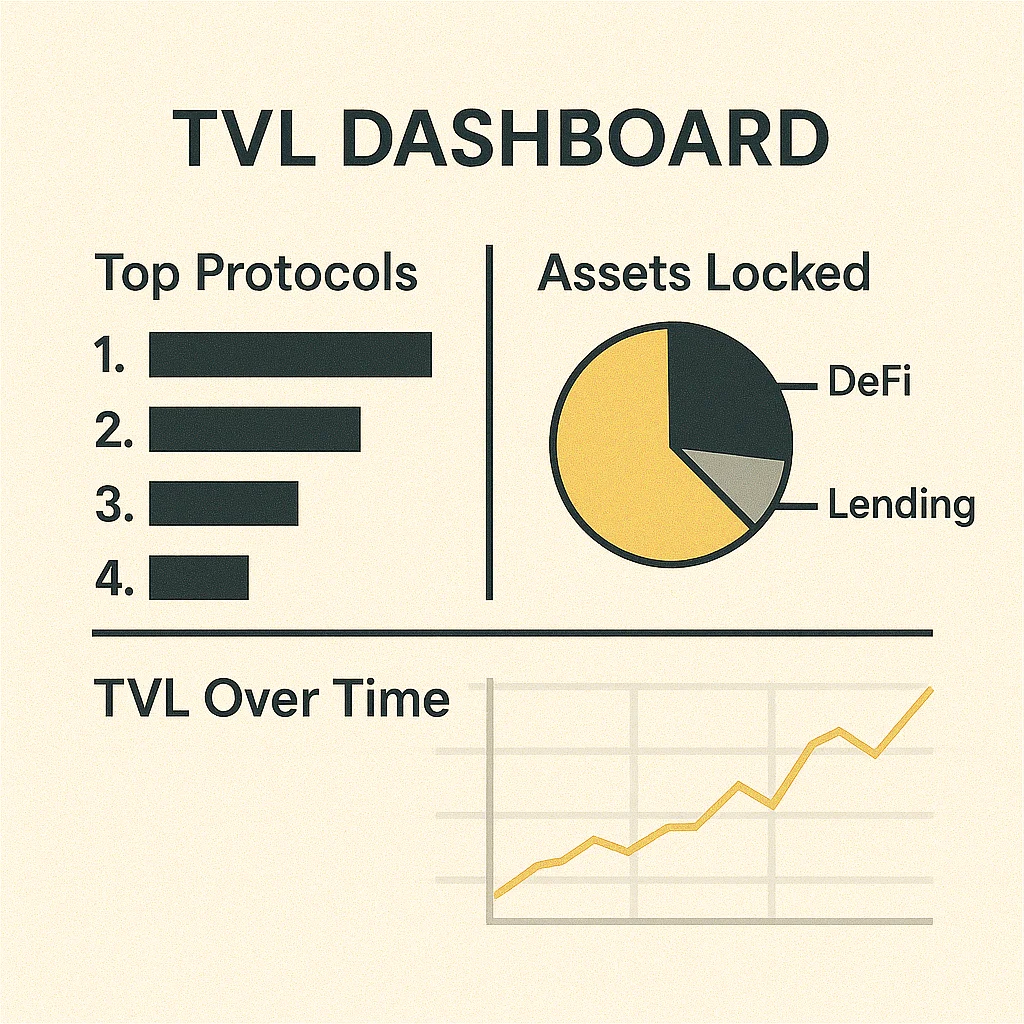
Infographic dashboard showing TVL rankings by protocol, asset categories (DeFi, Lending), and a historical growth line chart

Real-World Examples

  • Aave – Leading lending protocol with $10+ billion TVL across multiple chains
  • Uniswap – Largest DEX with $4+ billion in liquidity pools
  • Total DeFi TVL peaked at $180+ billion in 2021, currently around $50 billion

Why Beginners Should Care

TVL indicates protocol maturity and user trust. Protocols with higher TVL have more battle-tested smart contracts and established user bases.

Yield dilution often accompanies TVL growth. Early adopters earn higher yields that decrease as more users deposit funds and compete for the same rewards.

TVL crashes during bear markets or protocol exploits can signal fundamental problems or broader market stress affecting the entire DeFi ecosystem.

Related Terms: DeFi, Liquidity Pool, Yield Farming, Smart Contract

Back to Crypto Glossary

Similar Posts

  • Token Emissions

    Token Emissions: New Cryptocurrency CreationToken emissions refer to the creation and distribution of new cryptocurrency tokens over time according to predetermined schedules. It's like a factory that produces new money at controlled rates rather than printing it all at once.Token emissions describe the systematic creation and release of new cryptocurrency tokens into circulation according to…

  • Fair Distribution

    Fair Distribution: Equitable Token AllocationFair distribution refers to token allocation methods that avoid excessive concentration among founders, early investors, or privileged groups. It's like ensuring everyone gets an equal chance to participate in a community project rather than giving all the benefits to insiders.Fair distribution describes token allocation strategies that provide broad, equitable access to…

  • Anonymity Set

    Anonymity Set: Privacy Through NumbersAn anonymity set is the group of possible participants who could have performed a specific action, making it harder to identify the actual participant. It's like hiding in a crowd.An anonymity set refers to the group of all possible participants who could plausibly be responsible for a particular transaction or action,…

  • Transaction Privacy

    Transaction Privacy: Protecting Financial InformationTransaction privacy keeps cryptocurrency transaction details confidential while maintaining network security. It's like having private bank accounts in a transparent financial system.Transaction privacy refers to techniques that conceal cryptocurrency transaction information such as sender addresses, recipient addresses, and transaction amounts from public observation. This enables financial privacy while maintaining blockchain functionality.How Transaction…

  • Supply

    Supply: Total Token Quantity AvailableSupply refers to the total amount of cryptocurrency tokens available, including those in circulation, locked up, or held by various parties. It's a fundamental economic factor affecting token value.Supply encompasses all cryptocurrency tokens that exist or will exist, including circulating supply available for trading and locked supply held by teams, investors,…

  • Smart Contract Analysis

    Smart Contract Analysis: Code Security EvaluationSmart contract analysis involves examining blockchain code for vulnerabilities, bugs, and security issues before deployment. It's like having a building inspector check the foundation before construction begins.Smart contract analysis refers to the systematic examination of smart contract code to identify security vulnerabilities, logic errors, and potential attack vectors. This process helps…