
Web3

Web3: The Decentralized Internet Dream

Web3 promises an internet where users own their data, identity, and digital assets instead of tech giants controlling everything. It’s part vision, part reality, part marketing buzzword.

Web3 refers to a decentralized version of the internet built on blockchain technology where users control their own data, identity, and assets rather than relying on centralized platforms. It aims to replace Web2’s platform monopolies with user-owned networks.

How Web3 Works

Decentralized applications (dApps) run on blockchain networks instead of centralized servers, making them censorship-resistant and user-controlled rather than platform-controlled.

Self-sovereign identity lets users control their digital identity across platforms without relying on Google, Facebook, or other centralized identity providers.

Token-based incentives align user and network interests by giving users ownership stakes in the platforms they use, rather than just being unpaid data sources.
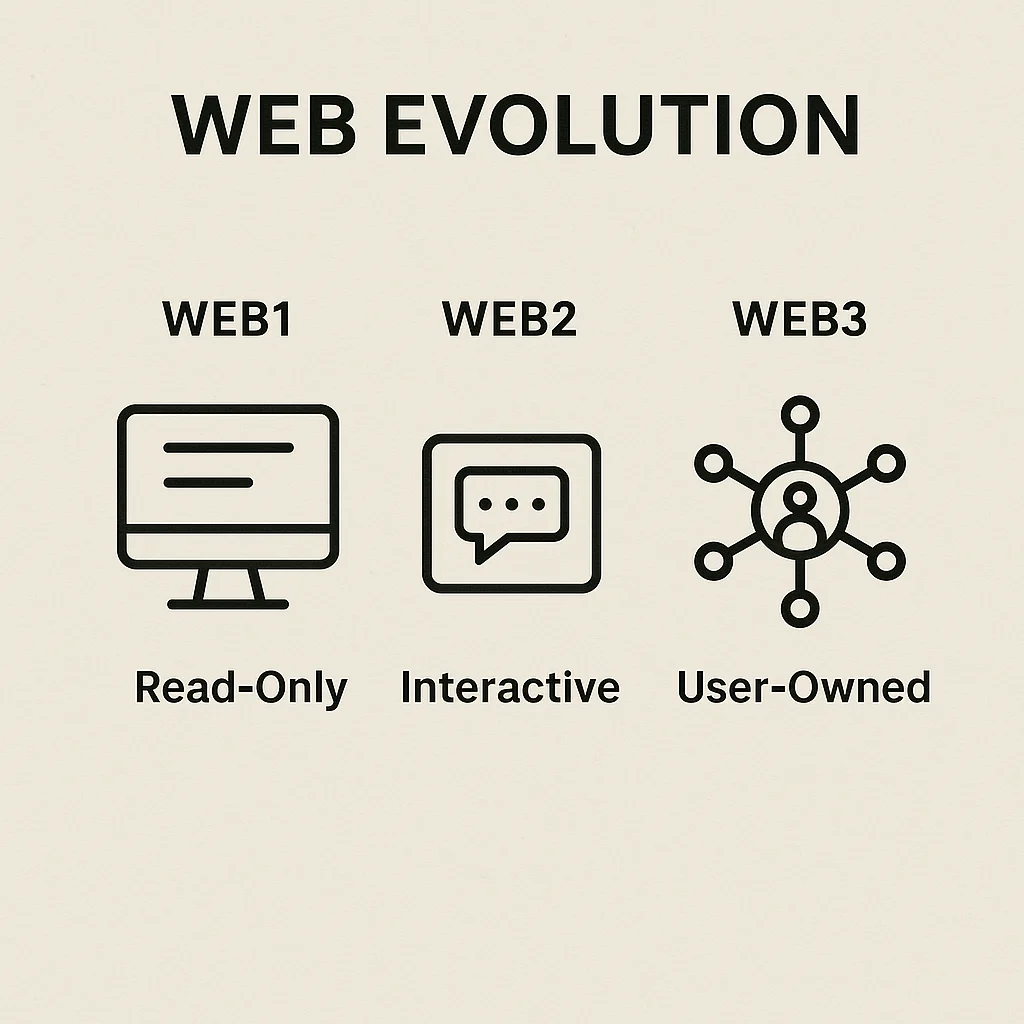
Infographic comparing Web1, Web2, and Web3 with icons and descriptions: read-only, interactive, and user-owned

Real-World Examples

  • ENS domains (.eth addresses) provide decentralized, user-owned website and identity systems
  • IPFS storage offers decentralized file storage resistant to censorship and platform shutdowns
  • DeFi protocols enable financial services without traditional banking intermediaries

Why Beginners Should Care

Web3 adoption remains early-stage with significant user experience challenges compared to polished Web2 applications. Most users aren’t ready to manage private keys for every online interaction.

Decentralization benefits include censorship resistance, platform independence, and user ownership of data and assets created online.

Investment opportunities exist in Web3 infrastructure, but many projects are experimental with uncertain long-term viability and regulatory challenges.

Related Terms: dApp, Decentralization, Self-Sovereign Identity, Token Economy

Back to Crypto Glossary

Similar Posts

  • Proof of Stake (PoS)

    Proof of Stake (PoS): Energy-Efficient Consensus Proof of Stake secures blockchain networks through economic staking rather than energy-intensive mining. It’s like replacing a gold rush with a security deposit system. Proof of Stake (PoS) is a consensus mechanism where validators are chosen to create new blocks based on their stake in the network rather than…

  • Fair Distribution

    Fair Distribution: Equitable Token AllocationFair distribution refers to token allocation methods that avoid excessive concentration among founders, early investors, or privileged groups. It's like ensuring everyone gets an equal chance to participate in a community project rather than giving all the benefits to insiders.Fair distribution describes token allocation strategies that provide broad, equitable access to…

  • Synthetic Asset

    Synthetic Asset: Creating Anything on Blockchain Synthetic assets are blockchain tokens that track the value of real-world assets like stocks, commodities, or currencies. They’re like financial derivatives but programmable and globally accessible. A synthetic asset is a tokenized derivative that tracks the price of an underlying asset without requiring direct ownership of that asset. Smart…

  • Challenge Period

    Challenge Period: Dispute Resolution WindowA challenge period is a time window during which participants can dispute or challenge proposed changes before they become final. It's like a cooling-off period for important decisions.A challenge period is a predetermined time frame that allows network participants to dispute transactions, withdrawals, or governance proposals before they become irreversible. This mechanism…

  • Chain Abstraction

    Chain Abstraction: Invisible Multi-Chain Experience Chain abstraction hides blockchain complexity from users, making multi-chain interactions feel like using a single network. It’s like having universal currency that works everywhere without exchange rates. Chain abstraction creates user experiences where interactions with multiple blockchains happen seamlessly without users needing to understand or manage different networks, tokens, or…

  • Leverage

    Leverage: Borrowing Money to Amplify TradesLeverage lets you control larger positions than your actual capital by borrowing funds from exchanges or platforms. It's like using a lever to lift heavy objects – small movements create big effects.Leverage in cryptocurrency trading allows borrowing funds to increase position sizes beyond available capital, amplifying both potential profits and…