
Mixing Service

Mixing Service: Shuffling Coins for Privacy

Mixing services (or tumblers) pool cryptocurrencies from multiple users then redistribute different coins to break transaction links. It’s like exchanging your marked bills for unmarked ones.

A mixing service is a privacy tool that pools cryptocurrencies from multiple users and redistributes them to break the link between sending and receiving addresses. Users deposit coins and receive different coins of equal value, obscuring transaction histories.

How Mixing Services Work

Pooling deposits from multiple users creates a large pool of mixed funds where individual contributions become indistinguishable from each other.

Random delays and amount splitting prevent timing analysis or amount correlation that could be used to link deposits with withdrawals.

Fresh outputs come from different sources than inputs, making it difficult for blockchain analysts to trace funds through the mixing process.
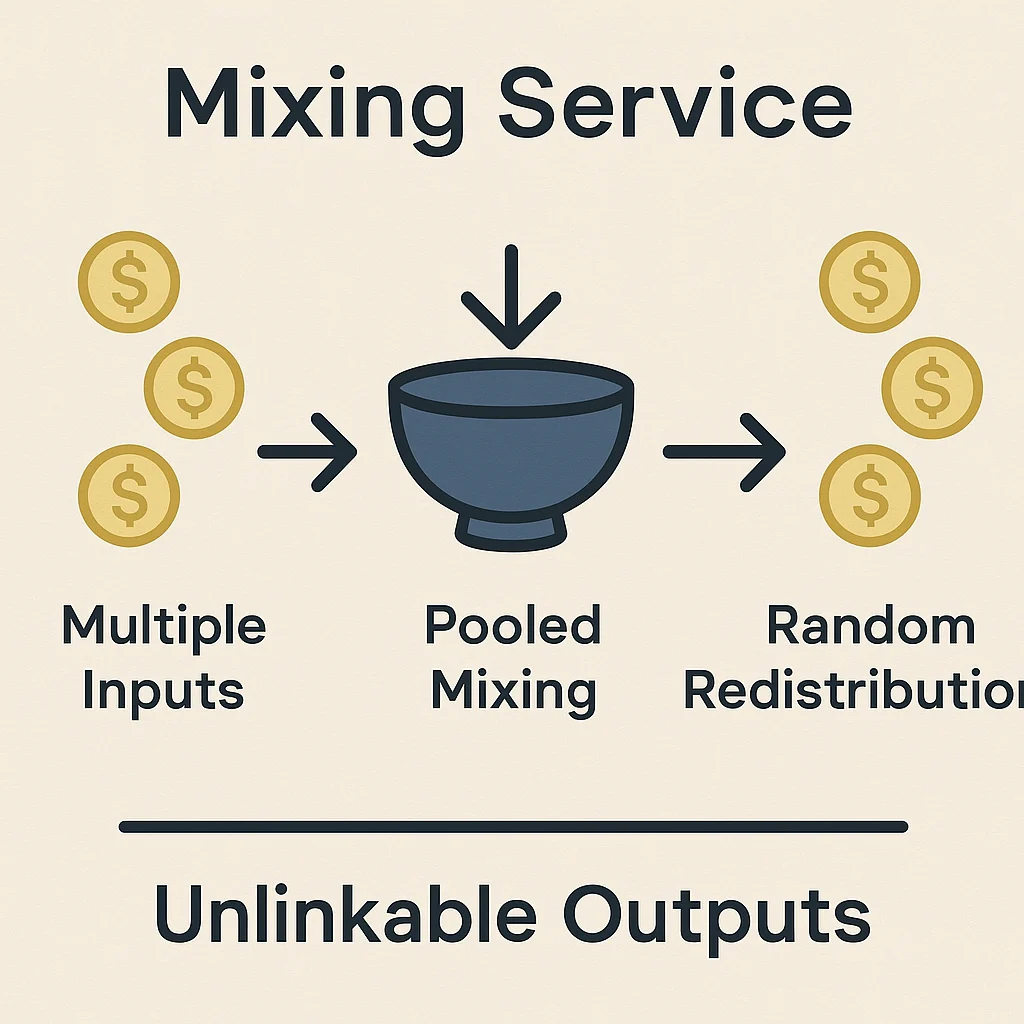
Infographic showing cryptocurrency mixing service with multiple inputs, pooled mixing, random redistribution, and unlinkable outputs

Real-World Examples

  • Tornado Cash – Ethereum mixing protocol using zero-knowledge proofs for enhanced privacy
  • CoinJoin – Bitcoin mixing technique that combines multiple users’ transactions
  • Wasabi Wallet – Bitcoin wallet with built-in CoinJoin mixing functionality

Why Beginners Should Care

Privacy protection helps prevent transaction surveillance and protects users from targeted attacks based on blockchain analysis of their spending patterns.

Regulatory scrutiny has led to sanctions against some mixing services and exchange policies against mixed funds, limiting practical utility.

Legitimate uses include protecting business privacy, preventing targeted theft, and maintaining financial confidentiality that most people expect from traditional banking.

Related Terms: Privacy Coin, CoinJoin, Tornado Cash, Transaction Privacy

Back to Crypto Glossary

Similar Posts

  • ENS

    ENS: Ethereum Name ServiceENS provides human-readable names for Ethereum addresses, making cryptocurrency transactions more user-friendly. It's like having domain names for websites instead of remembering IP addresses.Ethereum Name Service (ENS) is a decentralized naming system that maps human-readable names to Ethereum addresses, smart contracts, and other identifiers. ENS makes blockchain interactions more accessible by replacing complex…

  • |

    Bridgeless Interop

    Bridgeless Interop: Direct Cross-Chain Communication Bridgeless interoperability enables direct communication between blockchains without traditional bridge infrastructure. It’s like having chains that can talk directly to each other instead of using translators. Bridgeless interoperability refers to cross-chain communication methods that don’t rely on traditional bridge protocols, instead using native blockchain features or specialized infrastructure for direct…

  • Wallet Integration

    Wallet Integration: Seamless Application ConnectivityWallet integration enables applications to connect with cryptocurrency wallets for user authentication and transaction processing. It's like having a universal credit card reader that works with every type of payment card, making transactions smooth and effortless.Wallet integration refers to the technical implementation that allows decentralized applications to connect with various cryptocurrency…

  • Gaming Token

    Gaming Token: In-Game Digital CurrencyGaming tokens are cryptocurrencies designed specifically for use within video games and virtual worlds. They enable player ownership, trading, and monetization of in-game assets and achievements.Gaming tokens are cryptocurrencies created for specific video games or gaming ecosystems, enabling player ownership of in-game assets, rewards, and economic participation. These tokens bridge traditional gaming…

  • Paper Hands

    Paper Hands: Quick to Sell, Quick to Regret Paper hands describes investors who sell at the first sign of trouble or take profits too early. It’s crypto’s version of weak stomach syndrome. Paper hands refers to investors who sell their cryptocurrency holdings quickly due to fear, panic, or impatience rather than holding through volatility. The…

  • Token Supply

    Token Supply: Digital Asset QuantityToken supply refers to the total number of cryptocurrency tokens that exist, will exist, or are available for trading. It's a fundamental factor in determining token economics and value.Token supply encompasses the total quantity of cryptocurrency tokens in existence, including circulating supply available for trading and total supply that will ever…