
AML (Anti-Money Laundering)

AML (Anti-Money Laundering): Fighting Financial Crime

AML regulations force crypto businesses to monitor and report suspicious activities. It’s the government’s attempt to prevent crypto from becoming a money laundering paradise.

Anti-Money Laundering (AML) refers to laws, regulations, and procedures designed to prevent criminals from disguising illegally obtained funds as legitimate income. Crypto exchanges and businesses must implement AML compliance to operate legally.

How AML Works in Crypto

Transaction monitoring systems flag unusual patterns like rapid large deposits, immediate withdrawals, or transactions with known high-risk addresses.

Suspicious Activity Reports (SARs) must be filed with government agencies when exchanges detect potential money laundering. This creates permanent records tied to user identities.

Chain analysis tools track crypto movements across addresses, making it harder to obscure transaction histories compared to traditional cash-based money laundering.
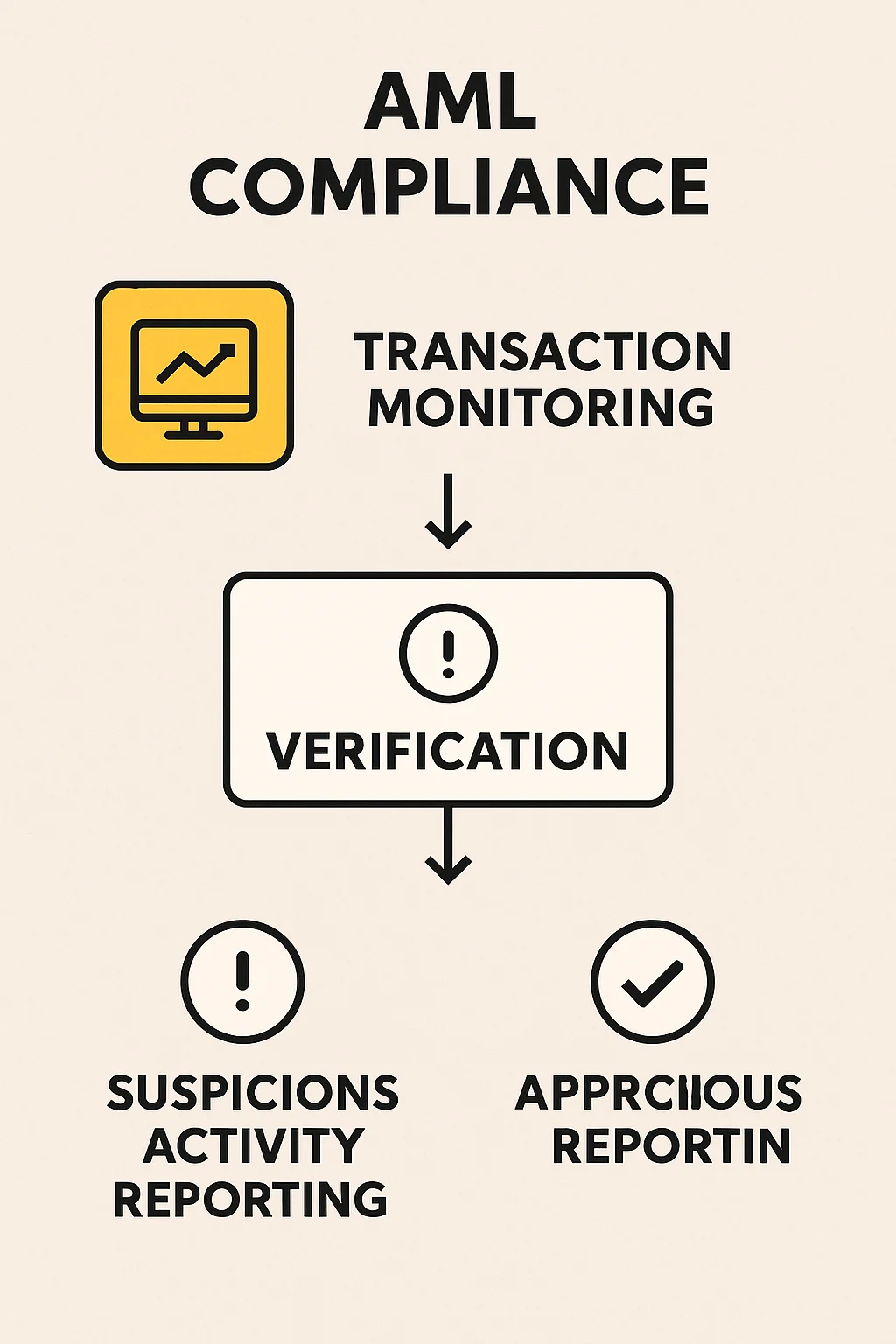
Flowchart showing AML compliance steps: transaction monitoring, risk verification, and suspicious activity reporting

Real-World Examples

  • Binance paid $4.3 billion in fines for AML violations and inadequate compliance
  • Tornado Cash sanctions highlighted tensions between privacy tools and AML enforcement
  • Exchange delistings of privacy coins like Monero due to AML compliance challenges

Why Beginners Should Care

AML compliance affects your crypto experience through identity verification requirements, transaction limits, and account monitoring that can trigger investigations.

Privacy expectations should be adjusted – regulated exchanges share transaction data with governments upon request. True privacy requires decentralized tools with their own risks.

Choose exchanges with strong compliance records like Kraken that balance regulatory requirements with user protection and transparent policies.

Related Terms: KYC, Exchange, Privacy Coin, Regulation

Back to Crypto Glossary

Similar Posts

  • Altcoin

    Altcoin: Every Cryptocurrency That Isn’t Bitcoin “Altcoin” literally means “alternative to Bitcoin.” Some are innovative improvements, others are marketing experiments, and many are outright scams. An altcoin is any cryptocurrency other than Bitcoin. The term covers everything from Ethereum’s smart contract platform to obscure meme coins with dog themes. How Altcoins Work Each altcoin attempts…

  • REKT

    REKT: When Trades Go Wrong REKT is what happens when your confident trade turns into a financial disaster. It’s crypto slang for getting completely wrecked by bad investment decisions. REKT is slang for “wrecked” – suffering severe financial losses from cryptocurrency trading or investing. It describes the aftermath of leveraged positions gone wrong, rug pulls,…

  • Slashing Conditions

    Slashing Conditions: Validator Penalty Rules Slashing conditions define specific behaviors that result in validators losing staked funds as punishment for malicious or negligent actions. They’re the rules of engagement for network security. Slashing conditions are predetermined criteria that trigger automatic penalties for validators who violate network consensus rules or behave maliciously. These penalties involve destroying…

  • Mining

    Mining: How New Bitcoins Are Created Bitcoin mining is the process that creates new bitcoins and secures the network. It’s like a global lottery where miners compete to solve mathematical puzzles for rewards. Mining is the computational process of validating transactions and adding new blocks to a blockchain while earning newly created cryptocurrency as rewards….

  • Yield Optimization

    Yield Optimization: Maximizing Investment ReturnsYield optimization involves strategies and protocols that automatically maximize returns on cryptocurrency investments through dynamic allocation and compounding. It's like having a financial advisor that works 24/7 to find the best returns.Yield optimization refers to automated strategies that maximize returns on cryptocurrency investments by continuously monitoring opportunities and reallocating funds to…

  • Spam

    Spam: Unwanted Blockchain TransactionsSpam in cryptocurrency refers to unwanted or low-value transactions that clog networks and waste resources. It's like junk mail but for blockchain networks.Spam consists of unwanted transactions, messages, or data that consume network resources without providing legitimate value. These activities can degrade network performance and increase costs for legitimate users.How Crypto Spam WorksNetwork…