
EVM (Ethereum Virtual Machine)

EVM (Ethereum Virtual Machine): The World Computer

The EVM is the runtime environment where Ethereum smart contracts execute. It’s like having one giant computer that runs the same programs across thousands of machines worldwide.

The Ethereum Virtual Machine (EVM) is a decentralized computing environment that executes smart contracts on the Ethereum blockchain. Every Ethereum node runs an identical copy of the EVM, ensuring smart contracts produce the same results regardless of where they execute.

How the EVM Works

Bytecode execution converts smart contract code into EVM instructions that every node can understand and execute identically. This ensures deterministic results across the entire network.

Gas metering prevents infinite loops and resource abuse by charging computational costs for every operation. Complex operations cost more gas than simple ones.

State management tracks account balances, smart contract storage, and all other network data in a global state that updates with each block.
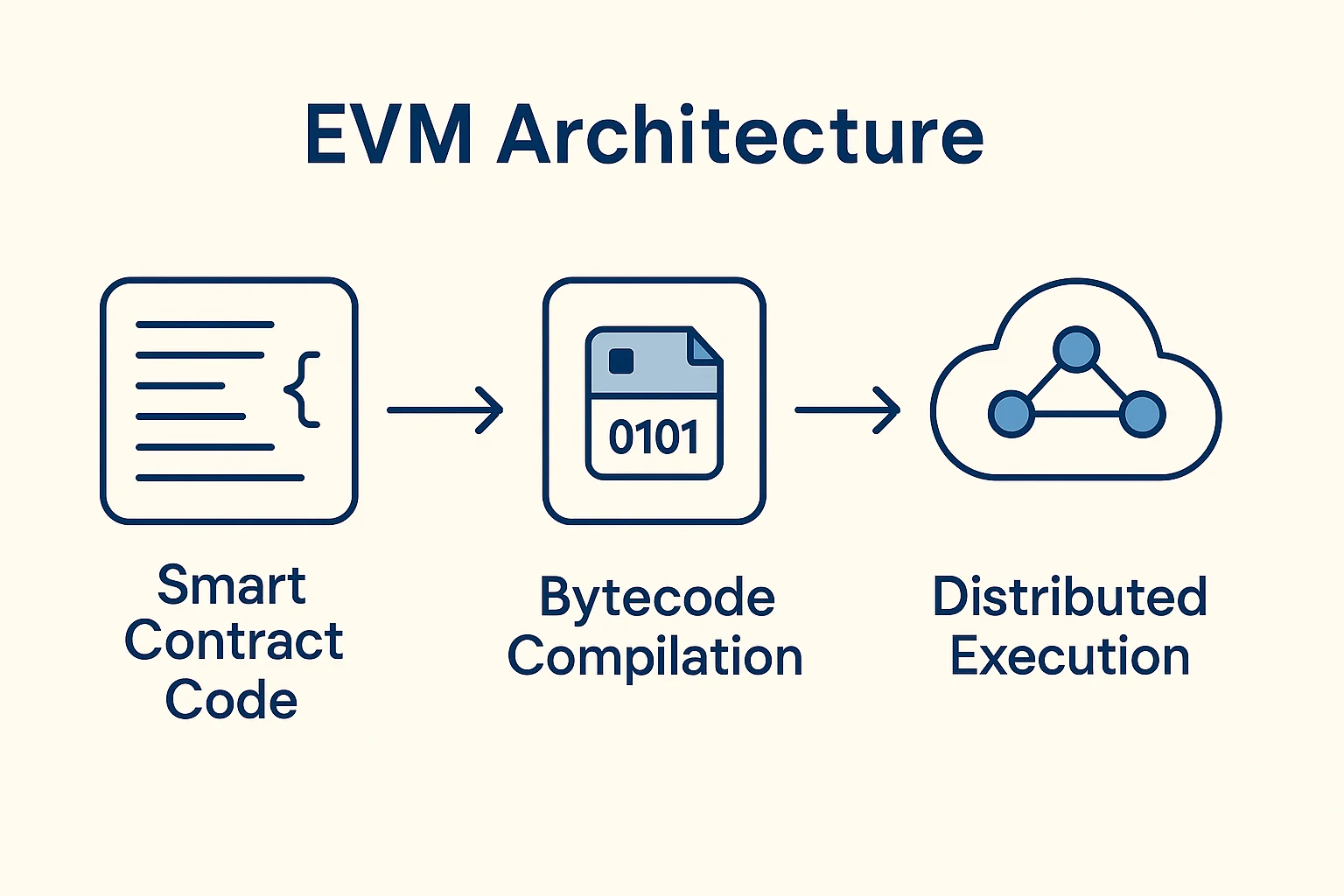
Infographic showing Ethereum Virtual Machine architecture with smart contract code, bytecode compilation, and distributed execution across nodes

Real-World Examples

  • All Ethereum dApps run on the EVM, from Uniswap to Compound to OpenSea
  • EVM-compatible chains like Polygon and Avalanche can run Ethereum smart contracts without modification
  • Layer 2 solutions often maintain EVM compatibility for seamless developer migration

Why Beginners Should Care

Developer network effects make EVM the most popular smart contract platform, with thousands of developers building compatible applications and tools.

Cross-chain compatibility allows moving dApps between EVM-compatible chains without rewriting code, providing flexibility and scaling options.

Learning investment in EVM-based platforms transfers to multiple blockchains, making it the most versatile smart contract skillset for developers.

Related Terms: Smart Contract, Gas Fees, Ethereum, dApp

Back to Crypto Glossary

Similar Posts

  • Leverage

    Leverage: Borrowing Money to Amplify TradesLeverage lets you control larger positions than your actual capital by borrowing funds from exchanges or platforms. It's like using a lever to lift heavy objects – small movements create big effects.Leverage in cryptocurrency trading allows borrowing funds to increase position sizes beyond available capital, amplifying both potential profits and…

  • Gas Refund Token

    Gas Refund Token: Optimizing Transaction Costs Gas refund tokens exploit Ethereum’s gas refund mechanism to reduce transaction costs by clearing unused storage. They’re like getting paid to clean up the blockchain. A gas refund token uses Ethereum’s gas refund mechanism to partially offset transaction costs by clearing unused contract storage during token transfers. The protocol…

  • Tornado Cash

    Tornado Cash: The Controversial Privacy Protocol Tornado Cash was Ethereum’s most popular mixing service until U.S. sanctions shut it down. It used zero-knowledge proofs to enable private transactions on a transparent blockchain. Tornado Cash was a decentralized mixing protocol on Ethereum that used zero-knowledge proofs to enable private transactions by breaking the link between sender…

  • Minting

    Minting: Creating New Tokens or NFTs Minting is the moment digital assets come into existence. Whether it’s new cryptocurrency tokens or unique NFTs, minting transforms code into valuable digital property. Minting is the process of creating new tokens or NFTs by executing a smart contract function that adds them to a blockchain. It’s like printing…

  • Token Incentives

    Token Incentives: Rewarding Desired BehaviorToken incentives use cryptocurrency rewards to encourage specific behaviors or participation in networks and protocols. They're like loyalty points that actually have real value and utility.Token incentives refer to mechanisms that distribute cryptocurrency tokens to users who perform desired actions or contribute value to networks and protocols. These align user behavior with…

  • Address Clustering

    Address Clustering: Connecting Wallet IdentitiesAddress clustering analyzes blockchain transactions to identify which addresses likely belong to the same user or entity. It's like detective work for digital money trails.Address clustering is a blockchain analysis technique that groups cryptocurrency addresses believed to belong to the same user or entity based on transaction patterns and shared inputs. This…