
Flashbots

Flashbots: MEV Infrastructure

Flashbots is a research and development organization that builds infrastructure to mitigate the negative externalities of MEV. They’re trying to make the blockchain economy more fair and transparent.

Flashbots develops tools and infrastructure to democratize MEV extraction and reduce its harmful effects on regular users. Their products include private mempools, MEV-protected transaction ordering, and research into fair value extraction mechanisms.

How Flashbots Works

Private mempools allow users to submit transactions without revealing them publicly until inclusion, preventing front-running and sandwich attacks.

MEV-Boost enables Ethereum validators to maximize their revenue from block production while maintaining network decentralization and censorship resistance.

Research initiatives study MEV’s impact on network security, user experience, and economic fairness to guide development of better solutions.
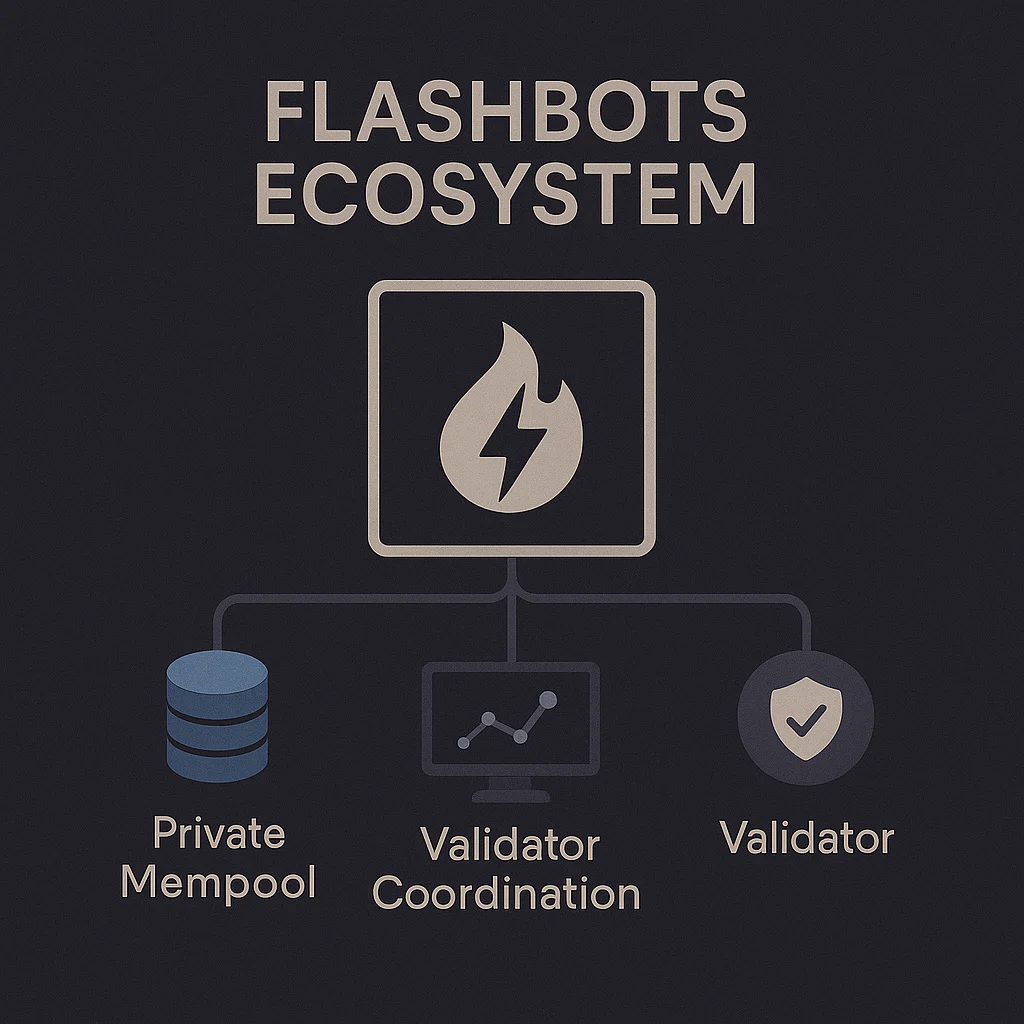
Flashbots ecosystem diagram showing private mempool, validator coordination, MEV protection, and research components.

Real-World Examples

  • Ethereum block building uses Flashbots infrastructure for over 90% of blocks since the Merge
  • MEV protection services route transactions through Flashbots to reduce user exploitation
  • Academic research on MEV economics and mitigation strategies guides protocol development

Why Beginners Should Care

User protection from Flashbots infrastructure reduces the hidden tax of MEV extraction that affects almost every DeFi transaction.

Democratization efforts aim to make MEV benefits available to regular users rather than only sophisticated bots and institutional actors.

Centralization concerns arise as Flashbots infrastructure becomes critical to Ethereum’s operation, raising questions about single points of failure.

Related Terms: MEV, Private Mempool, Block Building, Front-Running

Back to Crypto Glossary

Similar Posts

  • EVM Compatibility

    EVM Compatibility: Ethereum Code EverywhereEVM compatibility allows blockchain networks to run Ethereum applications without modification. It's like having different computers that can all run the same software.EVM compatibility refers to blockchain networks that can execute Ethereum smart contracts and support Ethereum-based applications without requiring code changes. This enables easy migration and cross-deployment of Ethereum applications.How EVM…

  • Bagholder

    Bagholder: Stuck with Worthless Tokens A bagholder is someone stuck holding cryptocurrency that has lost most of its value with little hope of recovery. It’s crypto’s version of being left holding the bag. A bagholder is an investor who continues holding a cryptocurrency that has significantly decreased in value, often because they’re unable or unwilling…

  • Blockchain

    Blockchain: The Unchangeable Digital Ledger Forget the hype – blockchain is simply a better way to keep records. It’s like a ledger book that everyone can see, but no one can cheat. Blockchain is a chain of digital records (blocks) that are linked together and secured using cryptography. Once information goes into a block, changing…

  • Token Allocation

    Token Allocation: Distributing Digital AssetsToken allocation determines how cryptocurrency tokens are distributed among different stakeholders like teams, investors, and communities. It's the blueprint for who gets what in crypto projects.Token allocation refers to the distribution plan for cryptocurrency tokens among various stakeholder groups including development teams, early investors, community members, and ecosystem development funds. This distribution…

  • Supply Shock

    Supply Shock: Sudden Token Availability ChangesA supply shock occurs when cryptocurrency token supply changes dramatically and unexpectedly, often causing significant price volatility. It's like suddenly discovering a new oil field or losing access to existing reserves.A supply shock refers to a sudden, significant change in cryptocurrency token supply that disrupts market equilibrium and typically causes…

  • DeFi Security

    DeFi Security: Protecting Decentralized FinanceDeFi security involves protecting decentralized finance protocols and users from smart contract vulnerabilities, economic attacks, and operational risks. It's cybersecurity for programmable money.DeFi security encompasses the practices, technologies, and protocols used to protect decentralized finance applications from hacks, exploits, and other security threats. This includes smart contract auditing, economic security, and user…