
Airdrop

Airdrop: Free Tokens From the Sky

Airdrops distribute free tokens to wallet addresses, usually to reward early users or generate buzz for new projects. Some are worth pennies, others change lives.

An airdrop is the distribution of free cryptocurrency tokens to wallet addresses, typically as a marketing strategy, reward for early adoption, or method of decentralizing token ownership. Recipients usually don’t need to pay anything to receive airdropped tokens.

How Airdrops Work

Snapshot-based airdrops take blockchain snapshots at specific times, then distribute tokens to addresses holding certain cryptocurrencies or using specific protocols during the snapshot.

Task-based airdrops require users to complete actions like following social media accounts, joining communities, or testing protocols before receiving tokens.

Retroactive airdrops reward past users of protocols that later launch governance tokens. These are often the most valuable since they reward genuine usage over speculation.
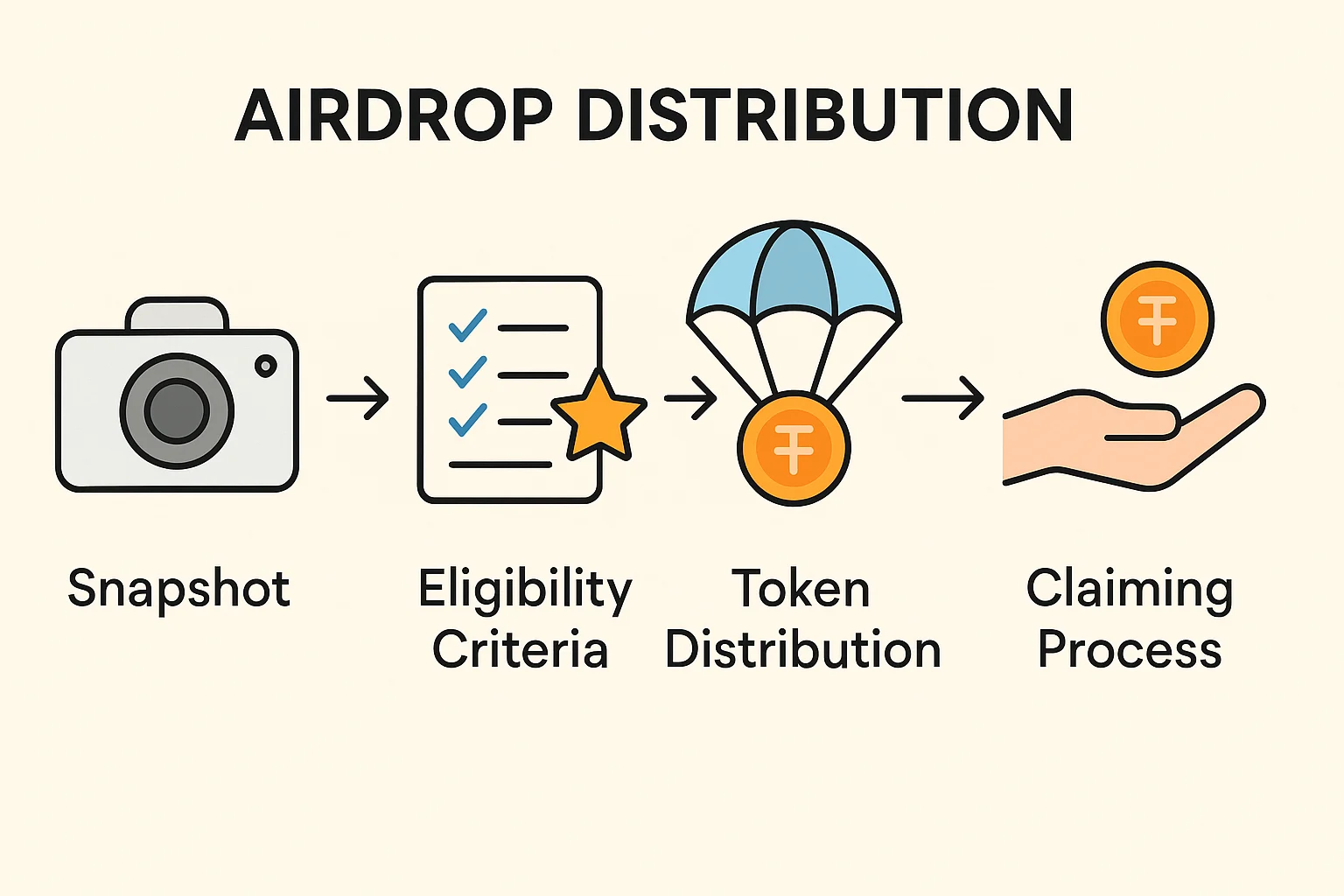
Infographic showing the airdrop distribution process from blockchain snapshot to eligibility verification, token delivery, and claim steps

Real-World Examples

  • Uniswap (UNI) airdropped 400 tokens worth $1,200+ to early platform users
  • Ethereum Name Service (ENS) distributed tokens based on domain ownership duration
  • dYdX rewarded trading volume with governance tokens worth thousands for active users

Why Beginners Should Care

Airdrop farming involves using multiple protocols hoping for future token distributions. This can be profitable but requires gas fees and time investment with no guarantees.

Scam airdrops are common – malicious tokens that steal funds when you try to sell them or interact with fake contracts. Never connect wallets to unknown airdrop claims.

Tax implications exist in many jurisdictions where airdropped tokens count as taxable income at fair market value when received.

Related Terms: Token Distribution, Governance Token, DeFi, Wallet

Back to Crypto Glossary

Similar Posts

  • Whale

    Whale: The Big Players Who Move Markets In crypto, whales are individuals or entities holding massive amounts of cryptocurrency. When whales move, markets tremble. A whale is someone who holds enough cryptocurrency to significantly influence market prices through their trading decisions. For Bitcoin, this typically means holding 1,000+ BTC (worth $30+ million at current prices)….

  • Phishing Attack

    Phishing Attack: How Scammers Steal Your Crypto Phishing attacks are the #1 way people lose crypto. Scammers create fake websites that look identical to real ones, then steal your login credentials and private keys. A phishing attack is a fraudulent attempt to obtain sensitive information by impersonating a trustworthy entity through fake websites, emails, or…

  • State Channel

    State Channel: Off-Chain Interaction Highways State channels enable instant, low-cost transactions between parties by moving interactions off-chain while maintaining blockchain security. It’s like having a private highway between two cities. A state channel is a two-way communication channel between blockchain users that enables off-chain transactions with on-chain security guarantees. Participants can transact instantly and cheaply,…

  • LayerZero

    LayerZero: Omnichain Interoperability Protocol LayerZero is an interoperability protocol that enables applications to send messages and transfer assets across different blockchains. It’s like having a universal translator for blockchain networks. LayerZero is a cross-chain communication protocol that enables decentralized applications to operate across multiple blockchains seamlessly. It provides infrastructure for omnichain applications that can access…

  • Private Key

    Private Key: Your Crypto’s Secret Password Your private key is the most important thing you’ll ever own in crypto. Lose it, and your money’s gone forever. No customer service number to call. A private key is a secret code that proves you own your cryptocurrency and allows you to spend it. It’s like the combination…

  • Batch Verification

    Batch Verification: Efficient Bulk ProcessingBatch verification processes multiple transactions or proofs together to improve efficiency and reduce computational costs. It's like grading a stack of tests all at once instead of one by one.Batch verification refers to techniques that verify multiple cryptographic proofs, transactions, or operations simultaneously rather than processing each individually. This approach significantly improves…