
Modular Execution Layer

Modular Execution Layer: Specialized Transaction Processing

Modular execution layers handle transaction processing separately from consensus and data availability. It’s like having specialized assembly lines instead of one worker doing everything.

A modular execution layer is a specialized blockchain component that focuses solely on processing transactions and executing smart contracts while relying on other layers for consensus and data availability. This separation enables optimization for specific execution requirements.

How Modular Execution Works

Execution specialization optimizes specifically for transaction processing speed, smart contract efficiency, or particular application requirements.

Layer separation enables using different consensus mechanisms, data availability solutions, or settlement layers while maintaining execution compatibility.

Scalability improvements through parallel execution environments that can process more transactions than monolithic blockchain architectures.
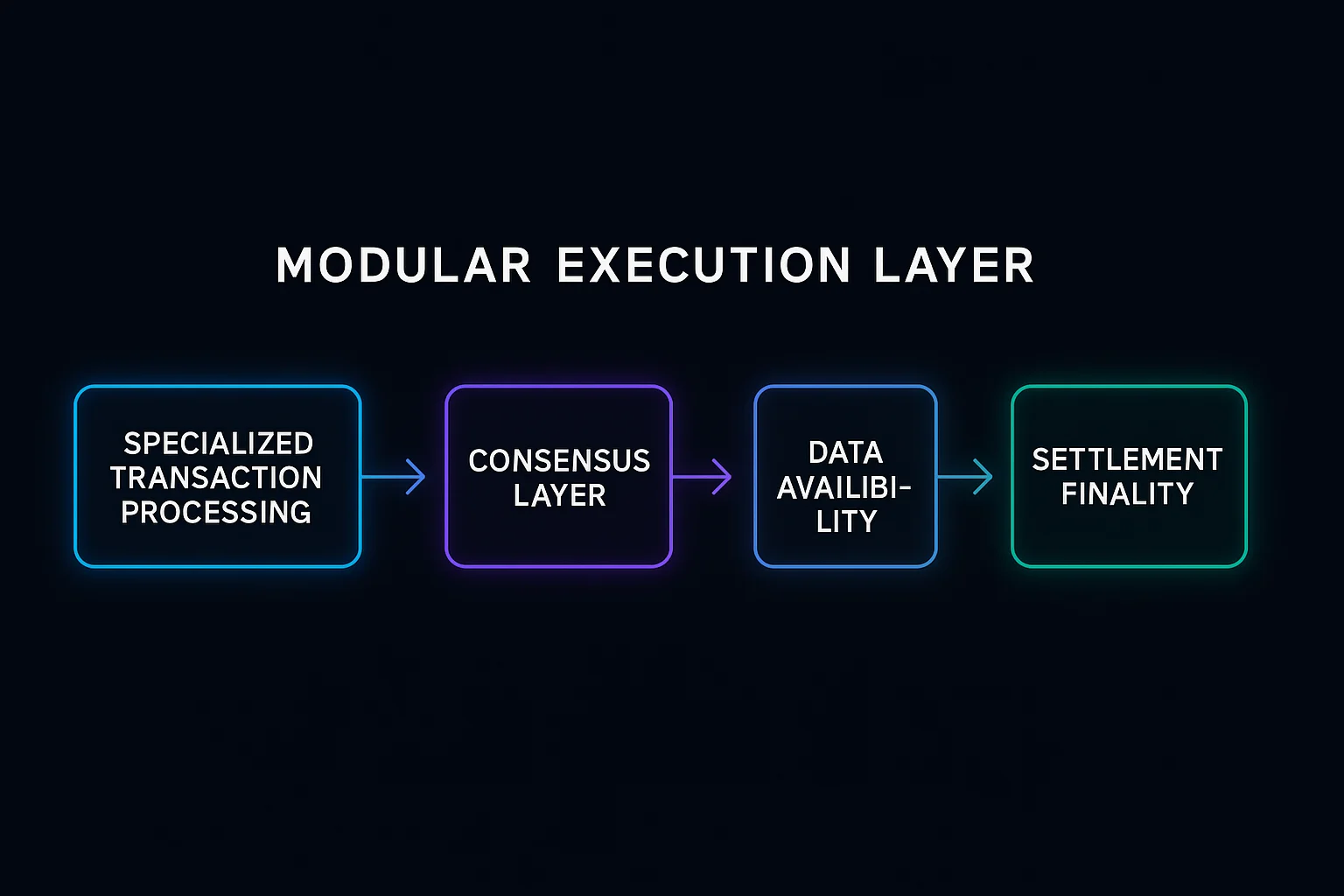
Modular execution layer showing specialized transaction processing, consensus, data availability, and settlement finality

Real-World Examples

  • Fuel Network provides optimized execution for high-throughput applications
  • Eclipse offers Solana execution with Ethereum settlement and Celestia data availability
  • Movement Labs builds Move-based execution layers for various blockchain stacks

Why Beginners Should Care

Performance optimization through specialization can dramatically improve transaction speed and reduce costs compared to general-purpose chains.

Flexibility benefits as execution layers can be swapped or upgraded without changing other parts of the blockchain stack.

Complexity trade-offs as modular architectures require understanding interactions between multiple specialized components.

Related Terms: Modular Blockchain, Execution Environment, Layer Separation

Back to Crypto Glossary

Similar Posts

  • Sandwich Attack

    Sandwich Attack: Extracting Value from Your Trades Sandwich attacks place trades before and after your transaction to manipulate prices and extract profit from your slippage. It’s like cutting in line twice – once in front of you and once behind you. A sandwich attack involves placing a buy order immediately before a victim’s trade and…

  • Due Diligence

    Due Diligence: Research Before InvestmentDue diligence involves thoroughly researching and evaluating cryptocurrency projects before investing. It's like test driving a car and checking its history before buying.Due diligence refers to the comprehensive investigation and analysis of cryptocurrency projects, including technology, team, tokenomics, and market factors before making investment decisions. Proper due diligence helps identify opportunities and…

  • Multisig Recovery

    Multisig Recovery: Getting Back Lost Access Multisig recovery helps regain access to multi-signature wallets when some keys are lost or compromised. It’s like having spare keys for your house, but with cryptographic mathematics. Multisig recovery refers to mechanisms that restore access to multi-signature wallets when the required number of signatures is no longer available due…

  • Hardware Wallet

    Hardware Wallet: Your Crypto’s Personal Vault If you’re serious about crypto, you need a hardware wallet. It’s the difference between keeping cash in your wallet versus storing it in a bank vault. A hardware wallet is a physical device that stores your cryptocurrency private keys offline, away from internet hackers. Think of it as a…

  • Optimistic Rollup

    Optimistic Rollup: Trust but Verify Scaling Optimistic rollups assume transactions are valid by default but allow challenges during dispute periods. It’s like innocent until proven guilty for blockchain transactions. An optimistic rollup is a Layer 2 scaling solution that assumes transactions are valid by default and only verifies them if someone submits a fraud proof…

  • Over-Collateralization

    Over-Collateralization: Excess Security DepositsOver-collateralization requires borrowers to deposit assets worth more than their loan amount as security against default. It's like putting down a $15,000 deposit to borrow $10,000, ensuring the lender is protected even if asset values decline.Over-collateralization refers to requiring collateral deposits that exceed the value of loans or borrowed assets, providing additional…