
Multisig Recovery

Multisig Recovery: Getting Back Lost Access

Multisig recovery helps regain access to multi-signature wallets when some keys are lost or compromised. It’s like having spare keys for your house, but with cryptographic mathematics.

Multisig recovery refers to mechanisms that restore access to multi-signature wallets when the required number of signatures is no longer available due to lost keys, compromised devices, or unavailable signers. Recovery methods must balance security with accessibility.

How Multisig Recovery Works

Threshold adjustment may allow reducing signature requirements during recovery procedures, typically requiring unanimous consent from remaining key holders.

Timelock recovery enables predetermined recovery procedures that activate after extended periods of inactivity, allowing backup methods to restore access.

Social recovery involves trusted contacts who can collectively restore access through predetermined procedures when primary key holders are unavailable.
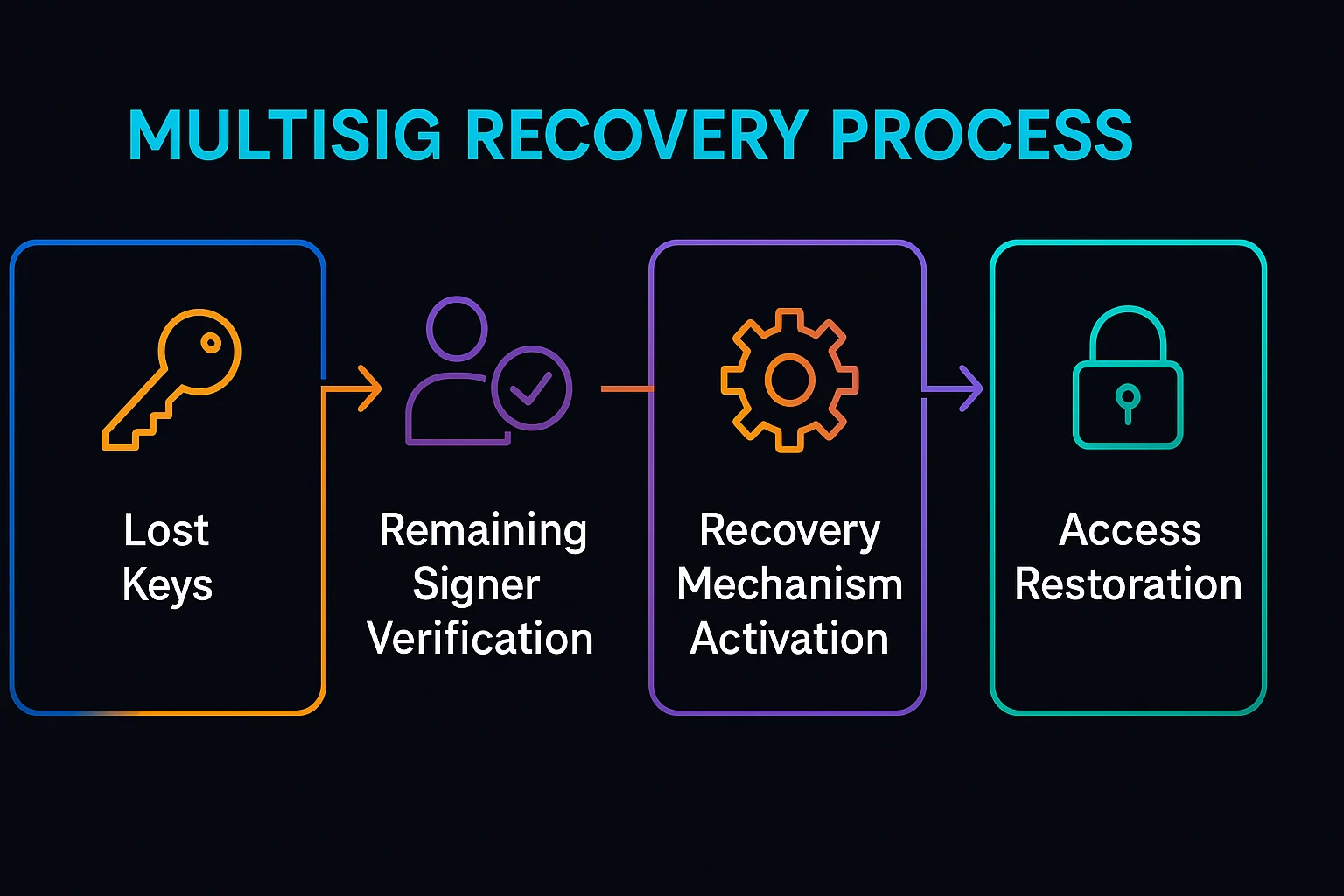
Multisig recovery process showing lost keys, remaining signer verification, recovery mechanism activation, and access restoration

Real-World Examples

  • Gnosis Safe recovery modules enable timelock-based recovery procedures for multi-signature wallets
  • Argent wallets use social recovery with trusted guardians to restore access
  • Corporate treasury recovery procedures for when key employees leave or become unavailable

Why Beginners Should Care

Access preservation prevents permanent loss of funds when multisig signers become unavailable due to device loss, death, or other circumstances.

Security trade-offs as recovery mechanisms can potentially be exploited if not designed carefully, creating new attack vectors.

Planning importance requires establishing recovery procedures before they’re needed, when all parties are available to configure them properly.

Related Terms: Multi-Signature, Social Recovery, Timelock, Wallet Security

Back to Crypto Glossary

Similar Posts

  • Transparency

    Transparency: Open Information AccessTransparency in cryptocurrency refers to the open, verifiable nature of blockchain data that allows anyone to inspect transactions and network operations. It's like having buildings made entirely of glass where you can see exactly what's happening inside every room.Transparency describes the property of blockchain systems that makes transaction data, network operations, and…

  • Omnichain

    Omnichain: Universal Blockchain ConnectivityOmnichain refers to applications and protocols that operate seamlessly across multiple blockchain networks as if they were a single unified system. It's like having apps that work on every phone brand without modification.Omnichain describes systems that can operate across multiple blockchain networks simultaneously, providing unified functionality and user experiences regardless of which…

  • Base Layer

    Base Layer: Blockchain FoundationThe base layer is the underlying blockchain protocol that provides fundamental functionality like consensus, security, and transaction processing. It's the foundation that everything else builds upon.Base layer refers to the core blockchain protocol that handles basic functions like transaction validation, consensus, and security without relying on external systems. This is Layer 1 infrastructure…

  • Democratic Governance

    Democratic Governance: Community-Controlled Decision MakingDemocratic governance enables community members to participate in project decisions through voting and proposal systems. It's like having a democracy where token holders are the citizens.Democratic governance refers to decision-making systems where community members have voting rights and influence over project direction, protocol changes, and resource allocation. Token holdings typically determine voting…

  • Consensus Mechanism

    Consensus Mechanism: How Networks Agree Consensus mechanisms solve the fundamental problem of getting thousands of independent computers to agree on a single version of truth without central authority. A consensus mechanism is the process by which a distributed network of nodes agrees on the validity of transactions and the current state of the blockchain. It…

  • Intent-Centric Protocols

    Intent-Centric Protocols: What You Want, Not How Intent-centric protocols let users specify desired outcomes while the system figures out how to achieve them. Instead of manually executing swap steps, you just say “I want USDC” and the protocol handles everything. Intent-centric protocols allow users to express desired end states rather than specific transaction sequences. Users…