
NFT Lending

NFT Lending: Borrowing Against Digital Art

NFT lending allows using non-fungible tokens as collateral for cryptocurrency loans. It’s like pawning your rare baseball cards, except the cards live in digital wallets.

NFT lending enables borrowers to use their non-fungible tokens as collateral to obtain cryptocurrency loans while retaining the potential upside of their digital assets. Lenders provide liquidity in exchange for yield and collateral protection.

How NFT Lending Works

Collateral evaluation uses floor prices, rarity traits, and collection value to determine loan amounts, typically offering 30-60% of estimated NFT value.

Loan mechanics involve depositing NFTs into smart contracts that release borrowed funds while holding collateral until repayment or liquidation.

Liquidation protection through automatic auctions or buy-back mechanisms when borrowers default or NFT values fall below required collateral ratios.
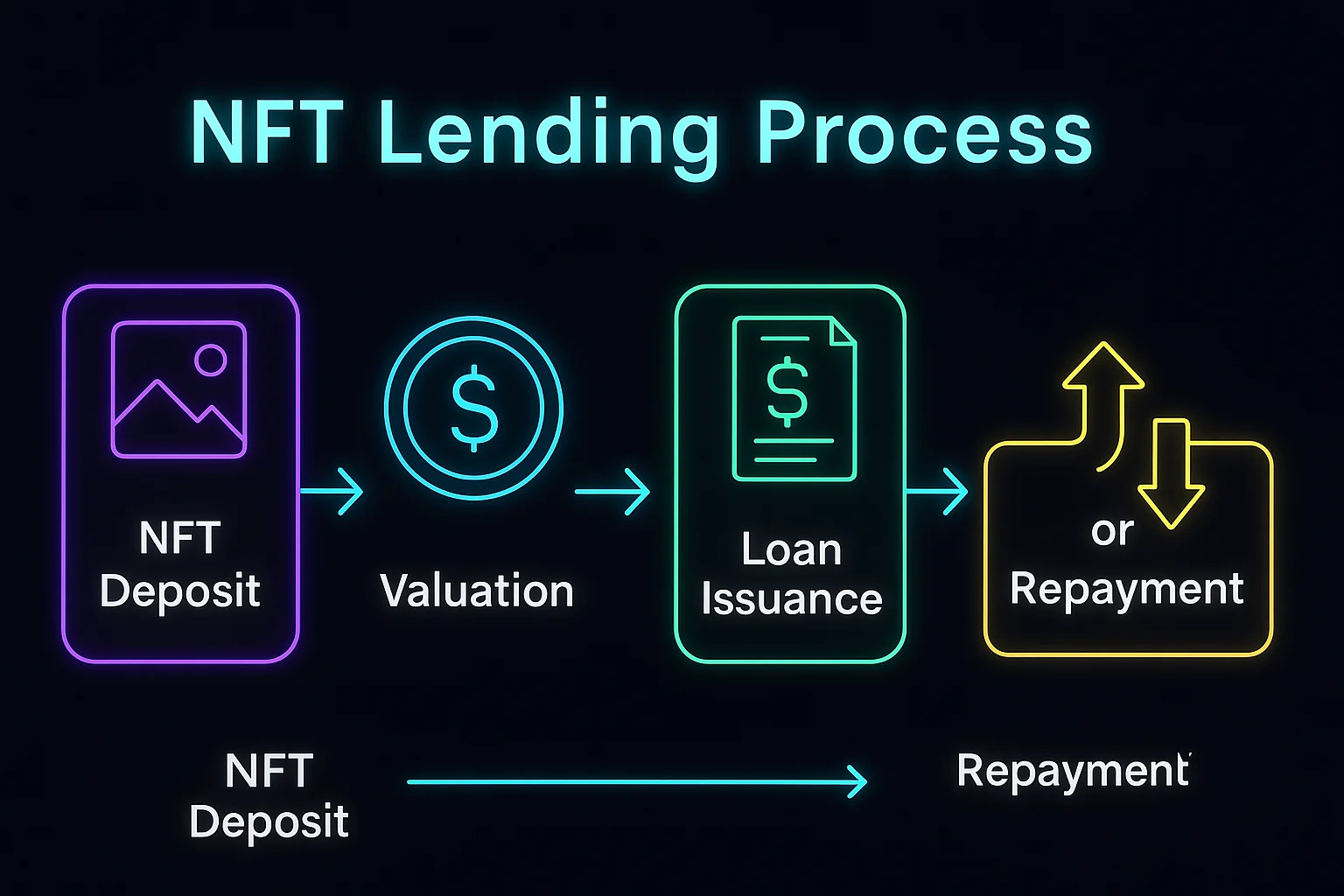
NFT lending process showing NFT deposit, valuation, loan issuance, and either repayment or liquidation pathway

Real-World Examples

  • Arcade provides institutional-grade NFT lending with professional valuation services
  • BendDAO offers peer-to-pool NFT lending with instant liquidity for borrowers
  • NFTfi enables peer-to-peer lending with customized terms between individual users

Why Beginners Should Care

Capital efficiency allows NFT holders to access liquidity without selling valuable digital assets, maintaining exposure to potential appreciation.

Valuation challenges make NFT lending riskier than traditional crypto lending due to illiquid markets and subjective valuations.

Market maturity remains early with limited lending options and high interest rates compared to traditional crypto lending protocols.

Related Terms: NFT, Collateral, Floor Price, DeFi Lending

Back to Crypto Glossary

Similar Posts

  • MEV Protection

    MEV Protection: Defending Against Value ExtractionMEV protection shields users from having value extracted from their transactions by sophisticated bots and arbitrageurs. It's like having bodyguards that protect you from pickpockets in a crowded market.MEV protection refers to techniques and services that prevent or minimize Maximal Extractable Value extraction from user transactions. These solutions help users get…

  • Smart Contract Risk

    Smart Contract Risk: Code-Based VulnerabilitiesSmart contract risk encompasses potential losses from bugs, exploits, or unexpected behavior in automated blockchain programs. It's like the risk that the software controlling your digital money might malfunction or be hacked.Smart contract risk refers to potential vulnerabilities, bugs, exploits, or failures in smart contract code that could result in loss…

  • Compliance

    Compliance: Following Regulatory RequirementsCompliance involves adhering to laws, regulations, and industry standards that govern cryptocurrency activities. It's like following traffic laws, but for digital money and blockchain businesses.Compliance refers to conforming with applicable laws, regulations, licensing requirements, and industry standards for cryptocurrency operations. This includes financial regulations, tax obligations, and consumer protection measures.How Crypto Compliance WorksRegulatory…

  • Sharding

    Sharding: Splitting Networks for Speed Sharding divides blockchain networks into smaller pieces that process transactions in parallel. It’s like adding more checkout lanes at the grocery store – same capacity, faster service. Sharding is a scaling technique that splits a blockchain network into smaller, parallel chains called shards that process transactions independently. Each shard handles…

  • Challenge Period

    Challenge Period: Dispute Resolution WindowA challenge period is a time window during which participants can dispute or challenge proposed changes before they become final. It's like a cooling-off period for important decisions.A challenge period is a predetermined time frame that allows network participants to dispute transactions, withdrawals, or governance proposals before they become irreversible. This mechanism…

  • Transaction Verification

    Transaction Verification: Confirming Payment ValidityTransaction verification is the process of confirming that cryptocurrency transactions are valid before adding them to the blockchain. It's like having bank tellers check that signatures match and accounts have sufficient funds before processing checks.Transaction verification refers to the systematic process where network participants validate cryptocurrency transactions by checking digital signatures,…