
zkSync

zkSync: Ethereum’s Zero-Knowledge Scaling

zkSync is a Layer 2 scaling solution that uses zero-knowledge proofs to bundle transactions while maintaining Ethereum’s security. It’s like having an express lane that’s mathematically guaranteed to follow traffic laws.

zkSync is a zero-knowledge rollup that scales Ethereum by processing transactions off-chain and submitting cryptographic proofs of validity to the main network. It enables faster, cheaper transactions while inheriting Ethereum’s security guarantees.

How zkSync Works

Zero-knowledge proofs validate transaction bundles without revealing individual transaction details, enabling privacy and scalability simultaneously.

Batch processing combines hundreds of transactions into single proofs that get submitted to Ethereum, dramatically reducing per-transaction costs.

EVM compatibility (in zkSync Era) allows existing Ethereum applications to deploy without modification while benefiting from improved performance.
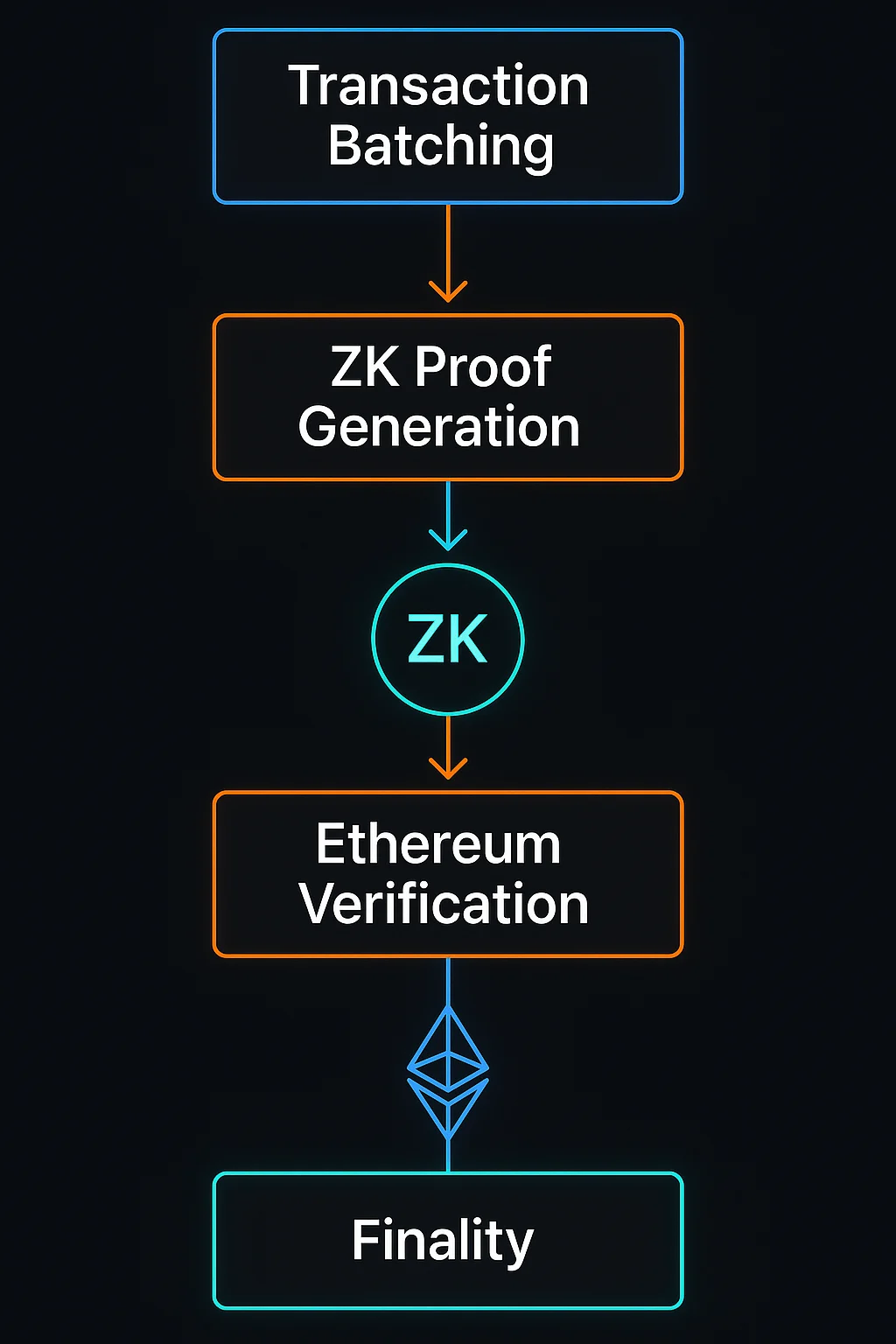
zkSync architecture showing transaction batching, ZK proof generation, Ethereum verification, and finality

Real-World Examples

  • zkSync Era supports full EVM compatibility for seamless dApp migration from Ethereum
  • Major DeFi protocols have deployed on zkSync for lower fees and faster confirmation
  • NFT marketplaces use zkSync to reduce minting and trading costs significantly

Why Beginners Should Care

Significant cost savings compared to Ethereum mainnet while maintaining the same security guarantees through mathematical proofs.

Faster finality for most transactions since ZK proofs provide immediate validity confirmation rather than requiring fraud proof waiting periods.

Technical complexity in ZK proof generation creates different trade-offs compared to optimistic rollups, affecting developer experience and computational requirements.

Related Terms: Zero-Knowledge Proof, Layer 2, Rollups, EVM Compatibility

Back to Crypto Glossary

Similar Posts

  • Reputation System

    Reputation System: Building Digital TrustReputation systems track and score user behavior to enable trust and coordination in decentralized environments. They're like credit scores but for overall trustworthiness and competence.A reputation system records and evaluates user actions, contributions, and behavior to create trustworthiness scores that enable cooperation in decentralized systems. These systems help identify reliable participants without…

  • Slippage

    Slippage: The Cost of Market Impact Slippage is the difference between expected and actual trade prices. It’s the tax you pay for moving markets when your trade is large relative to available liquidity. Slippage occurs when the execution price of a trade differs from the expected price due to market movement or insufficient liquidity. Large…

  • Team Incentives

    Team Incentives: Aligning Development with SuccessTeam incentives structure compensation and motivation for cryptocurrency project developers and founders. They align team interests with long-term project success rather than short-term gains.Team incentives refer to compensation structures that motivate project teams to work toward long-term success rather than quick profits. These typically include token allocations with vesting schedules and…

  • Fee Sharing

    Fee Sharing: Distributing Protocol RevenueFee sharing distributes a portion of protocol revenues to token holders, stakers, or other participants. It's like getting dividends from a company you own shares in.Fee sharing refers to mechanisms that distribute portions of protocol fees, transaction costs, or other revenues to token holders or network participants. This creates direct financial incentives…

  • Mooning

    Mooning: When Prices Go Parabolic Mooning describes cryptocurrency prices shooting up dramatically and rapidly. It’s what every crypto holder dreams about and what usually signals dangerous market euphoria. Mooning refers to cryptocurrency prices rising dramatically and rapidly, often in parabolic fashion. The term suggests prices going “to the moon” – reaching astronomical levels that seemed…

  • Play-to-Earn (P2E)

    Play-to-Earn (P2E): Gaming Meets Income Play-to-earn games let players earn cryptocurrency and NFTs through gameplay. It’s turned gaming from entertainment expense into potential income source for millions worldwide. Play-to-earn (P2E) is a gaming model where players earn cryptocurrency tokens, NFTs, or other digital assets with real-world value through gameplay activities. Players own in-game assets that…