
L2 Sequencer

L2 Sequencer: Transaction Ordering Engine

L2 sequencers determine transaction order on Layer 2 networks, controlling which transactions get included and how they’re arranged. They’re like traffic controllers for blockchain highways.

An L2 sequencer is a specialized node that collects, orders, and batches transactions for Layer 2 networks before submitting them to the main blockchain. Sequencers have significant power over transaction inclusion and ordering.

How L2 Sequencers Work

Transaction collection gathers user transactions from various sources and creates ordered sequences for batch processing.

MEV extraction opportunities arise from sequencers’ ability to reorder transactions, potentially front-running or sandwiching user trades.

Batch submission packages multiple transactions into single submissions to the main chain, amortizing costs across many users.
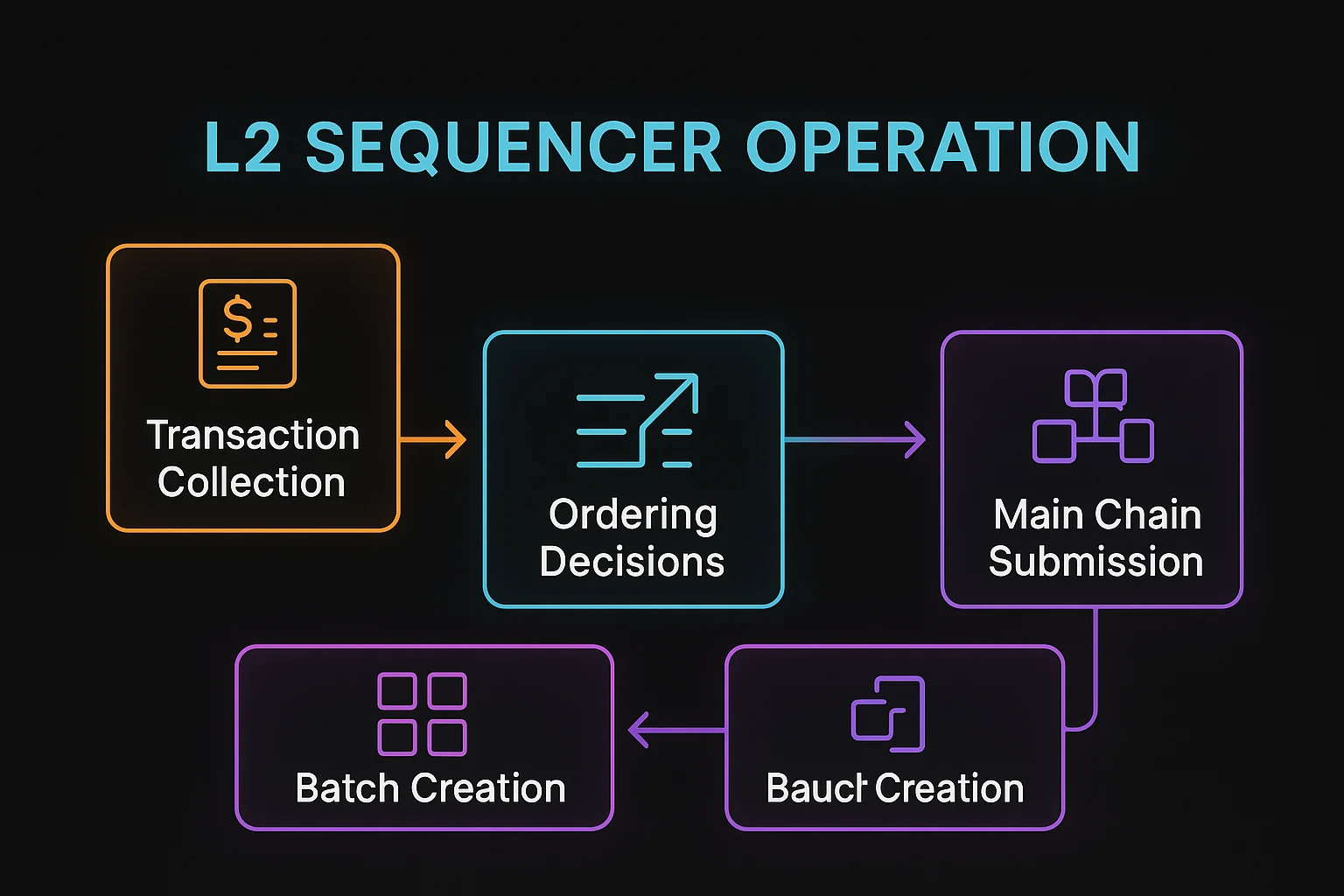
L2 sequencer operation showing transaction collection, ordering decisions, batch creation, and main chain submission

Real-World Examples

  • Arbitrum sequencer operated by Offchain Labs with plans for decentralization
  • Optimism runs centralized sequencing with revenue sharing for public goods funding
  • Base uses Coinbase-operated sequencing with similar centralization trade-offs

Why Beginners Should Care

Centralization risks as most L2s currently use single sequencers that could censor transactions or extract MEV unfairly.

Performance benefits from centralized sequencing that enables faster transaction confirmation and better user experience.

Decentralization roadmaps vary among L2 providers, with different timelines and approaches for reducing sequencer centralization.

Related Terms: Layer 2, MEV, Transaction Ordering, Centralization Risk

Back to Crypto Glossary

Similar Posts

  • Interoperability

    Interoperability: Blockchain Networks Working TogetherInteroperability enables different blockchain networks to communicate and share information seamlessly. It's like having universal translators for blockchain languages.Interoperability refers to the ability of different blockchain networks to communicate, share data, and interact with each other without requiring centralized intermediaries. This enables cross-chain applications and unified user experiences.How Blockchain Interoperability WorksCross-chain protocols enable…

  • Public Ledger

    Public Ledger: Transparent Transaction Records Public ledgers record all transactions transparently where anyone can verify the complete history of asset movements. It’s like having a bank statement that everyone can read but no one can forge. A public ledger is a distributed database that records all transactions transparently, allowing anyone to verify and audit the…

  • Encrypted Mempool

    Encrypted Mempool: Private Transaction Pools Encrypted mempools hide transaction details until inclusion in blocks, preventing front-running and MEV extraction. It’s like sending sealed bids instead of announcing your strategy publicly. An encrypted mempool contains pending transactions that are cryptographically hidden from public view until block inclusion. This prevents sophisticated actors from front-running or extracting MEV…

  • Peg Mechanism

    Peg Mechanism: Maintaining Price StabilityPeg mechanisms are systems designed to maintain stable exchange rates between cryptocurrencies and reference assets like fiat currencies. They're like autopilot systems that keep stablecoins flying at steady altitudes.A peg mechanism is a system that maintains the exchange rate of one asset relative to another through automatic adjustments, reserves, or market…

  • Dispute Resolution

    Dispute Resolution: Solving Blockchain ConflictsDispute resolution mechanisms help resolve conflicts that arise in decentralized systems where no central authority can make binding decisions. It's like having a digital court system.Dispute resolution in blockchain systems refers to mechanisms for resolving conflicts between parties in decentralized environments where traditional legal systems may be inadequate or unavailable. These systems…

  • Market Maker

    Market Maker: Providing Trading LiquidityMarket makers provide continuous buy and sell orders to ensure trading liquidity and narrow bid-ask spreads. They're like the vendors at a farmer's market who are always ready to trade.A market maker is an individual or entity that provides liquidity to trading markets by continuously offering to buy and sell assets…