
Liquidation Bot

Liquidation Bot: Automated Debt Collection

Liquidation bots monitor lending protocols for undercollateralized positions and automatically liquidate them for profit. They’re like repo men but for DeFi loans.

A liquidation bot is an automated program that monitors DeFi lending protocols for loans that fall below required collateral ratios and triggers liquidations to earn rewards. These bots help maintain protocol solvency while capturing liquidation bonuses.

How Liquidation Bots Work

Continuous monitoring tracks collateral ratios across lending platforms, identifying positions approaching liquidation thresholds as asset prices fluctuate.

Flash loan capital enables bots to liquidate large positions without holding significant capital upfront, borrowing funds for liquidation then repaying from proceeds.

Gas competition involves bots bidding higher gas prices to ensure their liquidation transactions get processed first when multiple bots target the same position.
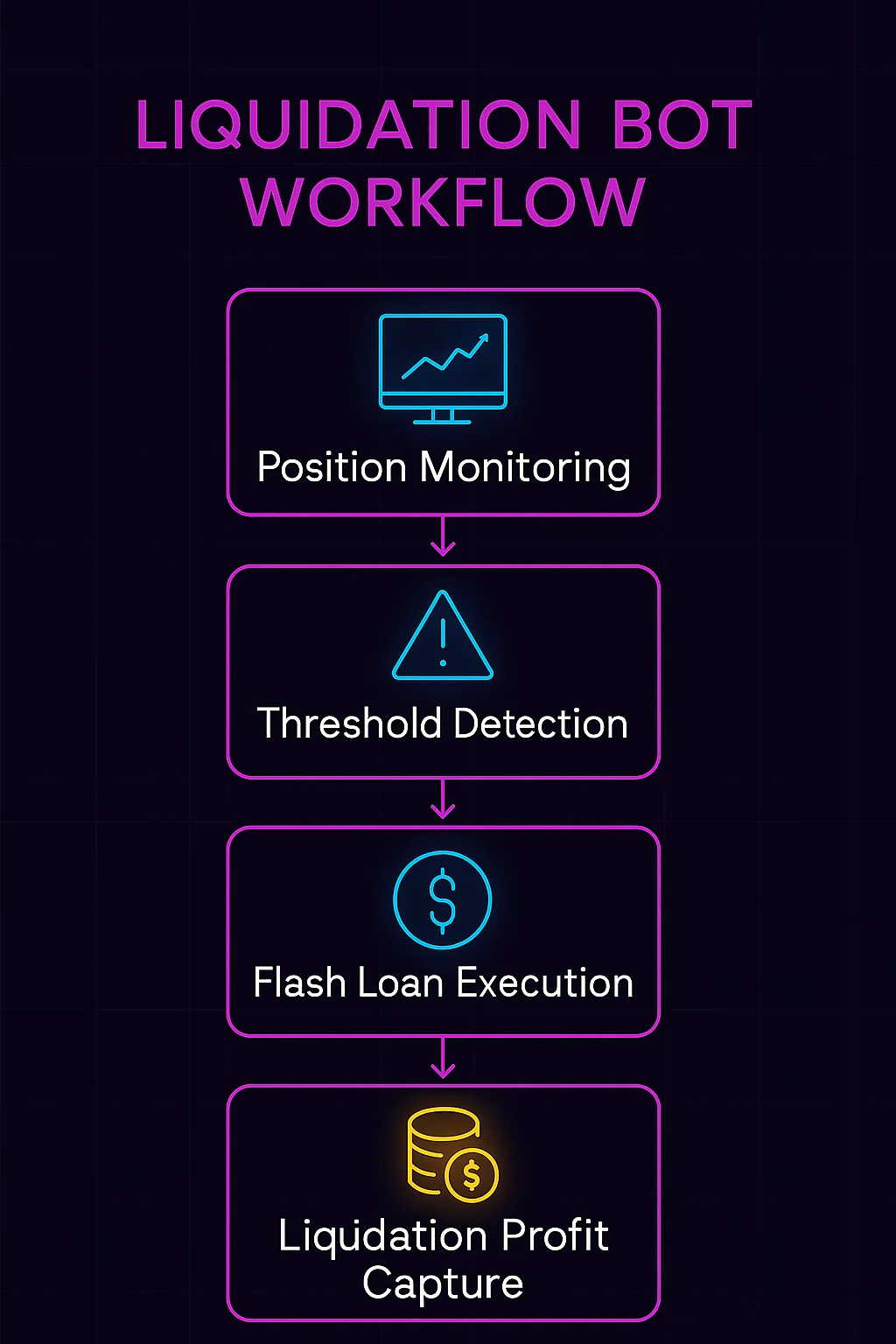
Infographic showing liquidation bot process: position monitoring, threshold detection, flash loan execution, and liquidation profit capture

Real-World Examples

  • Compound liquidations during market crashes can generate millions in bot profits as leveraged positions get liquidated en masse
  • Aave liquidation bonuses typically range from 5-15% of liquidated collateral value
  • MakerDAO liquidations use auction mechanisms that bots participate in to acquire discounted collateral

Why Beginners Should Care

Market efficiency from liquidation bots helps maintain lending protocol solvency by quickly removing bad debt before it becomes unrecoverable.

Borrower risks increase during volatile markets when liquidation bots aggressively target positions near liquidation thresholds.

Technical barriers make running competitive liquidation bots challenging for individuals due to infrastructure and capital requirements.

Related Terms: Liquidation, Flash Loan, Collateral Ratio, DeFi Lending

Back to Crypto Glossary

Similar Posts

  • Chain Abstraction

    Chain Abstraction: Invisible Multi-Chain Experience Chain abstraction hides blockchain complexity from users, making multi-chain interactions feel like using a single network. It’s like having universal currency that works everywhere without exchange rates. Chain abstraction creates user experiences where interactions with multiple blockchains happen seamlessly without users needing to understand or manage different networks, tokens, or…

  • Blockchain

    Blockchain: The Unchangeable Digital Ledger Forget the hype – blockchain is simply a better way to keep records. It’s like a ledger book that everyone can see, but no one can cheat. Blockchain is a chain of digital records (blocks) that are linked together and secured using cryptography. Once information goes into a block, changing…

  • Fraud Proof

    Fraud Proof: Detecting Invalid TransactionsFraud proofs are cryptographic evidence that demonstrate when invalid transactions or state changes have occurred. They're like mathematical receipts that prove someone broke the rules.Fraud proofs are cryptographic evidence that can demonstrate when invalid state transitions or transactions have occurred in blockchain systems. These proofs enable efficient verification and dispute resolution in…

  • Private Key

    Private Key: Your Crypto’s Secret Password Your private key is the most important thing you’ll ever own in crypto. Lose it, and your money’s gone forever. No customer service number to call. A private key is a secret code that proves you own your cryptocurrency and allows you to spend it. It’s like the combination…

  • Gas Limit

    Gas Limit: Setting Your Transaction Budget Gas limit is the maximum amount of gas you’re willing to spend on a transaction. Set it too low and your transaction fails. Set it too high and you overpay for simple operations. Gas limit is the maximum amount of computational work (measured in gas units) that a user…

  • Collateral Ratio

    Collateral Ratio: Loan Security MeasurementCollateral ratio measures the value of assets securing a loan compared to the loan amount. It's like the down payment percentage when buying a house with a mortgage.Collateral ratio is the percentage relationship between the value of collateral assets and the amount borrowed against them. Higher ratios provide more security for lenders…