
NFT Lending

NFT Lending: Borrowing Against Digital Art

NFT lending allows using non-fungible tokens as collateral for cryptocurrency loans. It’s like pawning your rare baseball cards, except the cards live in digital wallets.

NFT lending enables borrowers to use their non-fungible tokens as collateral to obtain cryptocurrency loans while retaining the potential upside of their digital assets. Lenders provide liquidity in exchange for yield and collateral protection.

How NFT Lending Works

Collateral evaluation uses floor prices, rarity traits, and collection value to determine loan amounts, typically offering 30-60% of estimated NFT value.

Loan mechanics involve depositing NFTs into smart contracts that release borrowed funds while holding collateral until repayment or liquidation.

Liquidation protection through automatic auctions or buy-back mechanisms when borrowers default or NFT values fall below required collateral ratios.
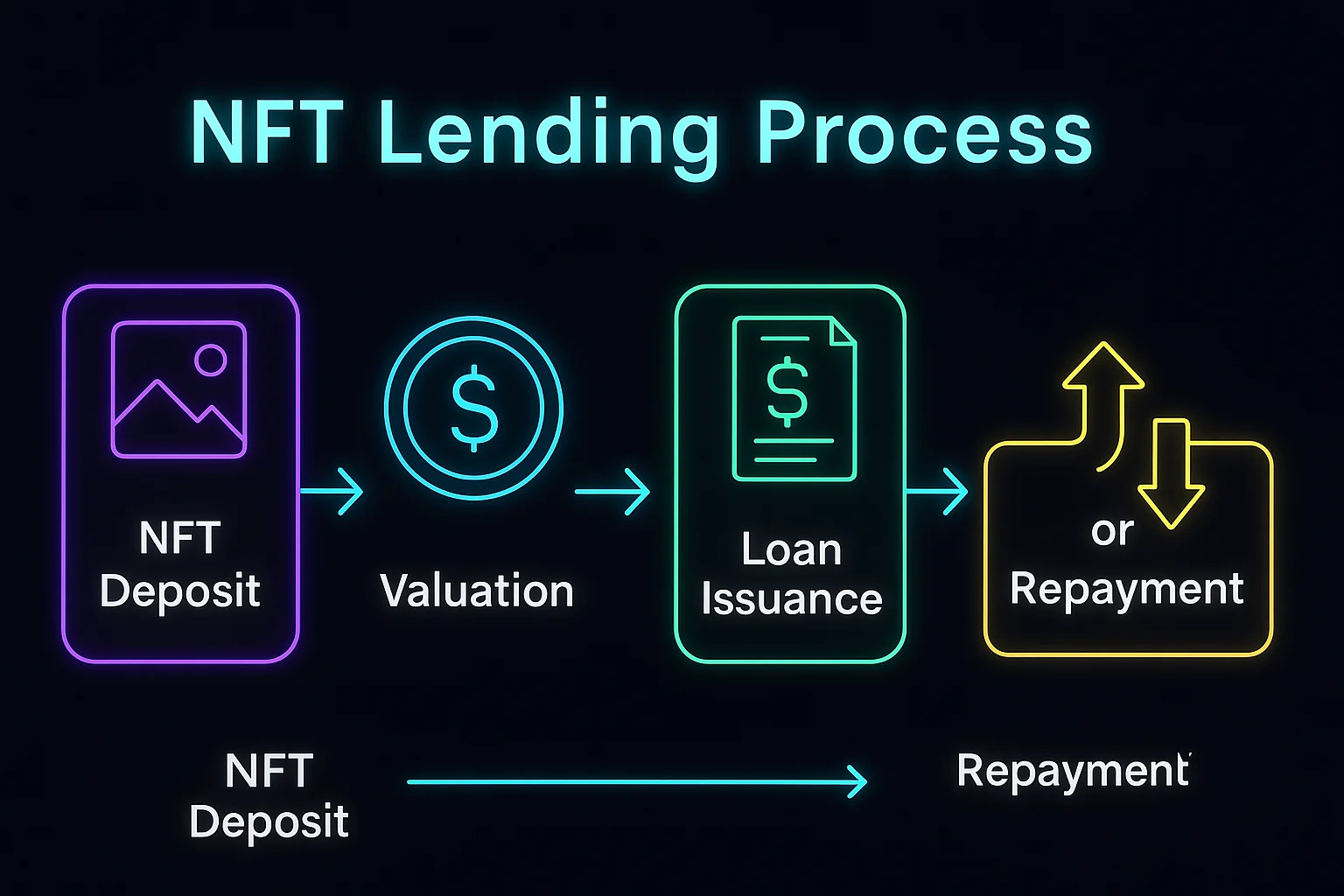
NFT lending process showing NFT deposit, valuation, loan issuance, and either repayment or liquidation pathway

Real-World Examples

  • Arcade provides institutional-grade NFT lending with professional valuation services
  • BendDAO offers peer-to-pool NFT lending with instant liquidity for borrowers
  • NFTfi enables peer-to-peer lending with customized terms between individual users

Why Beginners Should Care

Capital efficiency allows NFT holders to access liquidity without selling valuable digital assets, maintaining exposure to potential appreciation.

Valuation challenges make NFT lending riskier than traditional crypto lending due to illiquid markets and subjective valuations.

Market maturity remains early with limited lending options and high interest rates compared to traditional crypto lending protocols.

Related Terms: NFT, Collateral, Floor Price, DeFi Lending

Back to Crypto Glossary

Similar Posts

  • Layer Separation

    Layer Separation: Modular Blockchain ArchitectureLayer separation divides blockchain functionality into distinct layers that can be optimized independently. It's like having specialized departments in a company that each focus on what they do best.Layer separation refers to blockchain architectures that divide functionality into distinct layers such as consensus, execution, and data availability, enabling independent optimization and…

  • Flash Loan

    Flash Loan: Borrowing Millions Without Collateral Flash loans let you borrow millions of dollars without putting up collateral, but you must pay it back in the same transaction. It’s DeFi’s most mind-bending innovation. A flash loan is an uncollateralized loan that must be borrowed and repaid within a single blockchain transaction. If you can’t repay…

  • Governance Token

    Governance Token: Voting Rights in Digital Form Governance tokens turn users into stakeholders with voting power over protocol decisions. It’s democracy meets DeFi, with mixed results. A governance token grants holders voting rights on protocol decisions like parameter changes, upgrade proposals, treasury spending, and strategic direction. Token weight typically determines voting power – more tokens…

  • Mining Pool

    Mining Pool: Collaborative Block Mining Mining pools combine computational power from multiple miners to increase chances of finding blocks and earning rewards. It’s like joining a lottery syndicate to improve your odds. A mining pool is a collaborative group of cryptocurrency miners who combine their computational resources to increase their chances of successfully mining blocks…

  • DEX Aggregator

    DEX Aggregator: Optimal Trading Route FinderDEX aggregators find the best prices across multiple decentralized exchanges for cryptocurrency trades. They're like price comparison websites that automatically execute trades at the best available rates.A DEX aggregator is a service that compares prices and liquidity across multiple decentralized exchanges to find optimal trading routes for cryptocurrency swaps. These platforms…

  • Impermanent Loss

    Impermanent Loss: The Hidden Cost of Liquidity Providing Impermanent loss is the sneaky tax on liquidity providers. Your tokens can lose value even when the pool is profitable. It’s math, not magic – but it feels like getting robbed. Impermanent loss occurs when the price ratio of tokens in a liquidity pool changes compared to…