
On-Chain Gaming

On-Chain Gaming: Fully Decentralized Games

On-chain gaming runs game logic entirely on blockchain networks rather than traditional servers. It’s like having board games where the rules are enforced by mathematics instead of human referees.

On-chain gaming executes all game logic, state management, and interactions through smart contracts on blockchain networks. Unlike traditional games with centralized servers, on-chain games operate through decentralized infrastructure that players cannot manipulate.

How On-Chain Gaming Works

Smart contract logic handles all game rules, player actions, and state transitions through deterministic code that executes identically for all players.

Transparent mechanics make all game rules publicly visible and verifiable, preventing hidden advantages or manipulation by game operators.

Composable assets enable game items and characters to be used across different games and applications that support the same standards.
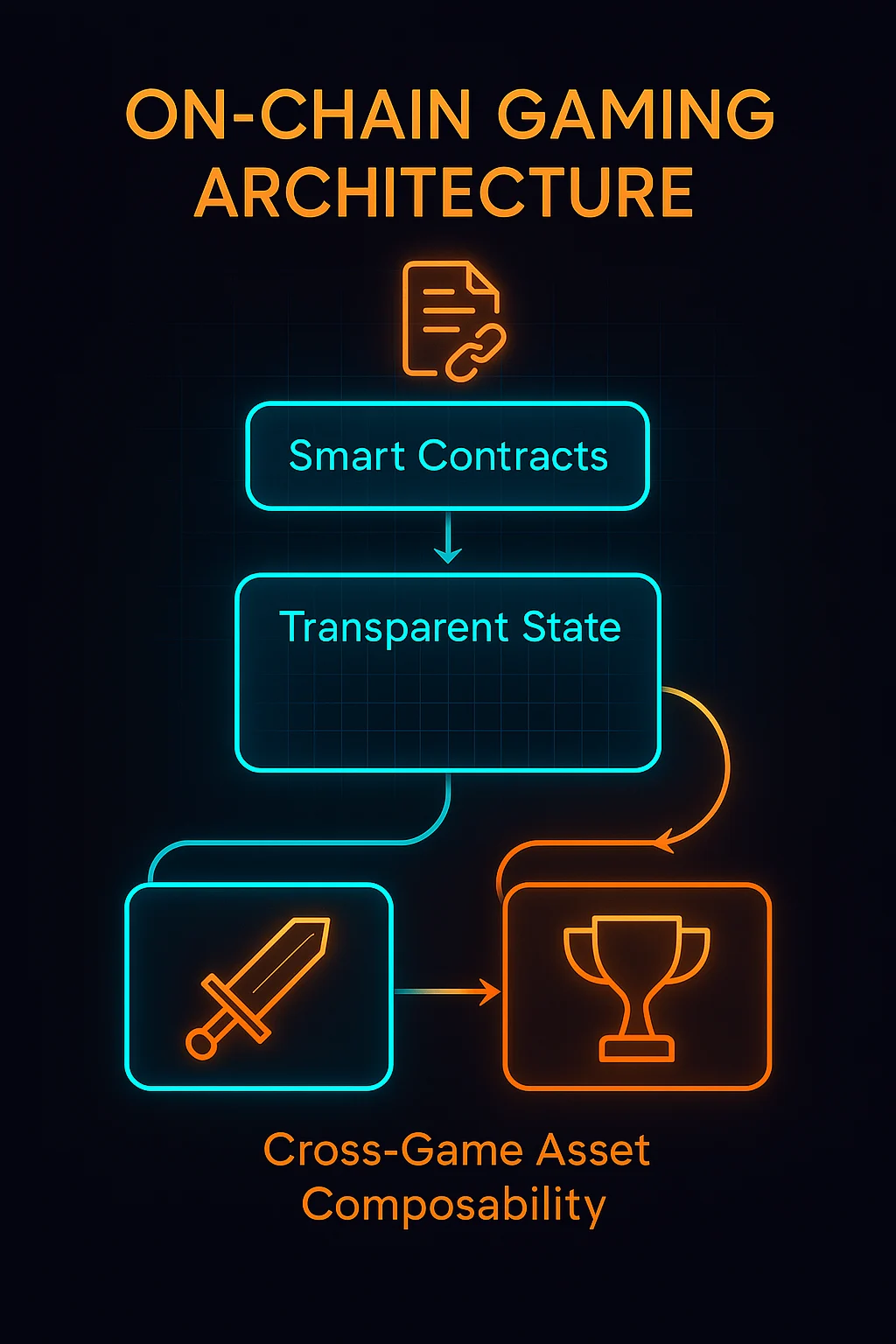
Illustration of on-chain gaming architecture, featuring smart contracts, transparent state management, and asset composability across multiple games.

Real-World Examples

  • Chess on-chain with provably fair random events and permanent game records
  • Strategy games where all moves and outcomes are cryptographically verifiable
  • Trading card games with truly scarce digital cards that work across multiple game implementations

Why Beginners Should Care

Provably fair gameplay eliminates concerns about rigged random number generation or hidden advantages for certain players.

Asset portability allows taking game items between different implementations and derivative games built by various developers.

Permanent records of achievements and gameplay history that persist even if original game developers stop supporting their games.

Related Terms: Smart Contract, Autonomous World, NFT Gaming, Verifiable Randomness

Back to Crypto Glossary

Similar Posts

  • Total Supply

    Total Supply: Maximum Token QuantityTotal supply refers to the maximum number of cryptocurrency tokens that will ever exist, including those not yet in circulation. It's like knowing how many copies of a collectible item will ever be made.Total supply encompasses all cryptocurrency tokens that exist or will ever be created, including circulating supply, locked tokens,…

  • Ethereum Compatibility

    Ethereum Compatibility: Supporting Ethereum StandardsEthereum compatibility enables blockchain networks to run Ethereum applications and support Ethereum-based tools without modification. It's like having different computers that can all run the same software programs.Ethereum compatibility refers to blockchain networks' ability to support Ethereum virtual machine code, development tools, and application standards without requiring modifications. This enables easy migration…

  • Secure Element

    Secure Element: Hardware Security ChipA secure element is a tamper-resistant hardware chip designed to store sensitive information like private keys. It's like having a tiny vault built into your device that's extremely difficult to break into.A secure element is a specialized hardware component designed to provide isolated, tamper-resistant storage and processing for sensitive data such…

  • Threshold Encryption

    Threshold Encryption: Shared Secret ProtectionThreshold encryption requires multiple parties to collaborate to decrypt information, preventing single points of failure. It's like having a safe that needs multiple people to turn their keys simultaneously.Threshold encryption is a cryptographic technique where encrypted data can only be decrypted when a minimum number of participants collaborate with their individual…

  • Security Token

    Security Token: Regulated Digital AssetsSecurity tokens are cryptocurrency tokens that represent ownership in real-world assets and are subject to securities regulations. They're like digital stock certificates that comply with financial laws.Security tokens are cryptocurrency tokens that represent ownership stakes in real-world assets and are subject to securities regulations and compliance requirements. These bridge traditional finance with…

  • Smart Contract Audit

    Smart Contract Audit: Code Security ReviewSmart contract audits involve professional security reviews of blockchain code to identify vulnerabilities before deployment. It's like having building inspectors for digital architecture.A smart contract audit is a comprehensive security review of blockchain application code conducted by experts to identify vulnerabilities, bugs, and potential attack vectors before public deployment. These reviews…