
Private Key

Private Key: Your Crypto’s Secret Password

Your private key is the most important thing you’ll ever own in crypto. Lose it, and your money’s gone forever. No customer service number to call.

A private key is a secret code that proves you own your cryptocurrency and allows you to spend it. It’s like the combination to a safe – except this safe holds digital money and there’s no locksmith if you forget the combination.

How Private Keys Work

Think of your private key as a super-long password – typically 256 characters of random letters and numbers. This key mathematically generates your wallet address (where people send you crypto) and creates digital signatures to authorize transactions.

Your private key never leaves your device when done right. It signs transactions locally, then broadcasts the signed transaction to the network.
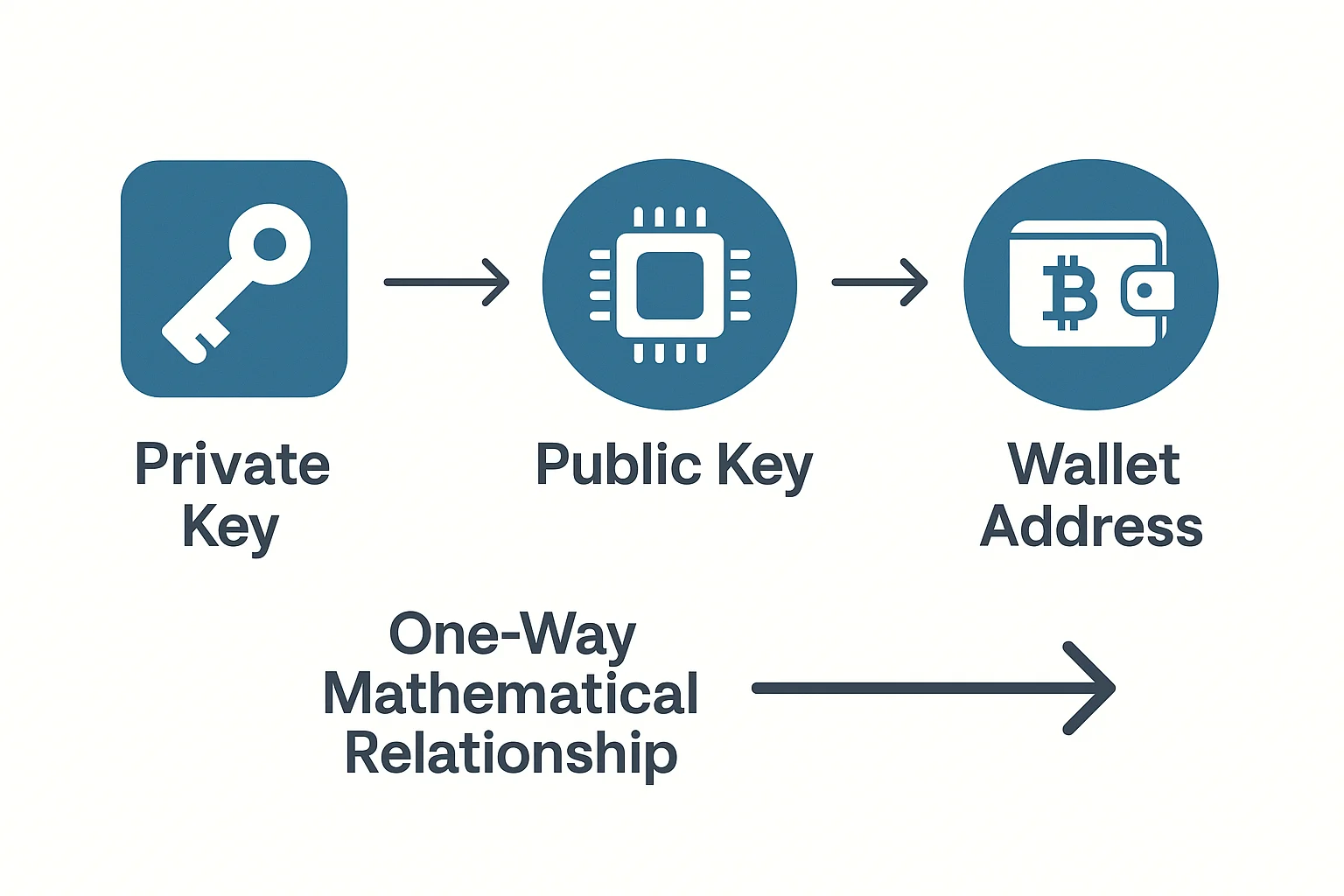
Diagram showing how a private key generates a public key and wallet address in a one-way relationship

Real-World Examples

  • Hardware wallets like Ledger store your private keys offline in secure chips
  • Paper wallets have private keys printed as QR codes
  • Software wallets encrypt your private keys with passwords

Why Beginners Should Care

“Not your keys, not your crypto” – this phrase exists because exchanges and online wallets hold your private keys for you. If they get hacked, go bankrupt, or freeze your account, you’re out of luck.

Smart crypto users graduate from exchanges to self-custody. Hardware wallets like the Ledger Nano series keep your private keys secure and offline, giving you true ownership of your funds.

Related Terms: Public Key, Seed Phrase, Hardware Wallet, Cold Storage

Back to Crypto Glossary

Similar Posts

  • Address Clustering

    Address Clustering: Connecting Wallet IdentitiesAddress clustering analyzes blockchain transactions to identify which addresses likely belong to the same user or entity. It's like detective work for digital money trails.Address clustering is a blockchain analysis technique that groups cryptocurrency addresses believed to belong to the same user or entity based on transaction patterns and shared inputs. This…

  • Transaction Cost

    Transaction Cost: The Price of Blockchain OperationsTransaction cost refers to the total expense of executing operations on blockchain networks, including fees, gas, and opportunity costs. It's the price you pay for using decentralized financial infrastructure.Transaction cost encompasses all expenses associated with executing blockchain operations, including network fees, gas costs, slippage, and time value. Understanding total transaction…

  • 51% Attack

    51% Attack: When Consensus Gets Hijacked A 51% attack occurs when a single entity controls the majority of a network’s mining power or stake, allowing them to manipulate transactions and double-spend coins. A 51% attack is when an individual or group controls more than half of a blockchain network’s mining hash rate or staking power,…

  • Token Supply

    Token Supply: Digital Asset QuantityToken supply refers to the total number of cryptocurrency tokens that exist, will exist, or are available for trading. It's a fundamental factor in determining token economics and value.Token supply encompasses the total quantity of cryptocurrency tokens in existence, including circulating supply available for trading and total supply that will ever…

  • DAO (Decentralized Autonomous Organization)

    DAO (Decentralized Autonomous Organization): Democracy Meets Code DAOs are how crypto communities govern themselves without traditional corporate structures. They’re experiments in digital democracy where token holders vote on everything. A Decentralized Autonomous Organization (DAO) is a community-governed entity where decisions are made collectively by token holders through blockchain-based voting. Smart contracts execute the community’s decisions…

  • Blockchain

    Blockchain: The Unchangeable Digital Ledger Forget the hype – blockchain is simply a better way to keep records. It’s like a ledger book that everyone can see, but no one can cheat. Blockchain is a chain of digital records (blocks) that are linked together and secured using cryptography. Once information goes into a block, changing…