
Proof of Burn

Proof of Burn: Destroying Value for Consensus

Proof of Burn requires destroying cryptocurrency to participate in consensus or gain network benefits. It’s like burning money to prove you’re serious about network security.

Proof of Burn is a consensus mechanism where participants destroy cryptocurrency by sending it to unrecoverable addresses to gain mining rights or network privileges. The economic cost of burned tokens incentivizes honest behavior.

How Proof of Burn Works

Token destruction sends cryptocurrency to addresses with no known private keys, permanently removing it from circulation as proof of economic commitment.

Mining rights are awarded based on the value of recently burned tokens, with more burns providing higher chances of being selected to create blocks.

Economic incentives align participant interests with network security since dishonest behavior would waste the burned tokens without rewards.
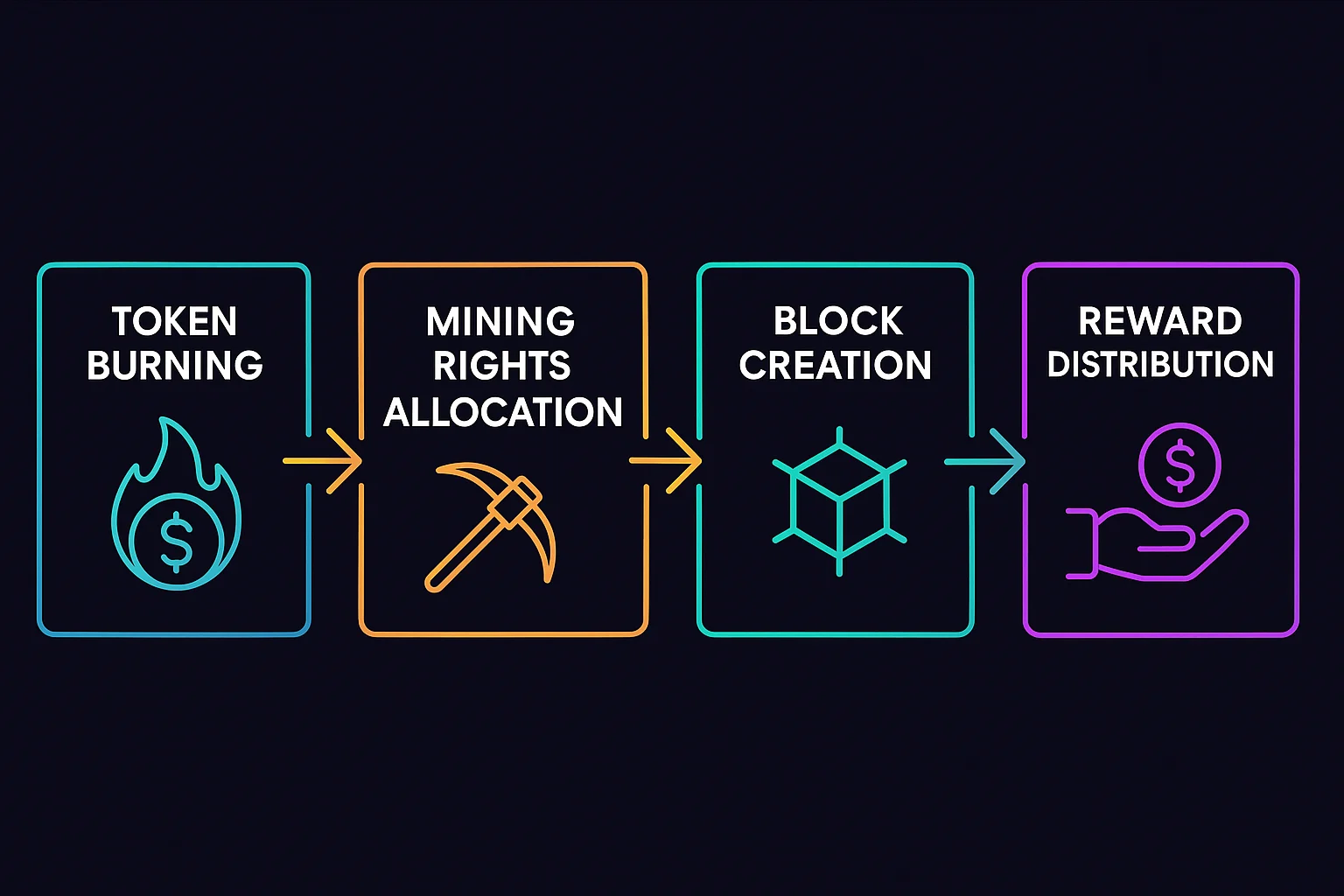
Proof of Burn process showing token burning, mining rights allocation, block creation, and reward distribution

Real-World Examples

  • Counterparty used Bitcoin burning to distribute XCP tokens during its initial launch
  • Slimcoin implements Proof of Burn as part of its hybrid consensus mechanism
  • Various token launches have used burning mechanisms to create fair distribution

Why Beginners Should Care

Environmental efficiency compared to Proof of Work since burning doesn’t require ongoing energy consumption for mining operations.

Economic sustainability questions about whether participants will continue burning tokens when rewards don’t justify the costs.

Limited adoption as most networks prefer Proof of Stake or other alternatives that don’t require permanent value destruction.

Related Terms: Consensus Mechanism, Token Burn, Economic Security

Back to Crypto Glossary

Similar Posts

  • Mining Pool

    Mining Pool: Collaborative Block Mining Mining pools combine computational power from multiple miners to increase chances of finding blocks and earning rewards. It’s like joining a lottery syndicate to improve your odds. A mining pool is a collaborative group of cryptocurrency miners who combine their computational resources to increase their chances of successfully mining blocks…

  • DEX

    DEX: Decentralized ExchangeA DEX is a cryptocurrency exchange that operates without central authority through smart contracts. It's like a marketplace where buyers and sellers trade directly without a middleman.A decentralized exchange (DEX) is a cryptocurrency trading platform that facilitates peer-to-peer trading through smart contracts without requiring a central operator or intermediary. Users maintain control of their…

  • ENS

    ENS: Ethereum Name ServiceENS provides human-readable names for Ethereum addresses, making cryptocurrency transactions more user-friendly. It's like having domain names for websites instead of remembering IP addresses.Ethereum Name Service (ENS) is a decentralized naming system that maps human-readable names to Ethereum addresses, smart contracts, and other identifiers. ENS makes blockchain interactions more accessible by replacing complex…

  • AML (Anti-Money Laundering)

    AML (Anti-Money Laundering): Fighting Financial Crime AML regulations force crypto businesses to monitor and report suspicious activities. It’s the government’s attempt to prevent crypto from becoming a money laundering paradise. Anti-Money Laundering (AML) refers to laws, regulations, and procedures designed to prevent criminals from disguising illegally obtained funds as legitimate income. Crypto exchanges and businesses…

  • Governance Token

    Governance Token: Voting Rights in CryptoGovernance tokens provide holders with voting rights in decentralized protocols and organizations. They're like shares in a company, but for decentralized projects where the community makes decisions.A governance token is a cryptocurrency that grants holders voting rights over protocol changes, treasury allocation, and other governance decisions in decentralized projects. These tokens…

  • 51% Attack

    51% Attack: When Consensus Gets Hijacked A 51% attack occurs when a single entity controls the majority of a network’s mining power or stake, allowing them to manipulate transactions and double-spend coins. A 51% attack is when an individual or group controls more than half of a blockchain network’s mining hash rate or staking power,…