
Public Ledger

Public Ledger: Transparent Transaction Records

Public ledgers record all transactions transparently where anyone can verify the complete history of asset movements. It’s like having a bank statement that everyone can read but no one can forge.

A public ledger is a distributed database that records all transactions transparently, allowing anyone to verify and audit the complete history of asset transfers without requiring trust in central authorities. Blockchain networks maintain these ledgers through consensus mechanisms.

How Public Ledgers Work

Transparent recording makes all transactions visible to anyone who wants to examine the network’s transaction history and current state.

Immutable history prevents alteration of past records through cryptographic hashing and consensus mechanisms that make tampering detectable.

Verification capability enables anyone to independently confirm transaction validity and account balances without trusting intermediaries.
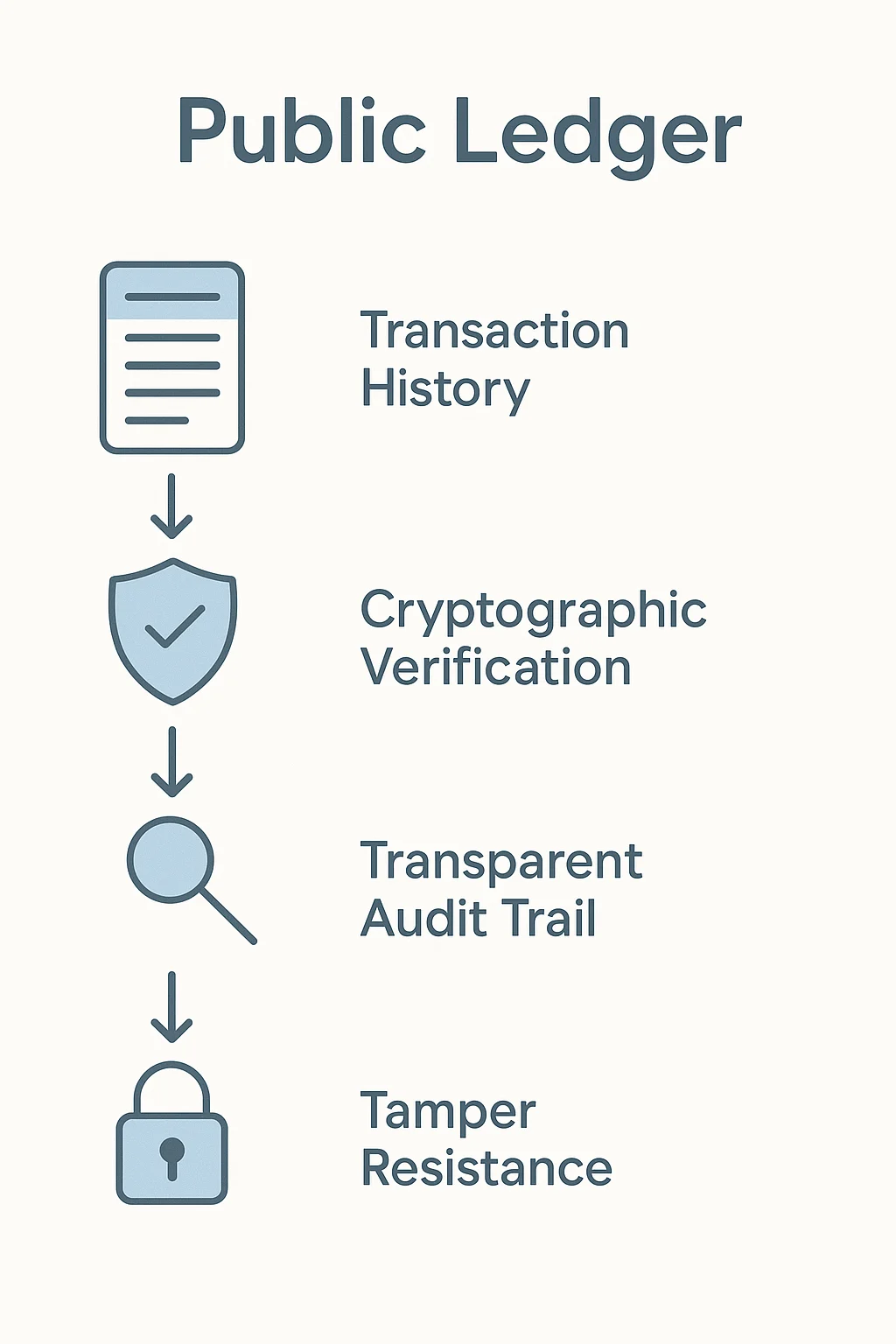
Infographic showing public ledger steps: transaction history, cryptographic verification, audit trail, tamper resistance

Real-World Examples

  • Bitcoin blockchain records every transaction since the genesis block in 2009
  • Ethereum ledger tracks all ETH transfers and smart contract interactions publicly
  • Block explorers like Etherscan provide user-friendly interfaces for examining public ledger data

Why Beginners Should Care

Trust elimination through transparency means you don’t need to trust banks or institutions to verify account balances and transaction history.

Privacy considerations since public ledgers reveal transaction patterns and balances, though personal identities may remain pseudonymous.

Audit capabilities enable independent verification of cryptocurrency supply, distribution, and transaction validity by anyone with internet access.

Related Terms: Blockchain, Transparency, Immutability, Verification

Back to Crypto Glossary

Similar Posts

  • Price Feed

    Price Feed: Real-Time Market DataPrice feeds provide real-time cryptocurrency market data to applications and smart contracts that need current asset values. They're like financial news tickers that continuously update with the latest stock prices, but for digital assets and automated systems.Price feed refers to continuous streams of current market prices and trading data that supply…

  • Autonomous World (AW)

    Autonomous World (AW): Persistent Virtual Realities Autonomous worlds are persistent virtual environments that continue existing and evolving even when no players are actively participating. They’re like having a Minecraft world that keeps running and changing forever. An Autonomous World (AW) is a virtual environment that operates independently through blockchain infrastructure, maintaining state and enabling interactions…

  • Supply Shock

    Supply Shock: Sudden Token Availability ChangesA supply shock occurs when cryptocurrency token supply changes dramatically and unexpectedly, often causing significant price volatility. It's like suddenly discovering a new oil field or losing access to existing reserves.A supply shock refers to a sudden, significant change in cryptocurrency token supply that disrupts market equilibrium and typically causes…

  • Transaction Ordering

    Transaction Ordering: Sequence Control SystemsTransaction ordering determines the sequence in which transactions get processed within blockchain blocks. It's like controlling the line at a busy restaurant.Transaction ordering refers to the process by which blockchain networks determine the sequence of transactions within blocks. This ordering can significantly affect transaction outcomes, especially in DeFi applications sensitive to price…

  • Block Reward

    Block Reward: Miner and Validator Compensation Block rewards are the cryptocurrency payments that miners and validators receive for successfully adding new blocks to the blockchain. It’s how networks incentivize security without charging transaction fees. Block reward is the amount of cryptocurrency awarded to miners or validators for successfully creating and validating a new block on…

  • Tokenization

    Tokenization: Converting Assets into Digital Tokens Tokenization transforms real-world assets into blockchain-based tokens that can be traded, divided, and managed digitally. It’s like turning everything into tradeable game pieces. Tokenization is the process of converting ownership rights to assets into digital tokens on a blockchain. This enables fractional ownership, easier trading, and programmable functionality for…