
Smart Contract Royalties

Smart Contract Royalties: Automated Creator Payments

Smart contract royalties automatically pay creators a percentage every time their NFTs are resold. It’s like having a永続 commission that follows your work forever.

Smart contract royalties are automated payment mechanisms built into NFT contracts that send a percentage of each resale back to the original creator. These payments happen automatically through code, ensuring creators benefit from secondary market appreciation.

How Smart Contract Royalties Work

Embedded logic in NFT smart contracts specifies royalty percentages and recipient addresses that execute automatically during transfers or sales.

Marketplace integration enables platforms like OpenSea to read royalty information and automatically deduct payments during transactions.

Perpetual payments continue for as long as the NFT exists and gets traded, providing ongoing income streams for creators beyond initial sales.
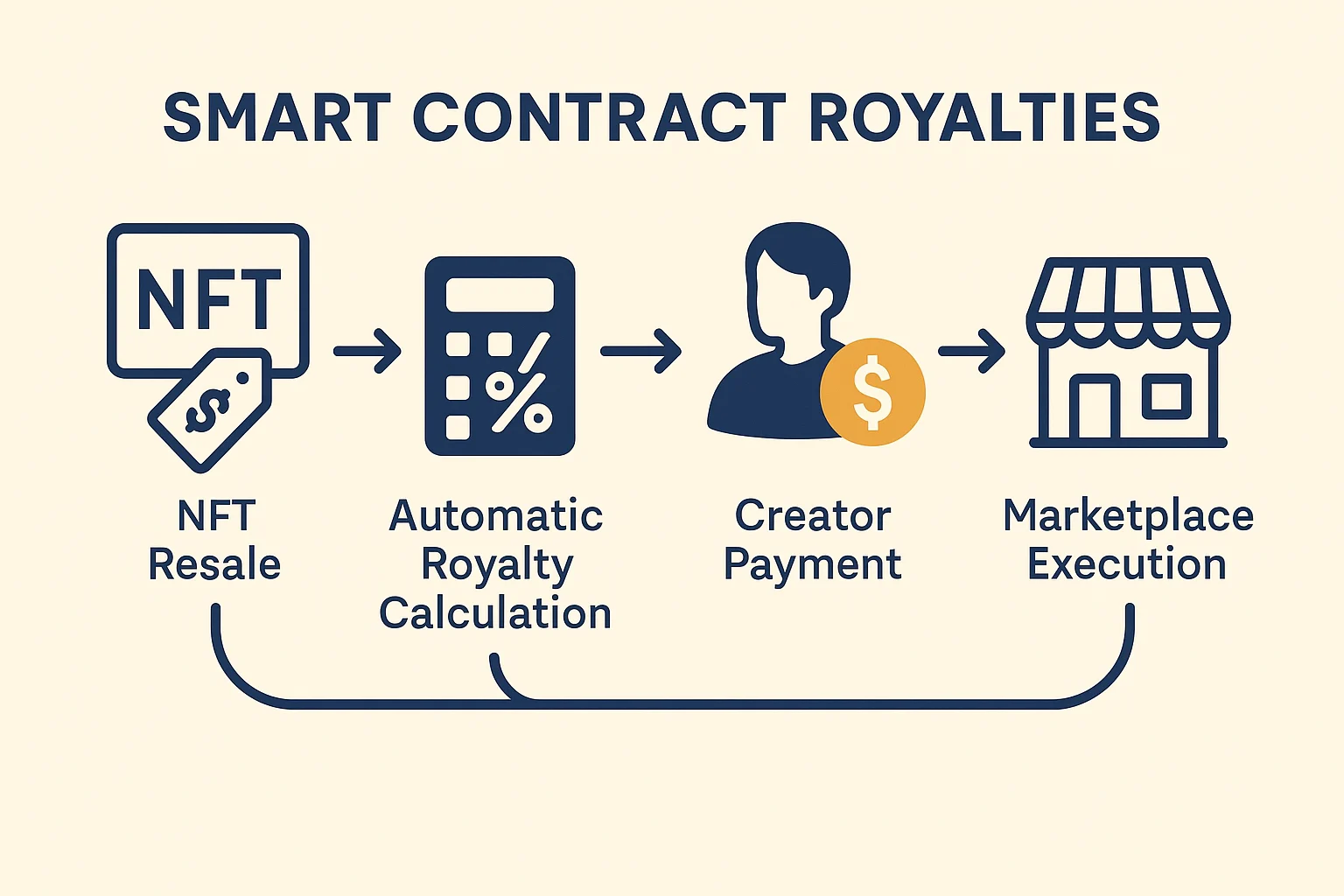
Infographic showing smart contract royalties process: NFT resale, automatic royalty calculation, creator payment, and marketplace execution

Real-World Examples

  • Art NFTs typically include 5-10% royalties that pay artists on every resale
  • Music NFTs enable musicians to earn from secondary market trading of their work
  • Gaming assets provide ongoing revenue to developers when players trade items

Why Beginners Should Care

Creator sustainability enables artists and developers to build long-term businesses rather than relying only on initial sales revenue.

Buyer transparency as royalty information is visible before purchase, allowing collectors to understand the full cost structure.

Enforcement challenges since some marketplaces have started making royalties optional, potentially undermining creator income expectations.

Related Terms: NFT, Smart Contract, Secondary Market

Back to Crypto Glossary

Similar Posts

  • Centralization Risk

    Centralization Risk: Single Point of Failure DangersCentralization risk refers to vulnerabilities created when critical functions are controlled by single entities rather than distributed among many participants. It's like having all eggs in one basket that could break everything at once.Centralization risk encompasses the potential negative impacts when blockchain networks, applications, or services become overly dependent…

  • Tokenization

    Tokenization: Converting Assets into Digital Tokens Tokenization transforms real-world assets into blockchain-based tokens that can be traded, divided, and managed digitally. It’s like turning everything into tradeable game pieces. Tokenization is the process of converting ownership rights to assets into digital tokens on a blockchain. This enables fractional ownership, easier trading, and programmable functionality for…

  • Phishing Attack

    Phishing Attack: How Scammers Steal Your Crypto Phishing attacks are the #1 way people lose crypto. Scammers create fake websites that look identical to real ones, then steal your login credentials and private keys. A phishing attack is a fraudulent attempt to obtain sensitive information by impersonating a trustworthy entity through fake websites, emails, or…

  • Flashbots

    Flashbots: MEV Infrastructure Flashbots is a research and development organization that builds infrastructure to mitigate the negative externalities of MEV. They’re trying to make the blockchain economy more fair and transparent. Flashbots develops tools and infrastructure to democratize MEV extraction and reduce its harmful effects on regular users. Their products include private mempools, MEV-protected transaction…

  • Governance Token

    Governance Token: Voting Rights in CryptoGovernance tokens provide holders with voting rights in decentralized protocols and organizations. They're like shares in a company, but for decentralized projects where the community makes decisions.A governance token is a cryptocurrency that grants holders voting rights over protocol changes, treasury allocation, and other governance decisions in decentralized projects. These tokens…

  • Gwei

    Gwei: Ethereum’s Gas Price Unit Gwei is the denomination used for Ethereum gas prices. Understanding gwei helps you avoid overpaying for transactions when the network gets congested. Gwei (gigawei) is a unit of Ethereum’s native currency equal to one billionth of an ETH (10^-9 ETH). It’s the standard unit for expressing gas prices, making it…