
Sniper Bot

Sniper Bot: Automated MEV Extraction

Sniper bots automatically execute trades ahead of other users to capture arbitrage opportunities and extract MEV. They’re the high-frequency traders of DeFi, but without regulatory oversight.

A sniper bot is an automated program that monitors blockchain mempools for profitable trading opportunities and executes transactions faster than human traders. These bots specialize in front-running, arbitrage, and MEV extraction across DeFi protocols.

How Sniper Bots Work

Mempool monitoring tracks pending transactions before they’re included in blocks, identifying profitable opportunities like large trades that will move prices.

Gas price optimization ensures bot transactions get prioritized by miners through higher fees, often paying 10-100x normal gas prices for speed advantages.

Atomic execution combines multiple trades into single transactions that either complete entirely or fail completely, eliminating partial execution risks.
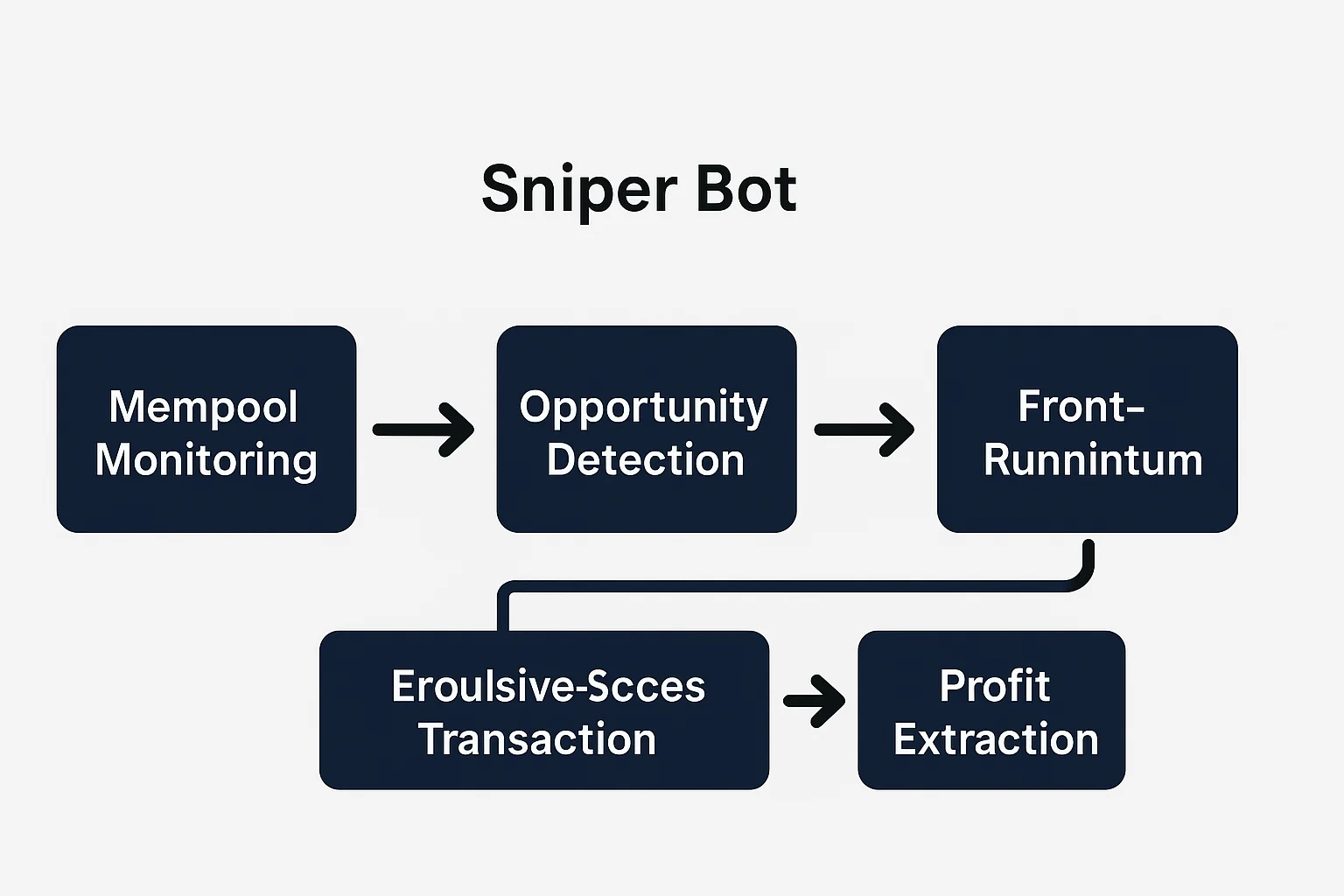
Sniper bot operation flowchart showing mempool monitoring, opportunity detection, front-running, and profit extraction steps.

Real-World Examples

  • DEX arbitrage bots exploit price differences between Uniswap, SushiSwap, and other exchanges
  • Liquidation bots compete to liquidate undercollateralized positions for profit
  • NFT sniping involves bots purchasing underpriced NFTs milliseconds after listing

Why Beginners Should Care

Hidden tax on regular users as sniper bots extract value from almost every large DeFi transaction through increased slippage and worse execution prices.

Technical arms race makes it nearly impossible for manual traders to compete with sophisticated bots that can execute trades in milliseconds.

Protocol responses include MEV-protected RPCs, private mempools, and fair sequencing services that aim to reduce bot advantages.

Related Terms: MEV, Front-Running, Arbitrage, Gas Price

Back to Crypto Glossary

Similar Posts

  • Gas Refund Token

    Gas Refund Token: Optimizing Transaction Costs Gas refund tokens exploit Ethereum’s gas refund mechanism to reduce transaction costs by clearing unused storage. They’re like getting paid to clean up the blockchain. A gas refund token uses Ethereum’s gas refund mechanism to partially offset transaction costs by clearing unused contract storage during token transfers. The protocol…

  • Market Cap

    Market Cap: How to Value Crypto Projects Market cap tells you how much the entire crypto market values a project. It’s the most important number for comparing different cryptocurrencies. Market capitalization is the total value of all coins in circulation, calculated by multiplying the current price by the circulating supply. It shows the relative size…

  • Private Key Security

    Private Key Security: Protecting Your Digital IdentityPrivate key security involves protecting the cryptographic keys that control cryptocurrency access from theft, loss, or compromise. It's like safeguarding the master key to your digital vault.Private key security encompasses all practices and technologies used to protect cryptographic private keys from unauthorized access, theft, or loss. These keys are the…

  • Dark Web

    Dark Web: Hidden Internet NetworksThe dark web consists of encrypted online networks accessible only through specialized software like Tor. It's where privacy advocates and criminals both hang out, but for very different reasons.The dark web refers to encrypted online content that exists on overlay networks requiring specific software, configurations, or authorization to access. Unlike the regular…

  • Layer Separation

    Layer Separation: Modular Blockchain ArchitectureLayer separation divides blockchain functionality into distinct layers that can be optimized independently. It's like having specialized departments in a company that each focus on what they do best.Layer separation refers to blockchain architectures that divide functionality into distinct layers such as consensus, execution, and data availability, enabling independent optimization and…

  • Message Passing

    Message Passing: Cross-System CommunicationMessage passing enables different blockchain networks or applications to communicate by transmitting information across system boundaries. It's like having a universal postal service that can deliver letters between different countries with different languages and customs.Message passing refers to communication protocols that enable different blockchain networks, smart contracts, or applications to exchange information…