
State Channel

State Channel: Off-Chain Interaction Highways

State channels enable instant, low-cost transactions between parties by moving interactions off-chain while maintaining blockchain security. It’s like having a private highway between two cities.

A state channel is a two-way communication channel between blockchain users that enables off-chain transactions with on-chain security guarantees. Participants can transact instantly and cheaply, settling final balances on the main blockchain.

How State Channels Work

Channel opening requires both parties to lock funds in a smart contract that enforces the rules smart contract rfor off-chain state updates.

Off-chain updates happen instantly between parties without broadcasting to the blockchain, enabling real-time interactions with minimal costs.

Dispute resolution mechanisms allow either party to challenge invalid state updates by submitting proofs to the on-chain contract.
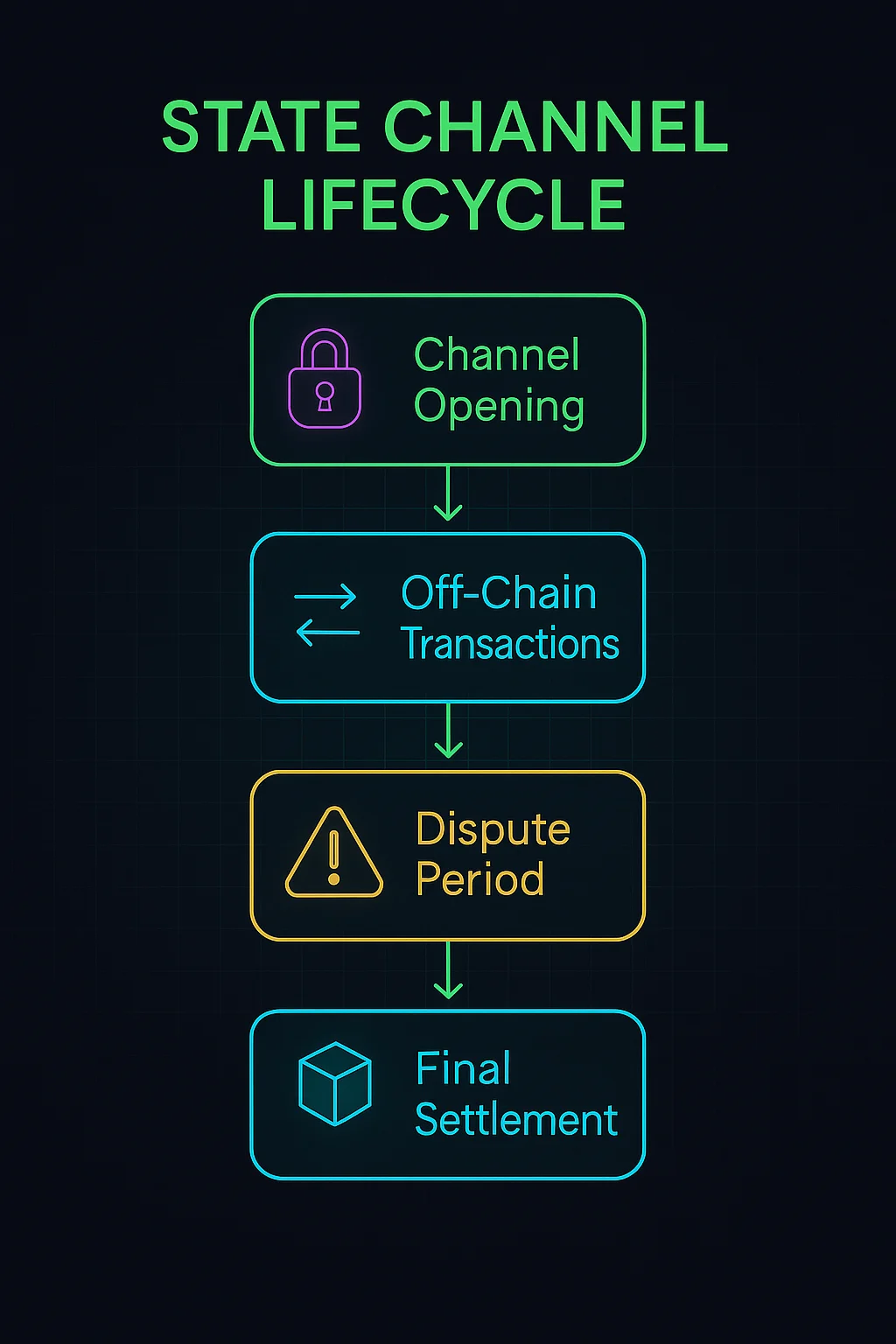
Infographic showing the state channel lifecycle: channel opening, off-chain transactions, dispute period, and final settlement

Real-World Examples

  • Lightning Network enables instant Bitcoin payments through payment channels
  • Connext provides Ethereum state channels for fast, cheap transfers
  • Gaming applications use state channels for real-time multiplayer interactions

Why Beginners Should Care

Instant finality for payments and interactions without waiting for blockchain confirmation times.

Low costs since only channel opening and closing require on-chain transactions regardless of off-chain activity volume.

Complexity requirements for channel management, dispute handling, and liquidity routing that limit mainstream adoption.

Related Terms: Lightning Network, Payment Channel, Layer 2, Dispute Resolution

Back to Crypto Glossary

Similar Posts

  • Marketplace

    Marketplace: Digital Trading PlatformsMarketplaces are platforms where users can buy, sell, and trade digital assets like NFTs, tokens, or services. They're like eBay but for blockchain-based items.A marketplace is a platform that facilitates buying, selling, and trading of digital assets between users, typically including discovery, pricing, and transaction features. These platforms often specialize in specific asset…

  • Go

    Go: Programming Language for BlockchainGo is a programming language widely used for building blockchain infrastructure and cryptocurrency applications. It's like the construction language for digital money systems.Go (also called Golang) is a programming language developed by Google that's popular for blockchain development due to its performance, simplicity, and excellent concurrency support. Many major cryptocurrency projects use…

  • Rebase Token

    Rebase Token: Algorithmic Supply Adjustment Rebase tokens automatically adjust their total supply to maintain target prices or economic conditions. It’s like having money that multiplies or divides to keep its buying power constant. A rebase token automatically increases or decreases the total token supply held by all users proportionally to achieve specific economic targets like…

  • Data Availability Layer

    Data Availability Layer: Ensuring Information Access Data availability layers ensure that blockchain data remains accessible for verification without requiring full nodes to store everything. It’s like having a library system where you can verify any book exists without storing them all. A data availability layer guarantees that blockchain transaction data is published and remains accessible…

  • NFT (Non-Fungible Token)

    NFT (Non-Fungible Token): Digital Ownership Certificates NFTs transformed JPEGs into million-dollar assets and made digital ownership mainstream. Love them or hate them, they’re reshaping how we think about digital property. A Non-Fungible Token (NFT) is a unique digital certificate stored on a blockchain that proves ownership of a specific digital asset. Unlike cryptocurrencies where each…

  • Transaction Verification

    Transaction Verification: Confirming Payment ValidityTransaction verification is the process of confirming that cryptocurrency transactions are valid before adding them to the blockchain. It's like having bank tellers check that signatures match and accounts have sufficient funds before processing checks.Transaction verification refers to the systematic process where network participants validate cryptocurrency transactions by checking digital signatures,…