
Synthetic Yield

Synthetic Yield: Engineered Return Products

Synthetic yield creates artificial return streams through derivatives and structured products rather than underlying asset productivity. It’s like manufacturing dividends through financial engineering.

Synthetic yield refers to returns generated through derivative strategies, structured products, or financial engineering rather than from the underlying asset’s inherent productivity. These products create yield where none naturally exists.

How Synthetic Yield Works

Derivative construction uses options, futures, or swaps to create income streams from assets that don’t naturally produce yield.

Structured products combine multiple financial instruments to engineer specific risk-return profiles that meet investor yield requirements.

Risk transformation converts one type of exposure into yield-generating positions through sophisticated trading strategies and financial instruments.
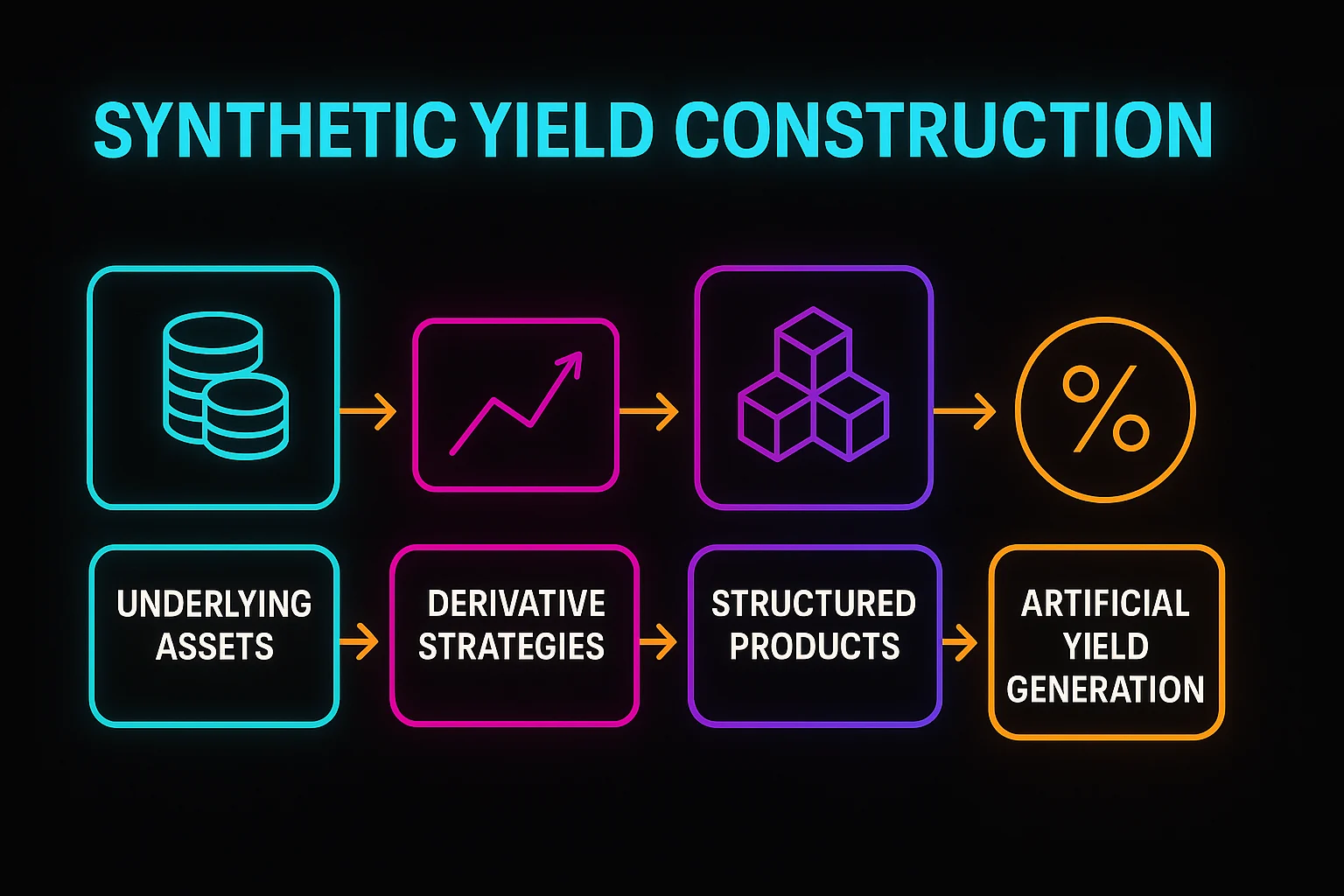
Synthetic yield construction flow showing underlying assets, derivative strategies, structured products, and artificial yield generation

Real-World Examples

  • Covered call strategies on Bitcoin that generate yield by selling call options
  • Structured products that provide yield on non-productive assets like gold or commodities
  • Yield tokens that split assets into principal and yield components for separate trading

Why Beginners Should Care

Yield availability on assets that don’t naturally produce returns, expanding income opportunities beyond traditional yield-bearing investments.

Complexity risks as synthetic products often involve multiple moving parts that can behave unexpectedly during market stress.

Understanding requirements for evaluating the true risks and potential returns of engineered yield products versus natural yield sources.

Related Terms: Derivatives, Structured Products, Yield Engineering

Back to Crypto Glossary

Similar Posts

  • Wrapped Token

    Wrapped Token: Bringing Assets Cross-Chain Wrapped tokens let you use Bitcoin on Ethereum, Ethereum on Solana, and any asset on any blockchain. They’re the universal adapters of crypto. A wrapped token is a cryptocurrency that represents another asset on a different blockchain, maintaining a 1:1 peg through collateralization. The original asset gets locked in a…

  • Two Way Peg

    Two Way Peg: Bidirectional Asset TransferA two-way peg enables moving assets between different blockchain networks in both directions while maintaining value equivalence. It's like having a currency exchange that works both ways between different countries.A two-way peg is a mechanism that allows assets to move freely between two blockchain networks while maintaining equivalent value on…

  • Restaking

    Restaking: Double-Duty for Staked Assets Restaking allows already-staked cryptocurrency to secure additional networks and earn extra rewards. It’s like getting paid twice for the same job, but with twice the risk. Restaking is a mechanism that allows staked cryptocurrency to simultaneously secure multiple networks or protocols, earning additional rewards beyond the base staking yield. Validators…

  • Bridge Aggregator

    Bridge Aggregator: Cross-Chain Route OptimizationBridge aggregators find the best routes for moving assets between blockchain networks by comparing multiple bridge options. They're like travel booking sites that find the cheapest flights across different airlines.A bridge aggregator is a service that compares multiple cross-chain bridge options to find optimal routes for transferring assets between different blockchain…

  • Rug Pull

    Rug Pull: When Projects Disappear With Your Money Rug pulls are crypto’s version of old-fashioned exit scams. Developers build hype, collect investor money, then vanish into the digital night. A rug pull is when cryptocurrency project developers abandon the project and steal investor funds. The term comes from “pulling the rug out” from under investors…

  • Multichain Router

    Multichain Router: Cross-Chain Navigation Multichain routers find optimal paths for moving assets between different blockchain networks. They’re like GPS for cross-chain transactions, finding the cheapest and fastest routes. A multichain router is a protocol that automatically finds the best path for transferring assets between different blockchain networks. It compares routes across multiple bridges and chains…