
Web3

Web3: The Decentralized Internet Dream

Web3 promises an internet where users own their data, identity, and digital assets instead of tech giants controlling everything. It’s part vision, part reality, part marketing buzzword.

Web3 refers to a decentralized version of the internet built on blockchain technology where users control their own data, identity, and assets rather than relying on centralized platforms. It aims to replace Web2’s platform monopolies with user-owned networks.

How Web3 Works

Decentralized applications (dApps) run on blockchain networks instead of centralized servers, making them censorship-resistant and user-controlled rather than platform-controlled.

Self-sovereign identity lets users control their digital identity across platforms without relying on Google, Facebook, or other centralized identity providers.

Token-based incentives align user and network interests by giving users ownership stakes in the platforms they use, rather than just being unpaid data sources.
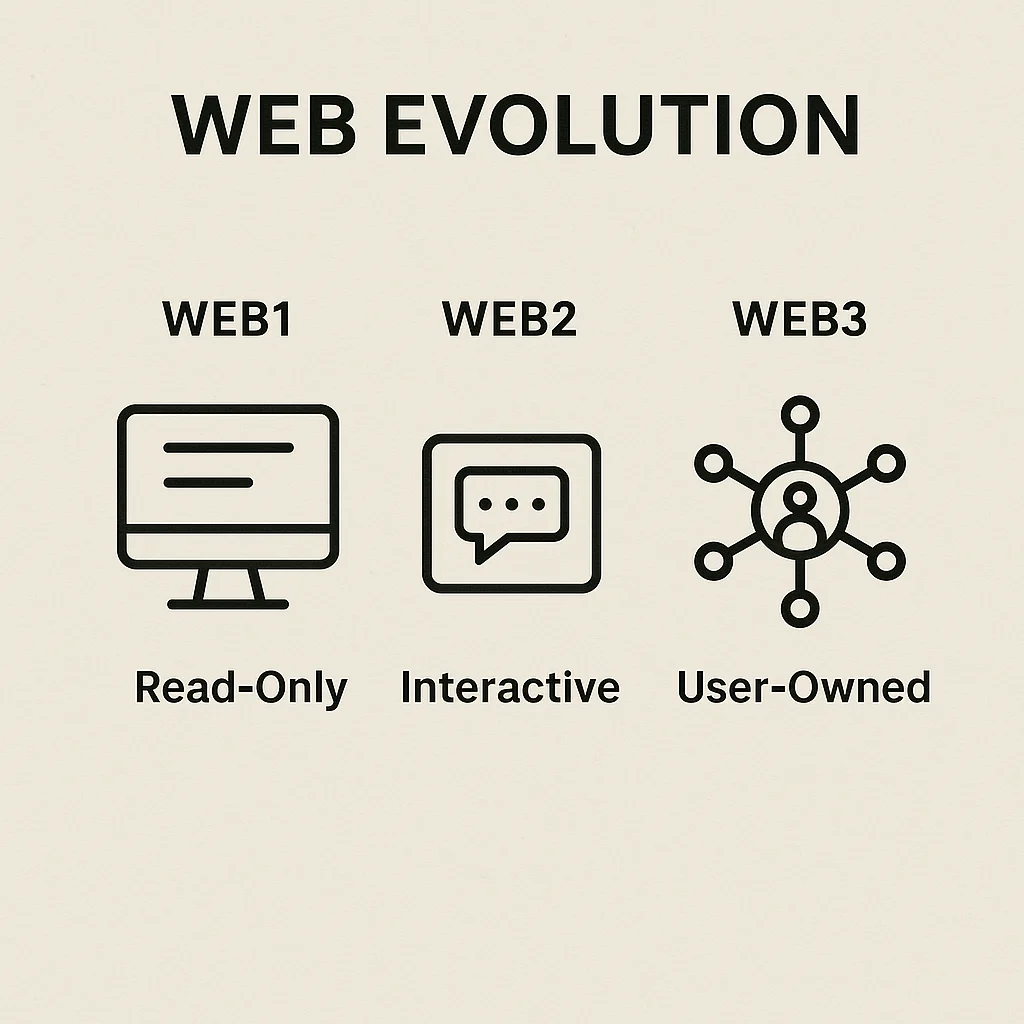
Infographic comparing Web1, Web2, and Web3 with icons and descriptions: read-only, interactive, and user-owned

Real-World Examples

  • ENS domains (.eth addresses) provide decentralized, user-owned website and identity systems
  • IPFS storage offers decentralized file storage resistant to censorship and platform shutdowns
  • DeFi protocols enable financial services without traditional banking intermediaries

Why Beginners Should Care

Web3 adoption remains early-stage with significant user experience challenges compared to polished Web2 applications. Most users aren’t ready to manage private keys for every online interaction.

Decentralization benefits include censorship resistance, platform independence, and user ownership of data and assets created online.

Investment opportunities exist in Web3 infrastructure, but many projects are experimental with uncertain long-term viability and regulatory challenges.

Related Terms: dApp, Decentralization, Self-Sovereign Identity, Token Economy

Back to Crypto Glossary

Similar Posts

  • Ring Signatures

    Ring Signatures: Anonymous Group AuthorizationRing signatures enable one member of a group to create signatures on behalf of the group without revealing which specific member signed. It's like having a group of people where any one can speak for the group anonymously, but observers know the statement came from a legitimate group member.Ring signatures are…

  • Verification

    Verification: Confirming Accuracy and AuthenticityVerification is the process of confirming that information, transactions, or claims are accurate and authentic without requiring trust in the information source. It's like being able to personally test that a diamond is real using scientific instruments instead of just believing the jeweler's word.Verification refers to the mathematical and cryptographic processes…

  • Cross-Chain Bridge

    Cross-Chain Bridge: Connecting Blockchain Islands Cross-chain bridges move assets between different blockchains, connecting isolated cryptocurrency ecosystems. They’re the highways between blockchain cities, but sometimes the bridges collapse. A cross-chain bridge is a protocol that enables the transfer of tokens, data, or smart contract calls between different blockchain networks. Bridges solve blockchain interoperability by creating connections…

  • Project Vetting

    Project Vetting: Investment Due DiligenceProject vetting involves thoroughly researching and evaluating cryptocurrency projects before investing to identify legitimate opportunities and avoid scams. It's like inspecting a house before buying it to check the foundation, plumbing, and electrical systems.Project vetting refers to the comprehensive research and analysis process used to evaluate cryptocurrency projects, including team credentials,…

  • Privacy Coin

    Privacy Coin: Digital Cash That Actually Hides Privacy coins use advanced cryptography to hide transaction details like amounts, senders, and receivers. They’re what Bitcoin was supposed to be before everyone realized blockchain transactions are completely transparent. Privacy coins are cryptocurrencies designed to provide anonymous or untraceable transactions through advanced cryptographic techniques. Unlike Bitcoin where all…

  • Synthetic Asset

    Synthetic Asset: Creating Anything on Blockchain Synthetic assets are blockchain tokens that track the value of real-world assets like stocks, commodities, or currencies. They’re like financial derivatives but programmable and globally accessible. A synthetic asset is a tokenized derivative that tracks the price of an underlying asset without requiring direct ownership of that asset. Smart…