
LayerZero

LayerZero: Omnichain Interoperability Protocol

LayerZero is an interoperability protocol that enables applications to send messages and transfer assets across different blockchains. It’s like having a universal translator for blockchain networks.

LayerZero is a cross-chain communication protocol that enables decentralized applications to operate across multiple blockchains seamlessly. It provides infrastructure for omnichain applications that can access liquidity and users across different networks.

How LayerZero Works

Message passing enables smart contracts on different chains to communicate and trigger actions without requiring users to manually bridge assets.

Ultra Light Nodes provide security verification with minimal overhead by using oracle and relayer networks rather than running full nodes for each supported chain.

Omnichain applications can deploy across multiple networks while maintaining unified state and user experience through LayerZero’s messaging infrastructure.
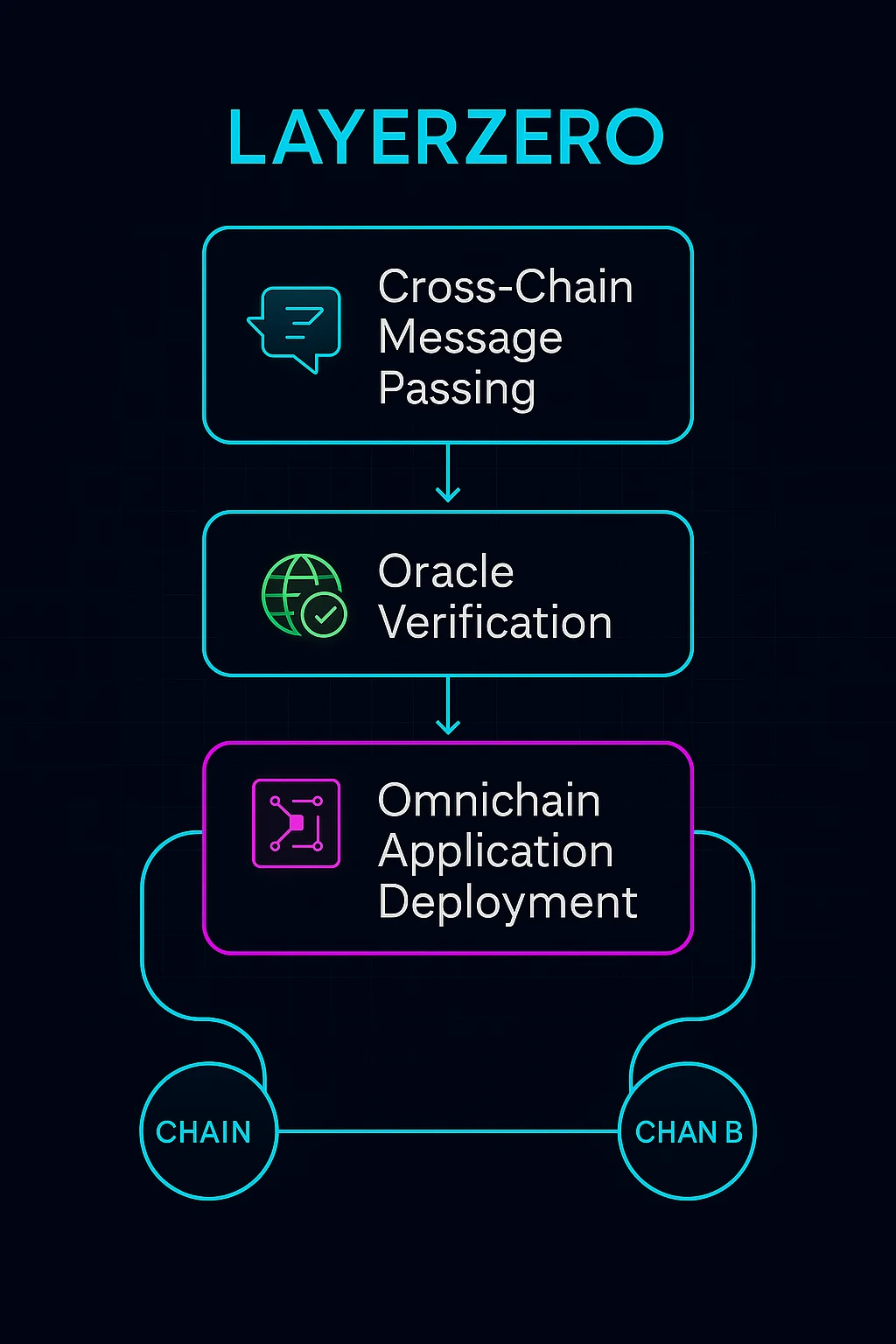
LayerZero architecture diagram showing cross-chain message passing, oracle validation, and omnichain app deployment

Real-World Examples

  • Stargate Finance provides unified liquidity across chains using LayerZero messaging
  • Radiant Capital creates omnichain lending markets through LayerZero infrastructure
  • Various DeFi protocols use LayerZero for cross-chain governance and treasury management

Why Beginners Should Care

Simplified user experience for accessing multi-chain applications without manual bridging or managing assets across different networks.

Infrastructure dependency creates centralization risks if LayerZero experiences outages or technical problems affecting dependent applications.

Expanding ecosystem enables new types of applications that weren’t possible with single-chain limitations or manual bridging requirements.

Related Terms: Cross-Chain Protocol, Omnichain, Message Passing, Interoperability

Back to Crypto Glossary

Similar Posts

  • Total Value Locked (TVL)

    Total Value Locked (TVL): DeFi’s Scorecard TVL measures how much money is deposited in DeFi protocols. It’s like measuring the size of a bank by its total deposits – bigger usually means more trust and activity. Total Value Locked (TVL) is the aggregate value of all assets deposited in a DeFi protocol or across the…

  • Premium

    Premium: Price Above Fair ValuePremium refers to the amount by which an asset's price exceeds its underlying value or reference price. It's like paying extra for convenience or brand name compared to the basic product cost.Premium is the additional amount paid above an asset's fair value, net asset value, or reference price. In cryptocurrency markets, premiums…

  • Verifiable Randomness

    Verifiable Randomness: Provably Fair Random NumbersVerifiable randomness provides cryptographically secure random numbers that can be independently verified for fairness. It's like having dice that everyone can mathematically confirm are not loaded.Verifiable randomness refers to random number generation systems that produce unpredictable outputs while providing cryptographic proofs that the randomness is fair and unbiased. This enables trustless…

  • Bull Market

    Bull Market: When Everything Goes Up Bull markets are when crypto investors feel like geniuses. Prices rise, optimism soars, and everyone becomes a trading expert. Until they don’t. A bull market is a sustained period of rising cryptocurrency prices accompanied by widespread investor optimism. During bull runs, even terrible projects can see massive gains as…

  • Market Cap

    Market Cap: How to Value Crypto Projects Market cap tells you how much the entire crypto market values a project. It’s the most important number for comparing different cryptocurrencies. Market capitalization is the total value of all coins in circulation, calculated by multiplying the current price by the circulating supply. It shows the relative size…

  • Price Feed

    Price Feed: Real-Time Market DataPrice feeds provide real-time cryptocurrency market data to applications and smart contracts that need current asset values. They're like financial news tickers that continuously update with the latest stock prices, but for digital assets and automated systems.Price feed refers to continuous streams of current market prices and trading data that supply…