
Liquidity

Liquidity: How Easily You Can Buy or Sell

Liquidity determines whether you can actually trade your crypto at fair prices. High liquidity means smooth trading. Low liquidity means getting rekt by slippage.

Liquidity refers to how easily an asset can be bought or sold without significantly affecting its price. In crypto markets, liquidity comes from active buyers and sellers providing depth to order books or automated market makers.

How Liquidity Works

Order book depth shows how many buy and sell orders exist at different price levels. Deep order books allow large trades without major price impact.

Market makers provide liquidity by continuously offering to buy and sell at slightly different prices, earning the spread between bid and ask prices.

Liquidity pools in DeFi protocols replace traditional order books with algorithmic market making, allowing trades against pooled assets rather than specific counterparties.
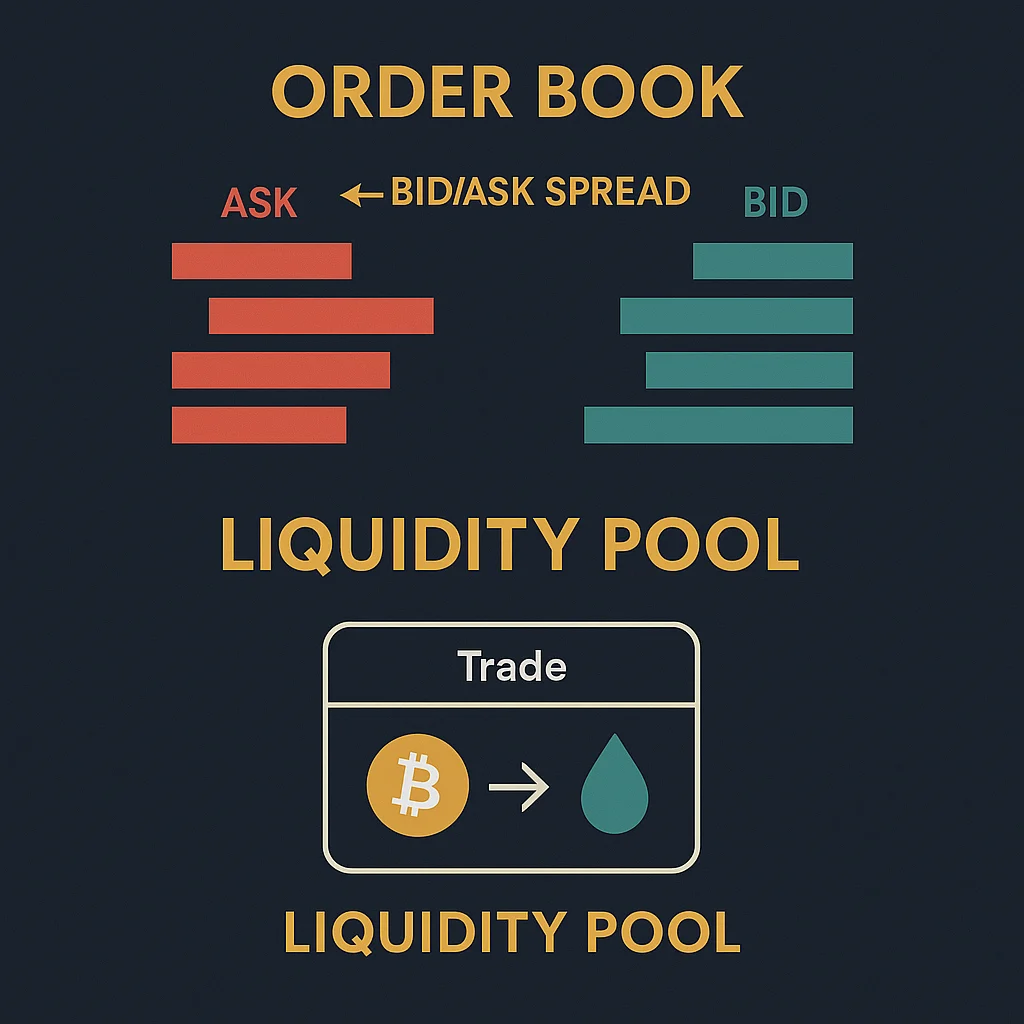
Comparison chart showing order book bid/ask depth and liquidity pool trading interface

Real-World Examples

  • Bitcoin/USD pairs have deep liquidity on major exchanges with tight spreads
  • Small altcoins often have wide spreads and high slippage on trades
  • Uniswap pools provide 24/7 liquidity through automated market makers

Why Beginners Should Care

Poor liquidity means you can’t exit positions quickly without losing money to slippage. A 10% price move might cost you 15% if there’s insufficient liquidity to absorb your trade.

Check spreads before trading smaller coins. Wide bid-ask spreads indicate poor liquidity that will cost you money on every trade.

Major exchanges like Kraken typically offer better liquidity for popular trading pairs than smaller platforms.

Related Terms: Slippage, Market Maker, Order Book, Liquidity Pool

Back to Crypto Glossary

Similar Posts

  • Sunk Cost

    Sunk Cost: Irretrievable Past InvestmentsSunk cost refers to money already spent that cannot be recovered, which shouldn't influence future investment decisions. It's like refusing to leave a terrible movie halfway through just because you already paid for the ticket.Sunk cost describes past investments or expenditures that cannot be recovered and should not factor into future…

  • Ring Signatures

    Ring Signatures: Anonymous Group AuthorizationRing signatures enable one member of a group to create signatures on behalf of the group without revealing which specific member signed. It's like having a group of people where any one can speak for the group anonymously, but observers know the statement came from a legitimate group member.Ring signatures are…

  • SocialFi

    SocialFi: Social Media Meets Financial Incentives SocialFi combines social networking with decentralized finance, rewarding users for creating content and engaging with communities. It’s like getting paid to post, but with actual economic models behind it. SocialFi refers to social finance applications that integrate social media features with DeFi economics, enabling users to monetize social interactions…

  • Credentials

    Credentials: Proof of Identity and QualificationsCredentials are verifiable proofs of identity, qualifications, or achievements that can be digitally verified without contacting issuing authorities. They're like diplomas that anyone can instantly authenticate.Credentials refer to digital or physical documents that prove identity, qualifications, achievements, or authorizations, increasingly being tokenized and verified through blockchain technology. These enable trustless verification…

  • Web3

    Web3: The Decentralized Internet Dream Web3 promises an internet where users own their data, identity, and digital assets instead of tech giants controlling everything. It’s part vision, part reality, part marketing buzzword. Web3 refers to a decentralized version of the internet built on blockchain technology where users control their own data, identity, and assets rather…

  • Buyback

    Buyback: Token Repurchase ProgramsBuyback refers to projects repurchasing their own tokens from the open market, often to reduce supply or return value to token holders. It's like a company buying back its own stock to increase the value of remaining shares.Buyback describes the process where cryptocurrency projects repurchase their own tokens from the open market…