
Sidechain

Sidechain: Independent Chains with Main Chain Connections

Sidechains operate independently while maintaining bridges to main blockchains. They’re like having a separate express lane that connects back to the main highway when needed.

A sidechain is an independent blockchain that runs parallel to a main blockchain and is connected through a two-way bridge allowing asset transfers. Sidechains can have different consensus mechanisms, block times, and features while maintaining interoperability with the parent chain.

How Sidechains Work

Two-way pegs lock assets on the main chain and mint equivalent tokens on the sidechain, enabling transfers between chains. When moving back, sidechain tokens are burned and main chain assets are unlocked.

Independent consensus allows sidechains to optimize for specific use cases like faster transactions, lower fees, or specialized smart contract features without affecting the main chain.

Bridge security varies from centralized custodians to complex multi-signature schemes to fully decentralized smart contract systems, each with different trust assumptions.
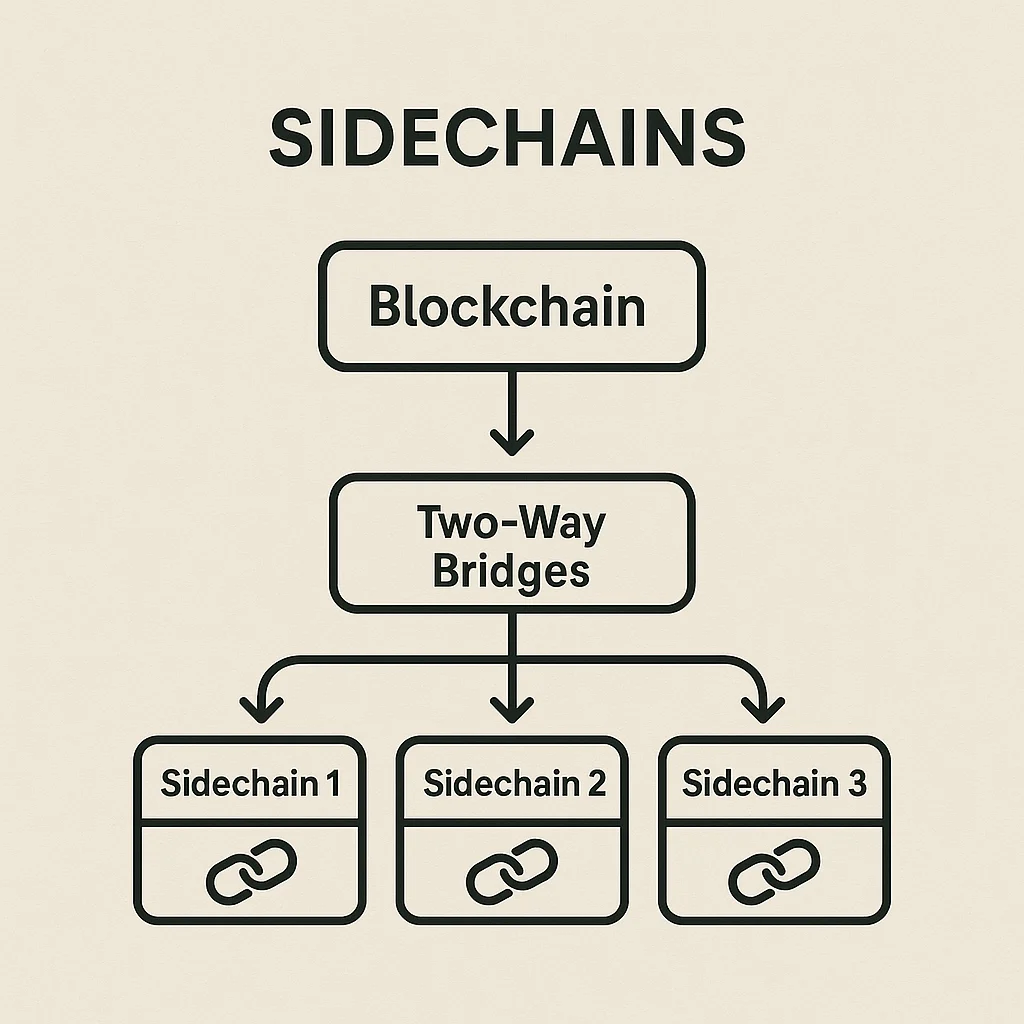
Infographic showing sidechain architecture with a main blockchain connected to multiple sidechains via two-way bridges

Real-World Examples

  • Polygon – Popular Ethereum sidechain offering faster, cheaper transactions
  • xDai Chain – Stablecoin-based sidechain for everyday payments
  • Liquid Network – Bitcoin sidechain for faster settlement between exchanges

Why Beginners Should Care

Lower costs on sidechains make them attractive for testing DeFi protocols or making frequent transactions without expensive main chain fees.

Bridge risks include smart contract vulnerabilities, centralized custody risks, and potential loss of funds if bridge mechanisms fail or get hacked.

Ecosystem fragmentation can occur when liquidity and users move to sidechains, potentially weakening the main chain’s network effects.

Related Terms: Bridge, Layer 2, Two-Way Peg, Interoperability

Back to Crypto Glossary

Similar Posts

  • Difficulty

    Difficulty: Mining Competition AdjustmentDifficulty refers to how hard it is to mine new blocks in proof-of-work cryptocurrencies, automatically adjusting to maintain consistent block times. It's like a video game that gets harder when you're doing too well and easier when you're struggling.Difficulty describes the measure of how computationally challenging it is to find valid proof-of-work…

  • Mooning

    Mooning: When Prices Go Parabolic Mooning describes cryptocurrency prices shooting up dramatically and rapidly. It’s what every crypto holder dreams about and what usually signals dangerous market euphoria. Mooning refers to cryptocurrency prices rising dramatically and rapidly, often in parabolic fashion. The term suggests prices going “to the moon” – reaching astronomical levels that seemed…

  • ENS

    ENS: Ethereum Name ServiceENS provides human-readable names for Ethereum addresses, making cryptocurrency transactions more user-friendly. It's like having domain names for websites instead of remembering IP addresses.Ethereum Name Service (ENS) is a decentralized naming system that maps human-readable names to Ethereum addresses, smart contracts, and other identifiers. ENS makes blockchain interactions more accessible by replacing complex…

  • Bitcoin (BTC)

    Bitcoin (BTC): Digital Money That Banks Can’t Control Bitcoin isn’t just another investment – it’s the financial revolution that started it all. When traditional banks failed us in 2008, Bitcoin emerged as the answer. Bitcoin is digital money that operates without banks, governments, or middlemen controlling it. Think of it as cash for the internet…

  • Proof of Stake (PoS)

    Proof of Stake (PoS): Energy-Efficient Consensus Proof of Stake secures blockchain networks through economic staking rather than energy-intensive mining. It’s like replacing a gold rush with a security deposit system. Proof of Stake (PoS) is a consensus mechanism where validators are chosen to create new blocks based on their stake in the network rather than…

  • Ring Signatures

    Ring Signatures: Anonymous Group AuthorizationRing signatures enable one member of a group to create signatures on behalf of the group without revealing which specific member signed. It's like having a group of people where any one can speak for the group anonymously, but observers know the statement came from a legitimate group member.Ring signatures are…