
Paper Hands

Paper Hands: Quick to Sell, Quick to Regret

Paper hands describes investors who sell at the first sign of trouble or take profits too early. It’s crypto’s version of weak stomach syndrome.

Paper hands refers to investors who sell their cryptocurrency holdings quickly due to fear, panic, or impatience rather than holding through volatility. The term suggests hands too weak to grip investments during turbulent periods.

How Paper Hands Behavior Works

Loss aversion drives paper hands selling – the psychological pain of losing money feels worse than the pleasure of gaining equivalent amounts. First-time investors often sell during initial crashes.

FOMO and FUD cycles trigger paper hands behavior. Investors buy during euphoria (FOMO) then sell during fear campaigns (FUD), repeatedly buying high and selling low.

Lack of conviction in investment thesis makes it easy to abandon positions when prices move against expectations or negative news emerges.
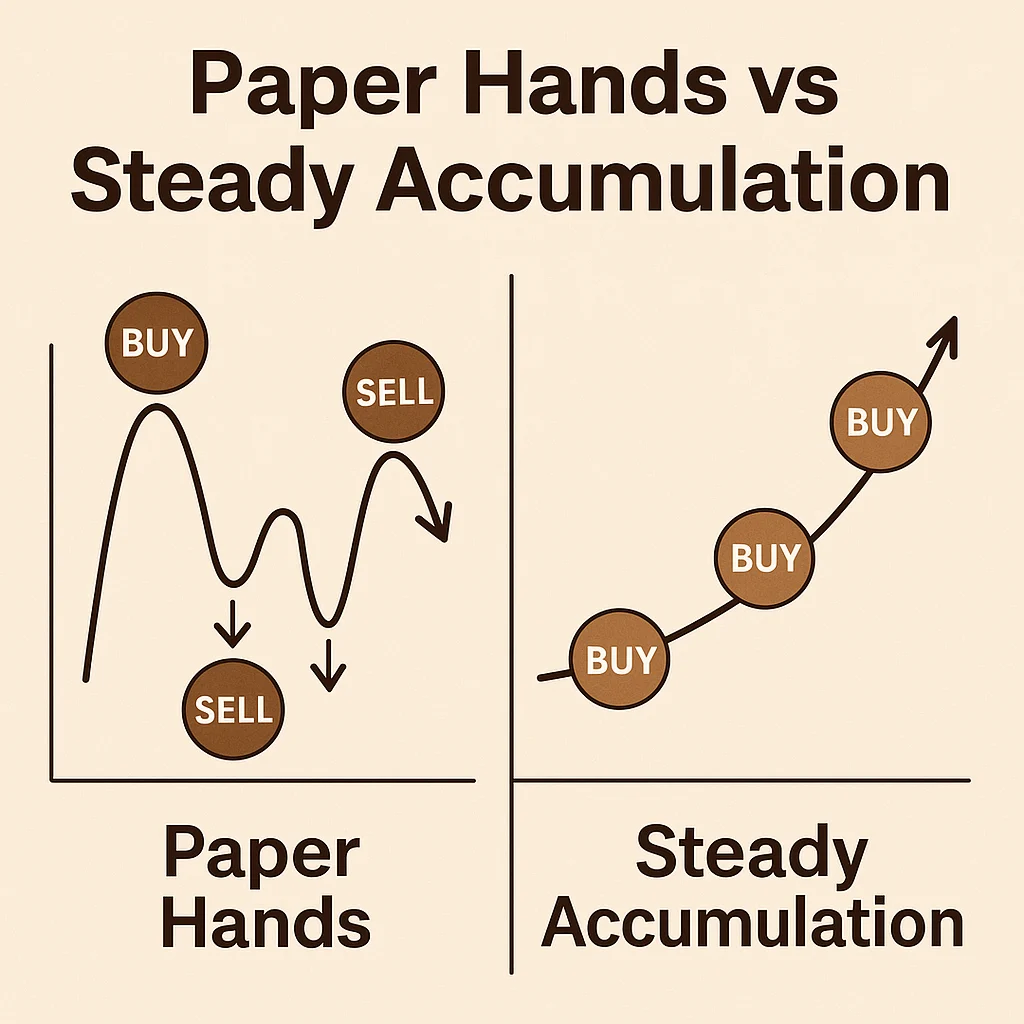
Infographic comparing paper hands behavior of buying high and selling low versus steady accumulation strategy with consistent upward buys

Real-World Examples

  • 2018 crypto crash saw many retail investors sell at losses, missing the 2020-2021 recovery
  • COVID market crash triggered massive selling that reversed within months
  • FTX collapse caused paper hands selling of quality assets due to contagion fears

Why Beginners Should Care

Paper hands behavior destroys wealth through poor timing decisions. Emotional reactions to volatility typically result in buying peaks and selling bottoms.

Education reduces paper hands tendencies. Understanding market cycles, volatility patterns, and fundamental analysis builds conviction needed for successful long-term investing.

Position sizing helps prevent paper hands by only investing amounts you can afford to lose completely, reducing emotional attachment to daily price movements.

Related Terms: Diamond Hands, FOMO, FUD, HODL

Back to Crypto Glossary

Similar Posts

  • Wallet Drainer

    Wallet Drainer: Malicious Fund Extraction Wallet drainers are malicious smart contracts or applications designed to steal all assets from connected wallets through deceptive transaction approvals. They’re digital pickpockets with smart contract superpowers. A wallet drainer is malicious software that tricks users into signing transactions that grant unlimited access to their cryptocurrency holdings. These attacks often…

  • Cross-Chain Bridge

    Cross-Chain Bridge: Connecting Blockchain Islands Cross-chain bridges move assets between different blockchains, connecting isolated cryptocurrency ecosystems. They’re the highways between blockchain cities, but sometimes the bridges collapse. A cross-chain bridge is a protocol that enables the transfer of tokens, data, or smart contract calls between different blockchain networks. Bridges solve blockchain interoperability by creating connections…

  • Token Distribution

    Token Distribution: Allocating Digital AssetsToken distribution refers to how cryptocurrency tokens are allocated among different stakeholders and released into circulation. It's like deciding how to divide up a pie among various groups of people.Token distribution encompasses the initial allocation and ongoing release of cryptocurrency tokens to various stakeholder groups including founders, investors, community members, and…

  • MetaMask

    MetaMask: Your Gateway to Web3 MetaMask is the browser extension wallet that connects you to the decentralized web. It’s like having a crypto wallet built into your browser that talks to every DeFi protocol. MetaMask is a browser extension and mobile wallet that enables interaction with Ethereum-based applications directly through web browsers. It manages private…

  • Gasless Transactions

    Gasless Transactions: Fee-Free User Experience Gasless transactions eliminate the need for users to hold native tokens for transaction fees by having third parties sponsor the gas costs. It’s like having someone else pay for your Uber rides. Gasless transactions enable users to interact with blockchain applications without holding native tokens for gas fees. Third parties,…

  • Asset Rehypothecation

    Asset Rehypothecation: Reusing Collateral for Multiple PurposesAsset rehypothecation involves using the same collateral for multiple financial purposes simultaneously. It's like using your house as collateral for multiple loans at the same time.Asset rehypothecation refers to the practice of using deposited or pledged assets as collateral for additional financial activities beyond their original purpose. This can multiply…