
Autonomous World (AW)

Autonomous World (AW): Persistent Virtual Realities

Autonomous worlds are persistent virtual environments that continue existing and evolving even when no players are actively participating. They’re like having a Minecraft world that keeps running and changing forever.

An Autonomous World (AW) is a virtual environment that operates independently through blockchain infrastructure, maintaining state and enabling interactions without requiring central servers or active management. These worlds persist and evolve according to their programmed rules.

How Autonomous Worlds Work

Blockchain persistence ensures the virtual world continues existing as long as the underlying blockchain operates, independent of any company or server infrastructure.

Player-driven evolution allows inhabitants to modify the world through their actions, with changes permanently recorded on-chain.

Economic sovereignty enables native economies with real value exchange, ownership rights, and governance systems controlled by world inhabitants.
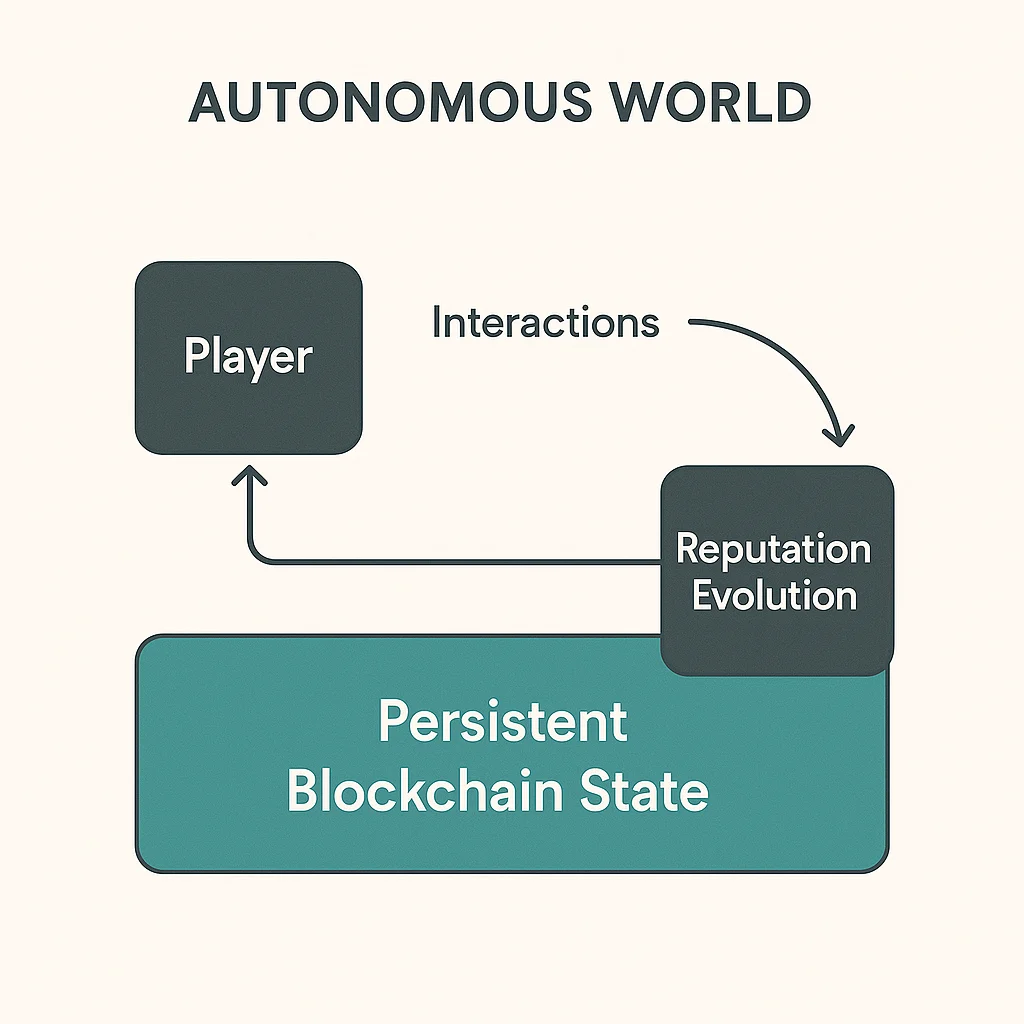
Autonomous world architecture showing player interactions, reputation evolution, and persistent blockchain state enabling independent system behavior.

Real-World Examples

  • Dark Forest – Space exploration game that runs entirely on-chain with hidden information
  • Loot derivatives creating persistent fantasy worlds based on text-based NFTs
  • MUD engine provides infrastructure for building complex autonomous worlds

Why Beginners Should Care

True ownership of virtual assets and land that can’t be taken away by game companies going out of business or changing policies.

Persistent value creation where time and effort invested in virtual worlds retains value indefinitely through blockchain permanence.

Experimental economics as autonomous worlds become laboratories for testing new forms of governance, economics, and social organization.

Related Terms: Metaverse, On-Chain Gaming, Virtual Real Estate, Persistence

Back to Crypto Glossary

Similar Posts

  • Two-Factor Authentication (2FA)

    Two-Factor Authentication (2FA): Your Crypto’s Second Lock 2FA is the minimum security standard for any crypto account worth protecting. If you’re not using it, you’re basically leaving your front door unlocked. Two-factor authentication (2FA) requires two different verification methods to access your account – typically something you know (password) plus something you have (phone or…

  • Hard Fork

    Hard Fork: Splitting the Blockchain Hard forks create permanent splits in blockchain networks, often resulting in two separate cryptocurrencies. They’re like corporate divorces – messy, dramatic, and usually involving lots of arguing about money. A hard fork is a permanent change to a blockchain’s protocol that makes previously invalid blocks valid, or vice versa, requiring…

  • Treasury

    Treasury: Protocol Fund ManagementA treasury is a fund controlled by cryptocurrency projects or DAOs for development, operations, and community initiatives. It's like a company's bank account that's managed by community voting instead of executives.A treasury refers to cryptocurrency funds held and managed by protocols, DAOs, or projects for operational expenses, development funding, and community initiatives. These…

  • Credentials

    Credentials: Proof of Identity and QualificationsCredentials are verifiable proofs of identity, qualifications, or achievements that can be digitally verified without contacting issuing authorities. They're like diplomas that anyone can instantly authenticate.Credentials refer to digital or physical documents that prove identity, qualifications, achievements, or authorizations, increasingly being tokenized and verified through blockchain technology. These enable trustless verification…

  • Exit Strategy

    Exit Strategy: Investment Withdrawal PlanningAn exit strategy is a predetermined plan for selling cryptocurrency investments to realize profits or limit losses. It's like having a fire escape route planned before you need it, so you know exactly what to do when the time comes.Exit strategy refers to a predetermined plan that defines when, how, and…

  • Wallet Signature Spoofing

    Wallet Signature Spoofing: Fake Authorization Attacks Wallet signature spoofing tricks users into signing malicious transactions that appear legitimate but actually authorize harmful actions. It’s like signing a contract where the fine print changes after you sign. Wallet signature spoofing involves presenting misleading information about transaction contents to trick users into signing authorizations for unintended actions….