
dApp Browser

dApp Browser: Gateway to Decentralized Apps

dApp browsers enable easy access to decentralized applications through integrated wallet functionality and Web3 connectivity. They’re like having a web browser that speaks cryptocurrency natively.

A dApp browser is a specialized web browser or application that integrates cryptocurrency wallet functionality to seamlessly interact with decentralized applications. These browsers handle Web3 connections, transaction signing, and blockchain interactions automatically.

How dApp Browsers Work

Wallet integration provides built-in cryptocurrency wallet functionality, eliminating the need for separate browser extensions or external wallet applications.

Web3 connectivity enables automatic connection to decentralized applications with integrated transaction signing and blockchain interaction capabilities.

Security features include transaction preview, dApp permission management, and protection against malicious websites or smart contracts.
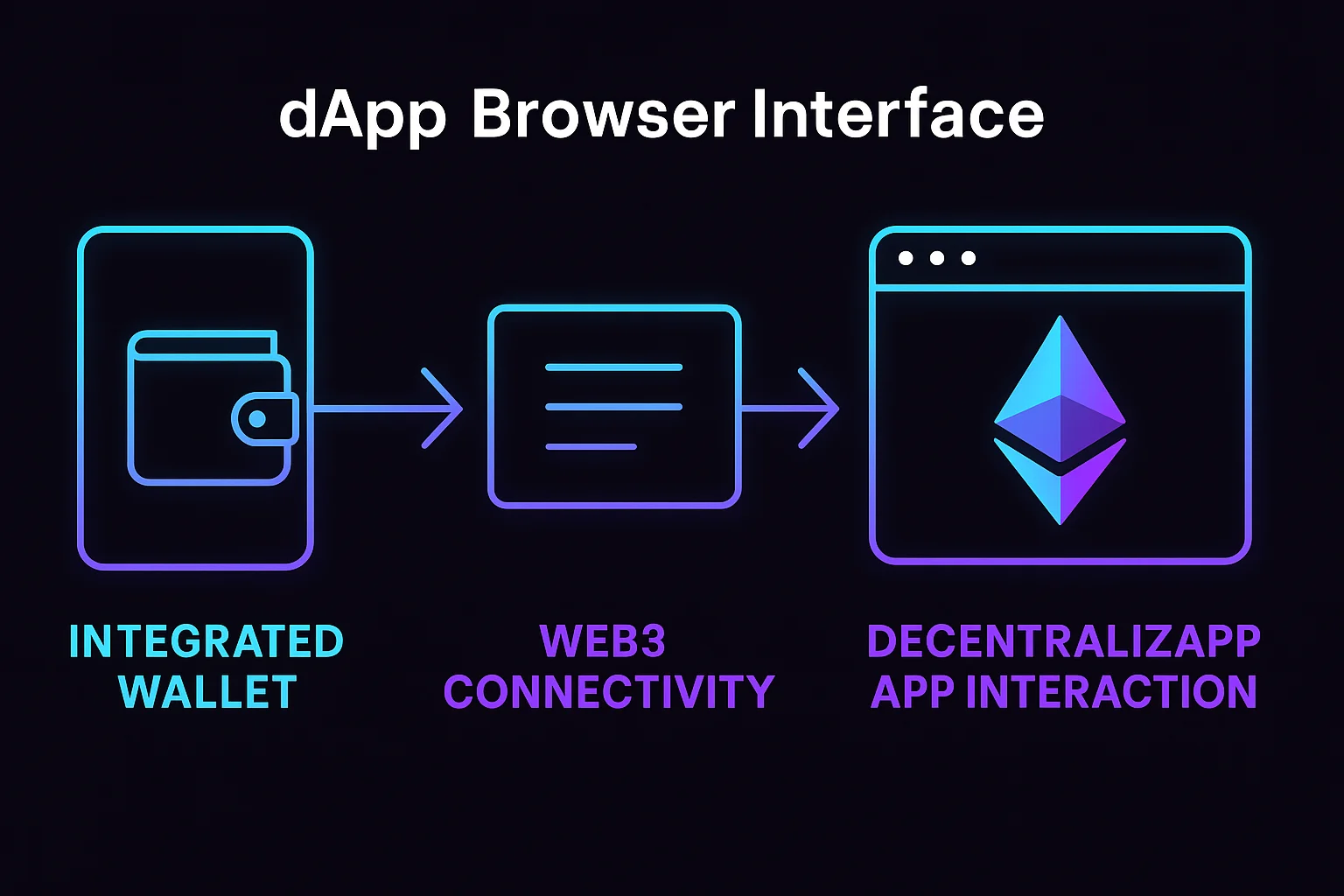
dApp browser interface showing integrated wallet, Web3 connectivity, transaction signing, and decentralized app interaction

  • MetaMask mobile browser combines wallet functionality with Web3-enabled browsing
  • Trust Wallet browser provides integrated access to DeFi protocols and dApps
  • Brave browser includes built-in crypto wallet and Web3 functionality

Why Beginners Should Care

Simplified onboarding eliminates complex setup procedures for accessing decentralized applications and DeFi protocols.

Integrated security provides better protection than manually managing wallet connections and transaction approvals across multiple applications.

Mobile accessibility enables smartphone users to access the full range of Web3 applications without desktop computer requirements.

Related Terms: dApp, Web3, Wallet Integration, Transaction Signing

Back to Crypto Glossary

Similar Posts

  • Token Economics

    Token Economics: Digital Asset Value DesignToken economics encompasses the economic principles and mechanisms that govern cryptocurrency token value, distribution, and utility. It's like designing the economic system for a digital nation.Token economics (tokenomics) refers to the study and design of economic systems around cryptocurrency tokens, including supply mechanisms, distribution models, utility functions, and incentive structures. Good…

  • Sharding

    Sharding: Splitting Networks for Speed Sharding divides blockchain networks into smaller pieces that process transactions in parallel. It’s like adding more checkout lanes at the grocery store – same capacity, faster service. Sharding is a scaling technique that splits a blockchain network into smaller, parallel chains called shards that process transactions independently. Each shard handles…

  • Blockchain Oracle Network

    Blockchain Oracle Network: Decentralized Data Feeds Blockchain oracle networks provide external data to smart contracts through decentralized systems rather than single data sources. It’s like having multiple weather stations instead of relying on one thermometer. A blockchain oracle network is a decentralized system of nodes that collectively provide external data to blockchain networks, reducing single…

  • Smart Contract Risk

    Smart Contract Risk: Code-Based VulnerabilitiesSmart contract risk encompasses all potential vulnerabilities and failures in automated blockchain programs. It's like the risk that the software controlling your digital money might have bugs or be exploited.Smart contract risk refers to potential losses from bugs, vulnerabilities, exploits, or unexpected behavior in smart contract code that controls cryptocurrency assets…

  • Gas Optimization

    Gas Optimization: Reducing Transaction CostsGas optimization involves techniques to minimize the computational cost of blockchain transactions and smart contracts. It's like finding the most fuel-efficient route for your digital transactions.Gas optimization refers to practices and techniques used to reduce the gas consumption of blockchain transactions and smart contract operations. This minimizes transaction costs and improves application…

  • AML (Anti-Money Laundering)

    AML (Anti-Money Laundering): Fighting Financial Crime AML regulations force crypto businesses to monitor and report suspicious activities. It’s the government’s attempt to prevent crypto from becoming a money laundering paradise. Anti-Money Laundering (AML) refers to laws, regulations, and procedures designed to prevent criminals from disguising illegally obtained funds as legitimate income. Crypto exchanges and businesses…