
Account Abstraction

Account Abstraction: Smart Contract Wallets

Account abstraction turns wallets into programmable smart contracts with custom logic for transaction validation. It’s like upgrading from a basic calculator to a full computer.

Account abstraction allows user accounts to be controlled by smart contract code rather than simple private key signatures. This enables programmable wallets with custom authentication, automatic payments, social recovery, and other advanced features impossible with traditional accounts.

How Account Abstraction Works

Custom validation logic replaces standard signature checks with programmable rules like multi-signature requirements, time-based restrictions, or biometric authentication.

Sponsored transactions enable third parties to pay gas fees for users, removing the need to hold native tokens for transaction costs.

Bundled operations combine multiple actions into single transactions, like approving and swapping tokens in one step rather than separate transactions.
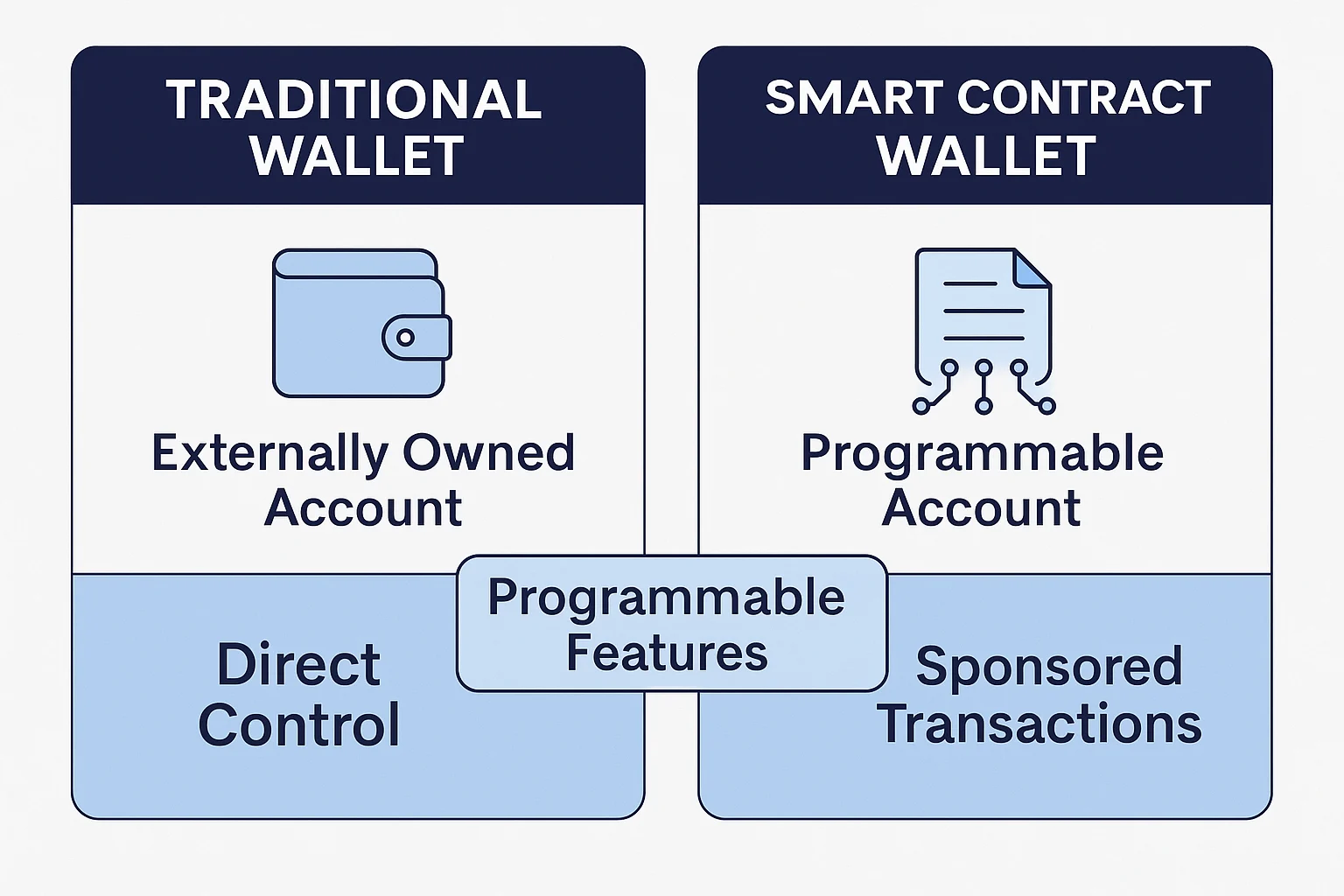
Account abstraction comparison showing traditional externally owned wallet vs smart contract wallet with programmable features and sponsored transactions.

Real-World Examples

  • Safe (formerly Gnosis Safe) provides multisig smart contract wallets with recovery features
  • Argent offers mobile wallets with social recovery and gasless transactions
  • EIP-4337 standardizes account abstraction implementation across Ethereum

Why Beginners Should Care

Better user experience eliminates many crypto UX pain points like gas fee management, seed phrase backup, and irreversible transaction mistakes.

Enhanced security through programmable rules like spending limits, trusted contacts for recovery, and automatic fraud detection that goes beyond simple private key protection.

Mass adoption potential as account abstraction makes crypto wallets behave more like traditional banking apps that mainstream users already understand.

Related Terms: Smart Contract, Multi-Signature, Social Recovery, Gas Fees

Back to Crypto Glossary

Similar Posts

  • Exchange

    Exchange: Where Crypto Gets Bought and Sold Crypto exchanges are the on-ramps to digital money. But not all exchanges are created equal – some prioritize security, others prioritize profits. A cryptocurrency exchange is a platform where you can buy, sell, and trade cryptocurrencies using traditional money or other digital assets. Think of it as a…

  • Monero

    Monero: Privacy-Focused CryptocurrencyMonero is a privacy-focused cryptocurrency that hides transaction details by default. It's like having a completely private bank account where no one can see your balance or transaction history.Monero is a privacy-focused cryptocurrency that uses advanced cryptographic techniques to hide transaction amounts, sender addresses, and recipient addresses by default. This provides strong financial privacy…

  • Gasless Transactions

    Gasless Transactions: Fee-Free User Experience Gasless transactions eliminate the need for users to hold native tokens for transaction fees by having third parties sponsor the gas costs. It’s like having someone else pay for your Uber rides. Gasless transactions enable users to interact with blockchain applications without holding native tokens for gas fees. Third parties,…

  • Wallet Connect

    Wallet Connect: Universal dApp Connection Standard WalletConnect is an open protocol that enables secure connections between mobile wallets and desktop applications. It’s like Bluetooth for crypto wallets and dApps. WalletConnect is a communication protocol that allows cryptocurrency wallets to interact with decentralized applications across different devices and platforms. It enables secure, encrypted connections without exposing…

  • Wallet Signature Spoofing

    Wallet Signature Spoofing: Fake Authorization Attacks Wallet signature spoofing tricks users into signing malicious transactions that appear legitimate but actually authorize harmful actions. It’s like signing a contract where the fine print changes after you sign. Wallet signature spoofing involves presenting misleading information about transaction contents to trick users into signing authorizations for unintended actions….

  • Utility Token

    Utility Token: Digital Tools with PurposeUtility tokens provide access to specific products, services, or features within blockchain ecosystems. They're like arcade tokens that let you play specific games or use certain services.A utility token is a cryptocurrency designed to provide access to a product, service, or feature within a specific blockchain ecosystem rather than serving…