
Blockchain Oracle Network

Blockchain Oracle Network: Decentralized Data Feeds

Blockchain oracle networks provide external data to smart contracts through decentralized systems rather than single data sources. It’s like having multiple weather stations instead of relying on one thermometer.

A blockchain oracle network is a decentralized system of nodes that collectively provide external data to blockchain networks, reducing single points of failure and manipulation risks. Multiple independent operators contribute to data accuracy and reliability.

How Oracle Networks Work

Multiple data sources aggregate information from various external APIs, exchanges, and data providers to create more reliable price feeds.

Consensus mechanisms combine individual oracle reports using weighted averaging, outlier detection, or voting systems to determine final data values.

Economic incentives reward honest data provision while penalizing operators who provide inaccurate or manipulated information.
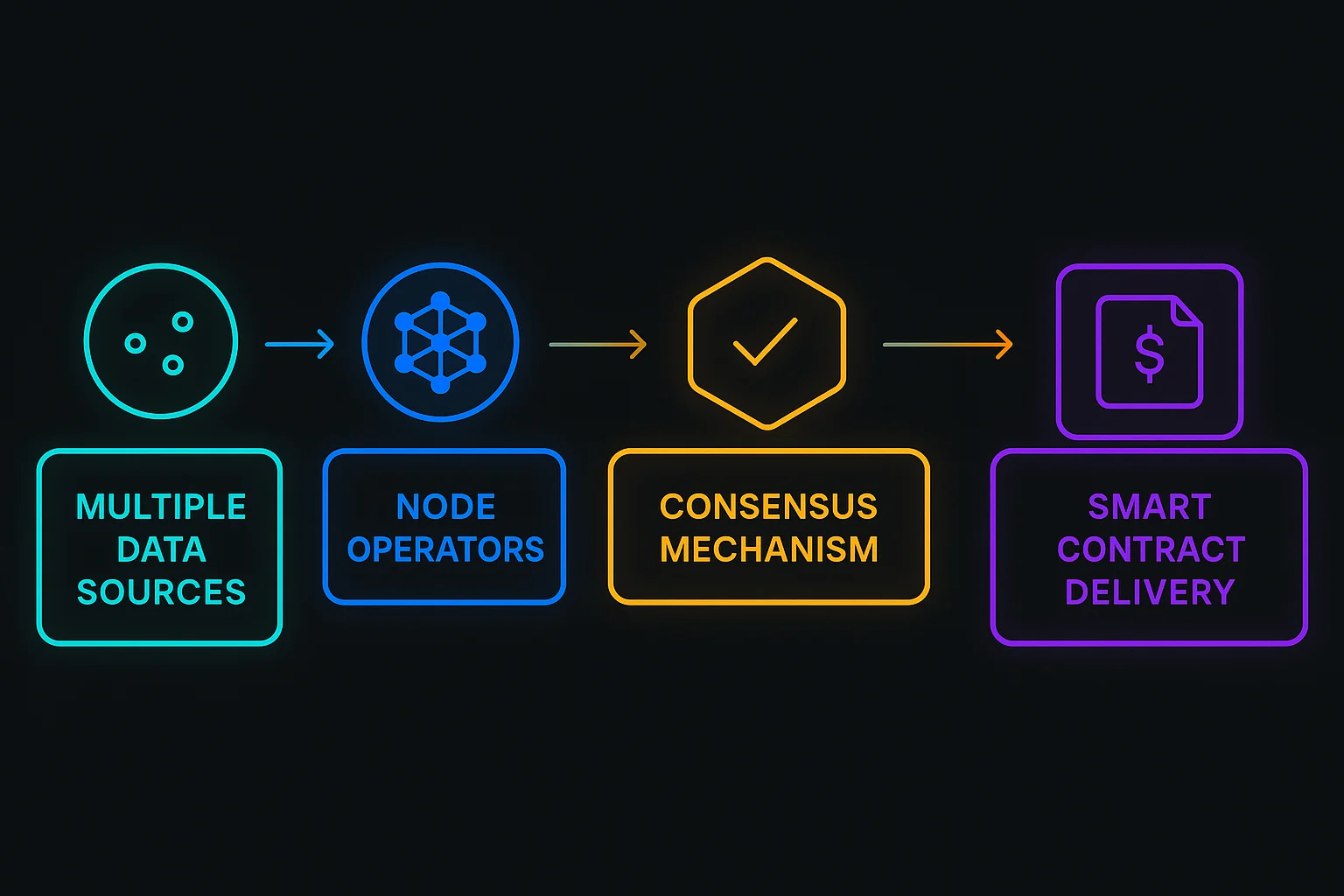
Oracle network architecture showing data sources, node operators, consensus mechanism, and smart contract delivery

Real-World Examples

  • Chainlink operates the largest decentralized oracle network with thousands of nodes
  • Band Protocol provides cross-chain oracle services with delegated proof of stake
  • Pyth Network focuses on high-frequency financial data with sub-second updates

Why Beginners Should Care

Data reliability improves through decentralization compared to single oracle sources that could fail or be manipulated.

DeFi security depends heavily on accurate price feeds for lending, trading, and liquidation mechanisms.

Network effects make established oracle networks more valuable as they gain more data sources and users.

Related Terms: Oracle, Price Feed, Smart Contract

Back to Crypto Glossary

Similar Posts

  • Multi-Chain

    Multi-Chain: Using Multiple Blockchain Networks Multi-chain refers to applications, strategies, or ecosystems that operate across multiple different blockchain networks simultaneously. It’s like being multilingual in the blockchain world. Multi-chain describes systems that utilize multiple different blockchain networks rather than being limited to a single chain. This approach leverages the unique strengths of different blockchains while…

  • Democratic Governance

    Democratic Governance: Community-Controlled Decision MakingDemocratic governance enables community members to participate in project decisions through voting and proposal systems. It's like having a democracy where token holders are the citizens.Democratic governance refers to decision-making systems where community members have voting rights and influence over project direction, protocol changes, and resource allocation. Token holdings typically determine voting…

  • HODL

    HODL: The Art of Doing Nothing HODL started as a typo but became crypto’s most important investment strategy. Sometimes the best move is not moving at all. HODL means holding cryptocurrency long-term regardless of short-term price volatility, derived from a misspelled “hold” in a 2013 Bitcoin forum post. It represents the strategy of buying and…

  • Anti-Sybil Mechanism

    Anti-Sybil Mechanism: Preventing Fake Identity Attacks Anti-Sybil mechanisms prevent individuals from creating multiple fake identities to gain unfair advantages in voting, airdrops, or governance systems. They’re like requiring photo ID to prevent ballot stuffing. Anti-Sybil mechanisms are systems designed to prevent or detect when single entities create multiple fake identities to manipulate voting, governance, or…

  • Web3

    Web3: The Decentralized Internet Dream Web3 promises an internet where users own their data, identity, and digital assets instead of tech giants controlling everything. It’s part vision, part reality, part marketing buzzword. Web3 refers to a decentralized version of the internet built on blockchain technology where users control their own data, identity, and assets rather…

  • Block Building

    Block Building: Transaction Assembly ProcessBlock building is the process of selecting and organizing transactions into blocks that will be added to the blockchain. It's like a chef choosing ingredients and assembling them into a complete meal that satisfies both taste and nutritional requirements.Block building refers to the process where miners or validators select, order, and…