
Restaking Slashing

Restaking Slashing: Enhanced Penalty Risks

Restaking slashing involves penalties from multiple protocols simultaneously, amplifying potential losses for validators who secure additional networks. It’s like being liable for multiple insurance policies with a single accident.

Restaking slashing refers to the enhanced penalty mechanisms that apply when validators use restaked assets to secure multiple protocols, potentially facing slashing from multiple sources for single violations. This creates compounded risk but also enhanced rewards.

How Restaking Slashing Works

Multiple slashing conditions from different protocols can trigger simultaneously, creating larger penalty exposure than traditional single-protocol staking.

Cascading failures may occur when slashing in one protocol affects the validator’s ability to meet requirements in other protocols they’re securing.

Risk amplification means validators face greater potential losses in exchange for earning rewards from multiple sources simultaneously.
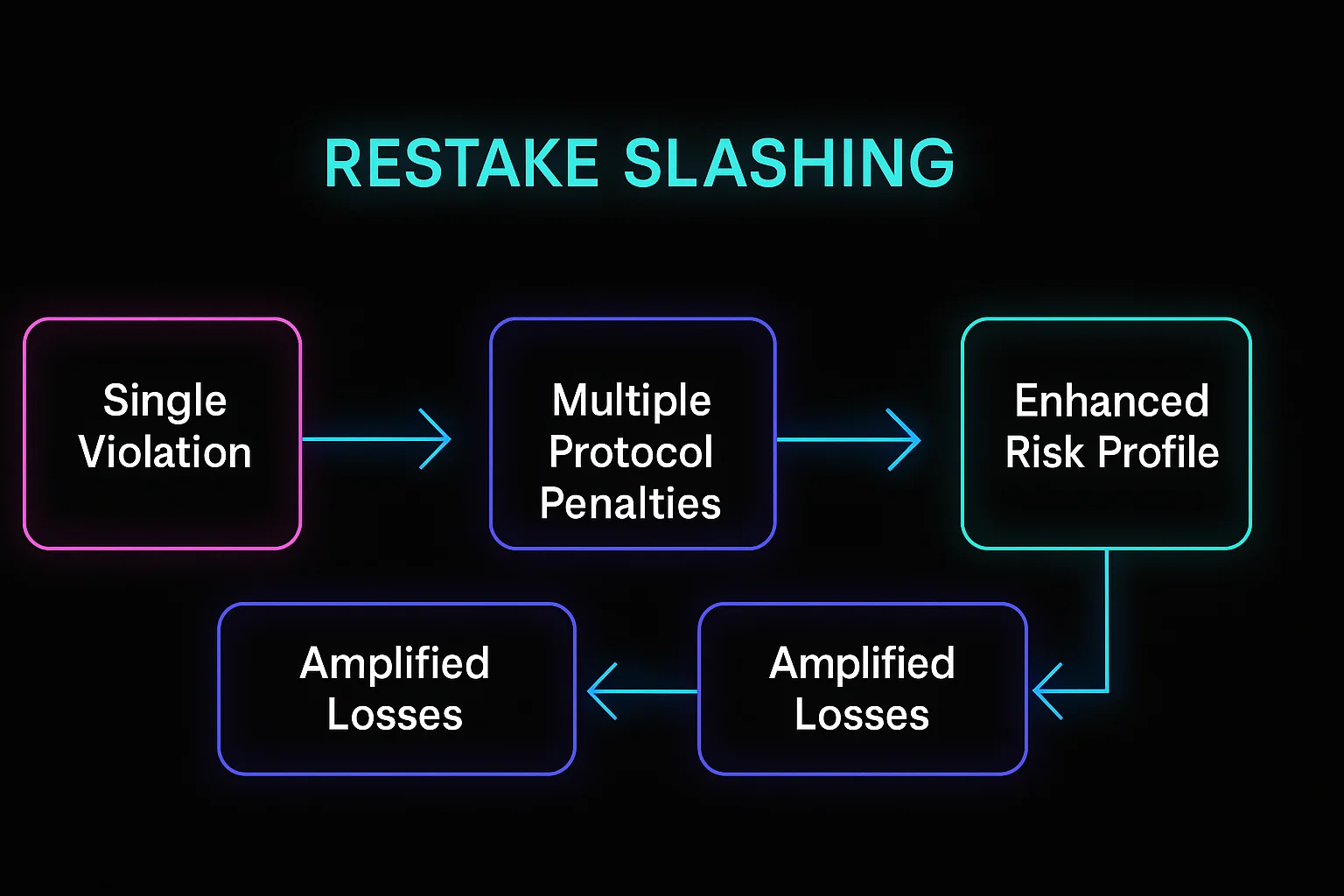
Restaking slashing diagram showing single violation, multiple protocol penalties, amplified losses, and enhanced risk profile

Real-World Examples

  • EigenLayer restaking creates exposure to slashing from both Ethereum and additional protocol violations
  • Babylon Bitcoin staking introduces slashing mechanisms to normally non-slashable Bitcoin
  • Various middleware protocols that add their own slashing conditions to base layer stakes

Why Beginners Should Care

Risk multiplication requires careful consideration of whether enhanced yields justify significantly increased slashing exposure.

Operator selection becomes more critical when choosing validators who must competently manage multiple protocol requirements.

Insurance considerations may become important for large restaking positions given the amplified penalty risks.

Related Terms: Restaking, Slashing, Validator, Risk Management

Back to Crypto Glossary

Similar Posts

  • zkSync

    zkSync: Ethereum’s Zero-Knowledge Scaling zkSync is a Layer 2 scaling solution that uses zero-knowledge proofs to bundle transactions while maintaining Ethereum’s security. It’s like having an express lane that’s mathematically guaranteed to follow traffic laws. zkSync is a zero-knowledge rollup that scales Ethereum by processing transactions off-chain and submitting cryptographic proofs of validity to the…

  • Sandwich Attack

    Sandwich Attack: Extracting Value from Your Trades Sandwich attacks place trades before and after your transaction to manipulate prices and extract profit from your slippage. It’s like cutting in line twice – once in front of you and once behind you. A sandwich attack involves placing a buy order immediately before a victim’s trade and…

  • Halving

    Halving: Cutting Block Rewards in Half Halving events reduce block rewards by 50%, creating artificial scarcity that historically triggers major bull markets. It’s like cutting gold mining output in half overnight. Halving is a pre-programmed event that reduces block rewards by half, typically occurring every four years or after a specific number of blocks. This…

  • Chain Reorg (Reorganization)

    Chain Reorg (Reorganization): Blockchain History Changes Chain reorgs occur when a blockchain adopts a different version of transaction history, potentially reversing confirmed transactions. It’s like time travel, but messier and more expensive. A chain reorganization (reorg) happens when a blockchain network adopts an alternative chain of blocks as the canonical history, potentially reversing previously confirmed…

  • Real Yield

    Real Yield: Sustainable Revenue-Based Returns Real yield comes from actual protocol revenue rather than token emissions or inflationary rewards. It’s the difference between earning from productive business activity versus printing more money. Real yield refers to returns generated from genuine protocol revenue, fees, or value creation rather than token inflation or emissions. These yields can…

  • Decentralized Identity (DID)

    Decentralized Identity (DID): Self-Sovereign Digital Identity DIDs give users control over their digital identity without relying on centralized authorities like governments or tech companies. It’s like having a passport that you issue and control yourself. Decentralized Identity (DID) is a digital identity framework that gives individuals control over their personal data and identity verification without…