
Smart Contract Royalties

Smart Contract Royalties: Automated Creator Payments

Smart contract royalties automatically pay creators a percentage every time their NFTs are resold. It’s like having a永続 commission that follows your work forever.

Smart contract royalties are automated payment mechanisms built into NFT contracts that send a percentage of each resale back to the original creator. These payments happen automatically through code, ensuring creators benefit from secondary market appreciation.

How Smart Contract Royalties Work

Embedded logic in NFT smart contracts specifies royalty percentages and recipient addresses that execute automatically during transfers or sales.

Marketplace integration enables platforms like OpenSea to read royalty information and automatically deduct payments during transactions.

Perpetual payments continue for as long as the NFT exists and gets traded, providing ongoing income streams for creators beyond initial sales.
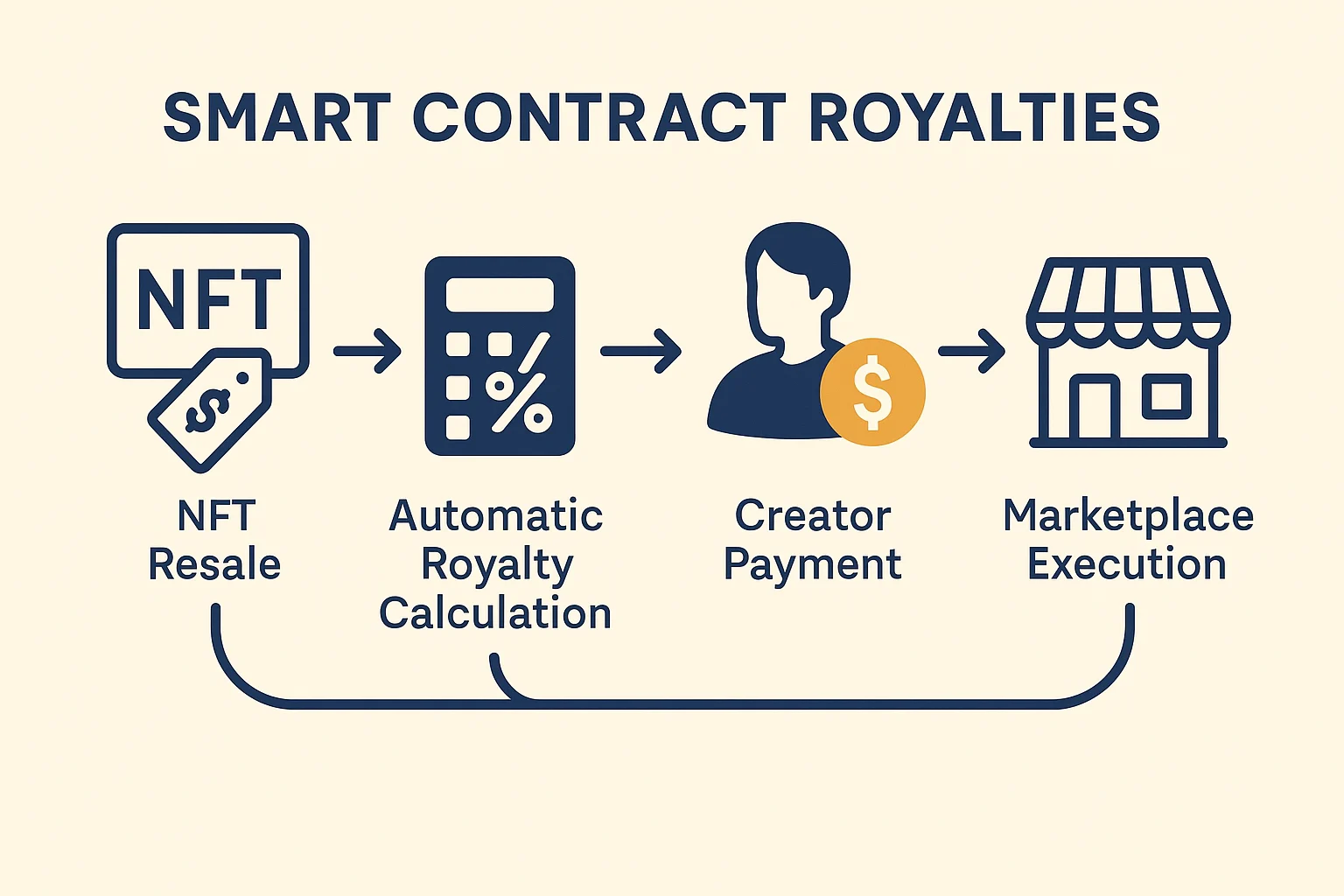
Infographic showing smart contract royalties process: NFT resale, automatic royalty calculation, creator payment, and marketplace execution

Real-World Examples

  • Art NFTs typically include 5-10% royalties that pay artists on every resale
  • Music NFTs enable musicians to earn from secondary market trading of their work
  • Gaming assets provide ongoing revenue to developers when players trade items

Why Beginners Should Care

Creator sustainability enables artists and developers to build long-term businesses rather than relying only on initial sales revenue.

Buyer transparency as royalty information is visible before purchase, allowing collectors to understand the full cost structure.

Enforcement challenges since some marketplaces have started making royalties optional, potentially undermining creator income expectations.

Related Terms: NFT, Smart Contract, Secondary Market

Back to Crypto Glossary

Similar Posts

  • |

    zkEVM

    zkEVM: Zero-Knowledge Ethereum Virtual Machine zkEVM provides Ethereum compatibility with zero-knowledge proof validation, enabling existing dApps to run on faster, cheaper networks while maintaining security. It’s like having Ethereum that’s been turbocharged with privacy and speed. zkEVM is a zero-knowledge virtual machine that executes Ethereum transactions and smart contracts while generating cryptographic proofs of correct…

  • Token Lockup

    Token Lockup: Preventing Early Selling Token lockups prevent allocated tokens from being sold or transferred for specific time periods. It’s like putting your poker winnings in a time-locked safe to prevent impulse spending. Token lockup is a mechanism that prevents token holders from selling, transferring, or accessing their tokens until predetermined conditions are met. Lockups…

  • Soft Fork

    Soft Fork: Backward-Compatible Upgrades Soft forks tighten blockchain rules without breaking compatibility. They’re the diplomatic approach to network upgrades – everyone can still participate even if they don’t upgrade immediately. A soft fork is a backward-compatible change to blockchain protocol rules that makes previously valid blocks invalid while keeping previously invalid blocks invalid. Old nodes…

  • Storage Rent

    Storage Rent: Pay-per-Use Blockchain StorageStorage rent is a proposed mechanism where users pay ongoing fees for maintaining data on blockchain networks. It's like paying monthly rent for keeping files in cloud storage instead of a one-time purchase.Storage rent refers to fee mechanisms that charge users for ongoing blockchain storage rather than allowing permanent storage after…

  • Self-Custody

    Self-Custody: Direct Asset ControlSelf-custody means personally controlling your cryptocurrency private keys rather than trusting third parties to hold your assets. It's like keeping cash in your own safe instead of depositing it in someone else's bank account.Self-custody refers to the practice of personally maintaining control over cryptocurrency private keys and digital assets without relying on…

  • Finality

    Finality: Transaction IrreversibilityFinality refers to the point when blockchain transactions become irreversible and permanently confirmed. It's like when ink dries on a signed contract – the deal is done and can't be changed.Finality is the property of blockchain transactions that ensures they cannot be reversed, modified, or cancelled once confirmed. Different blockchain networks achieve finality through…