
Soulbound Token (SBT)

Soulbound Token (SBT): Non-Transferable Achievements

Soulbound tokens are NFTs that cannot be transferred or sold once received. They represent achievements, credentials, or identity elements that should remain permanently attached to specific individuals.

A Soulbound Token (SBT) is a non-fungible token that is permanently bound to a specific wallet address and cannot be transferred or sold. They represent personal achievements, credentials, or identity elements that shouldn’t be tradeable.

How Soulbound Tokens Work

Transfer restrictions are built into the smart contract code, preventing SBTs from being moved between wallets after initial minting.

Identity binding creates permanent associations between individuals and their achievements, credentials, or reputation markers.

Composable reputation allows multiple SBTs to build comprehensive identity profiles across different domains and time periods.
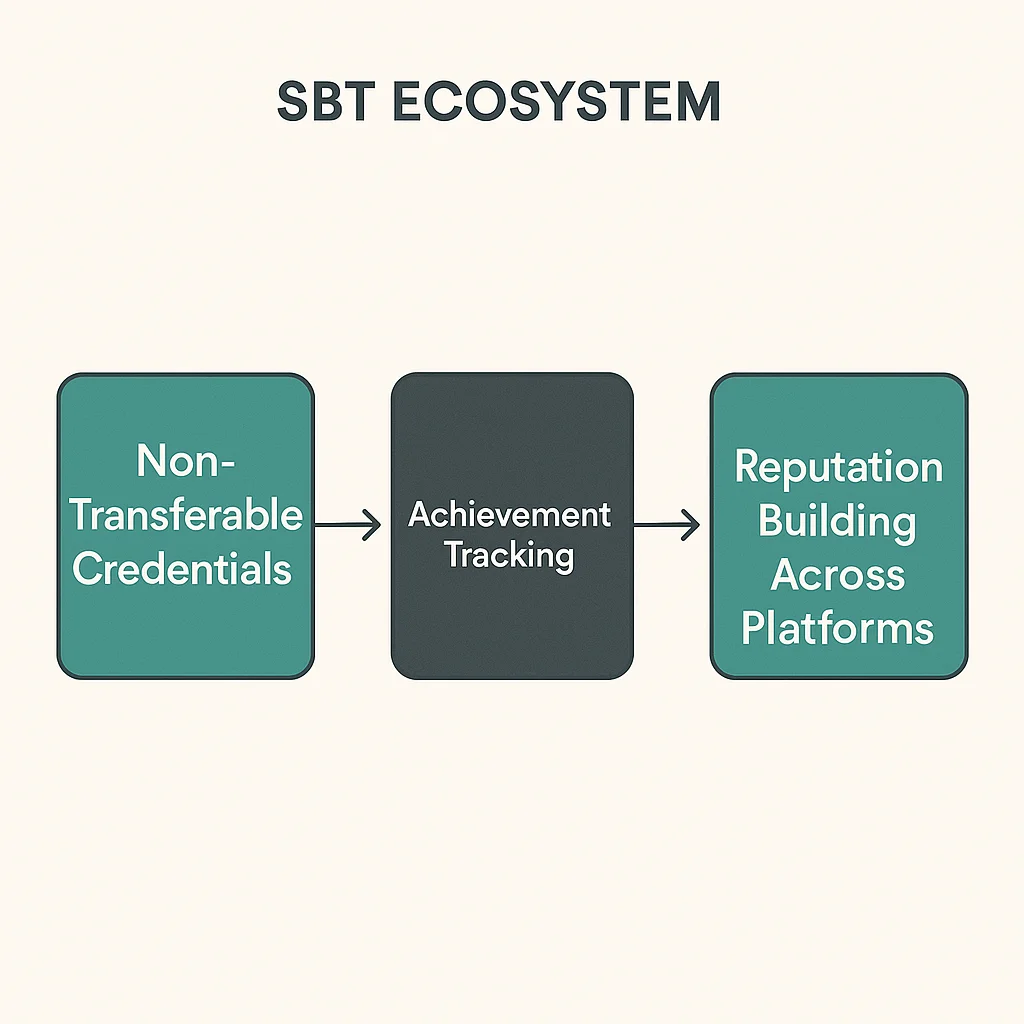
SBT ecosystem diagram showing non-transferable credentials, achievement tracking, and reputation building across platforms.

Real-World Examples

  • University diplomas as SBTs would prevent credential fraud and enable instant verification
  • Professional certifications could be issued as SBTs for permanent skill verification
  • Event attendance tokens prove participation without allowing secondary market trading

Why Beginners Should Care

Authentic credentials that can’t be bought or sold, ensuring achievements represent genuine accomplishment rather than financial resources.

Reputation systems built on SBTs could enable more meaningful social and professional networking based on verified accomplishments.

Privacy considerations as permanent credential binding could enable unwanted tracking and discrimination based on past activities.

Related Terms: NFT, Decentralized Identity, Reputation System, Credentials

Back to Crypto Glossary

Similar Posts

  • Governance Participation

    Governance Participation: Active Protocol InvolvementGovernance participation involves actively engaging in decision-making processes for cryptocurrency projects and protocols. It's like being an active citizen who votes and participates in community decisions.Governance participation refers to active involvement in protocol decision-making through voting, proposal creation, delegation, and other governance mechanisms. This enables community members to influence project direction and…

  • Storage Rent

    Storage Rent: Pay-per-Use Blockchain StorageStorage rent is a proposed mechanism where users pay ongoing fees for maintaining data on blockchain networks. It's like paying monthly rent for keeping files in cloud storage instead of a one-time purchase.Storage rent refers to fee mechanisms that charge users for ongoing blockchain storage rather than allowing permanent storage after…

  • AML (Anti-Money Laundering)

    AML (Anti-Money Laundering): Fighting Financial Crime AML regulations force crypto businesses to monitor and report suspicious activities. It’s the government’s attempt to prevent crypto from becoming a money laundering paradise. Anti-Money Laundering (AML) refers to laws, regulations, and procedures designed to prevent criminals from disguising illegally obtained funds as legitimate income. Crypto exchanges and businesses…

  • Proof of Stake (PoS)

    Proof of Stake (PoS): Energy-Efficient Consensus Proof of Stake secures blockchain networks through economic staking rather than energy-intensive mining. It’s like replacing a gold rush with a security deposit system. Proof of Stake (PoS) is a consensus mechanism where validators are chosen to create new blocks based on their stake in the network rather than…

  • Tokenomics

    Tokenomics: The Economics of Digital Assets Tokenomics determines how cryptocurrencies create, distribute, and maintain value over time. It’s the difference between digital money and digital monopoly money. Tokenomics refers to the economic design and mechanics of a cryptocurrency token, including supply schedules, distribution methods, utility functions, and incentive structures. Good tokenomics align stakeholder interests while…

  • Session Keys

    Session Keys: Temporary Wallet Permissions Session keys provide temporary, limited permissions for applications to perform specific actions without exposing main wallet private keys. It’s like giving valet keys instead of your full car keys. Session keys are temporary cryptographic keys that grant limited permissions to applications for specific time periods or transaction types. They enable…