
Yield Farming

Yield Farming: Crypto’s High-Risk, High-Reward Game

Yield farming is DeFi’s answer to traditional investing – except the yields are higher, the risks are bigger, and the game changes daily.

Yield farming is the practice of lending, staking, or providing liquidity with your cryptocurrency to earn maximum returns across multiple DeFi protocols. It’s like playing musical chairs with your money, constantly moving to wherever yields are highest.

How Yield Farming Works

Farmers deploy capital across different DeFi protocols to maximize returns. This might involve providing liquidity to DEXs, lending on money markets, or staking governance tokens.

Strategy matters. Smart farmers compound their rewards, reinvesting earnings to grow their positions. They also chase new opportunities as yields shift between protocols.

Advanced farmers use leverage, borrowing against collateral to increase their farming positions. This amplifies both gains and losses dramatically.
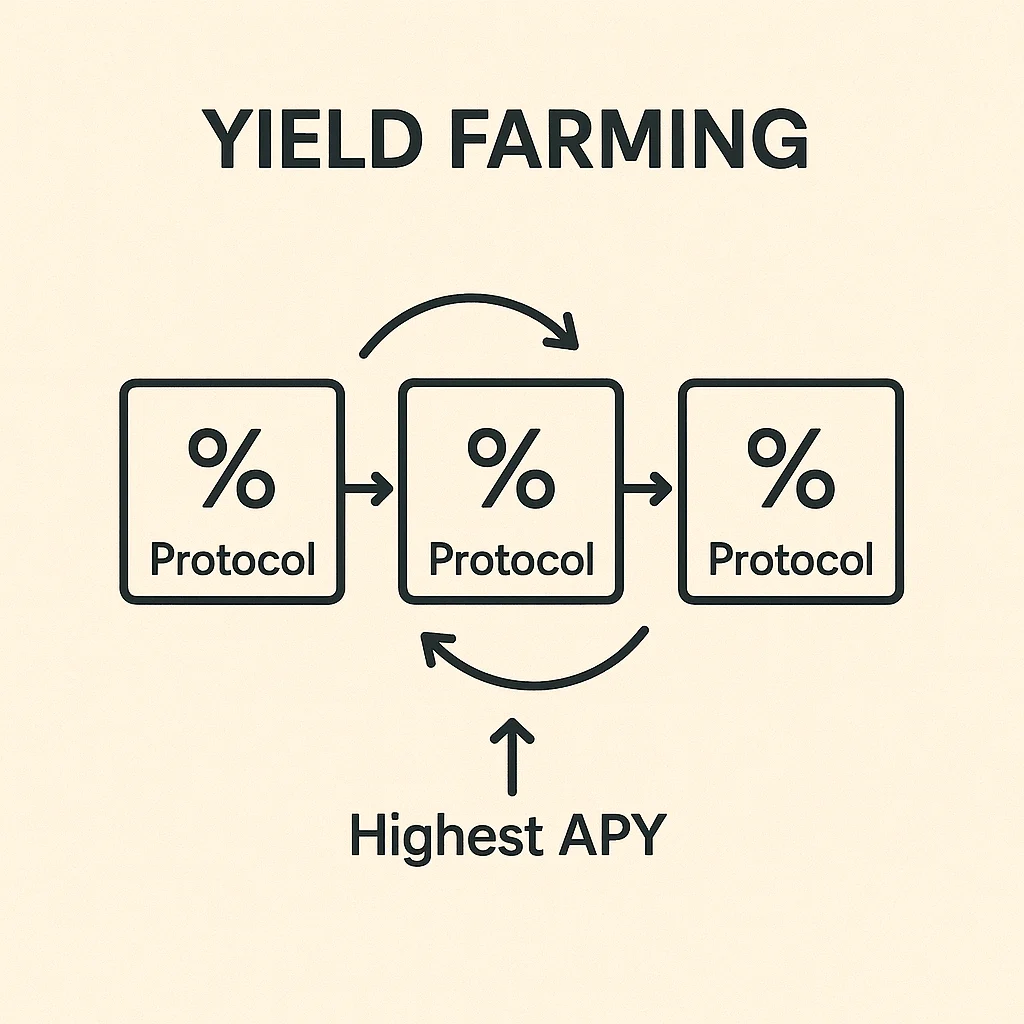
Flowchart showing a yield farming strategy with capital moving between protocols seeking the highest APY

Real-World Examples

  • Compound – Lend USDC at 5% APY, earn COMP tokens worth another 3%
  • Curve – Provide stablecoin liquidity for 8% base APY plus CRV rewards
  • Convex – Boost Curve yields through optimized staking strategies

Why Beginners Should Care

Yield farming can generate impressive returns – 20-100%+ APY isn’t uncommon during bull markets. But these protocols are experimental and uninsured.

Smart contracts can have bugs. Tokens can lose value overnight. Regulations can change. Only farm with money you can afford to lose completely.

Related Terms: Liquidity Pool, Staking, DeFi, Impermanent Loss

Back to Crypto Glossary

Similar Posts

  • Privacy Coin

    Privacy Coin: Digital Cash That Actually Hides Privacy coins use advanced cryptography to hide transaction details like amounts, senders, and receivers. They’re what Bitcoin was supposed to be before everyone realized blockchain transactions are completely transparent. Privacy coins are cryptocurrencies designed to provide anonymous or untraceable transactions through advanced cryptographic techniques. Unlike Bitcoin where all…

  • Staking

    Staking: Earning Rewards by Holding Crypto Staking turns your crypto into a money-making machine. Hold tokens, earn more tokens – it’s that simple. But the devil’s in the details. Staking is the process of locking up cryptocurrency tokens to support a blockchain network’s operations and earning rewards in return. Think of it as earning interest…

  • Verifiable Randomness

    Verifiable Randomness: Provably Fair Random NumbersVerifiable randomness provides cryptographically secure random numbers that can be independently verified for fairness. It's like having dice that everyone can mathematically confirm are not loaded.Verifiable randomness refers to random number generation systems that produce unpredictable outputs while providing cryptographic proofs that the randomness is fair and unbiased. This enables trustless…

  • Multi-Chain

    Multi-Chain: Using Multiple Blockchain Networks Multi-chain refers to applications, strategies, or ecosystems that operate across multiple different blockchain networks simultaneously. It’s like being multilingual in the blockchain world. Multi-chain describes systems that utilize multiple different blockchain networks rather than being limited to a single chain. This approach leverages the unique strengths of different blockchains while…

  • Atomic Transaction

    Atomic Transaction: All-or-Nothing OperationsAn atomic transaction either completes entirely or fails completely, with no partial execution possible. It's like a package deal where you get everything or nothing at all.An atomic transaction is an operation that either succeeds completely or fails entirely, ensuring that all components of a complex transaction execute together or none execute…

  • Token Approval

    Token Approval: Granting Spending PermissionToken approval allows smart contracts to spend tokens on behalf of users through explicit permission mechanisms. It's like giving someone permission to use your credit card with specific spending limits.Token approval is a mechanism that grants smart contracts permission to transfer specific amounts of tokens from user wallets without requiring signatures…