
Hard Fork

Hard Fork: Splitting the Blockchain

Hard forks create permanent splits in blockchain networks, often resulting in two separate cryptocurrencies. They’re like corporate divorces – messy, dramatic, and usually involving lots of arguing about money.

A hard fork is a permanent change to a blockchain’s protocol that makes previously invalid blocks valid, or vice versa, requiring all nodes to upgrade to the new rules. Nodes that don’t upgrade continue following the old chain, potentially creating two separate networks.

How Hard Forks Work

Incompatible changes to blockchain rules require hard forks. This might include changing block size limits, consensus mechanisms, or fundamental protocol features that older software can’t understand.

Network consensus determines which fork becomes the “main” chain. Usually, the fork with more hash power, developer support, and economic activity becomes dominant while the other dies.

Cryptocurrency splits can result when communities disagree about fork changes. Both chains continue operating with their own tokens, exchanges, and user bases.
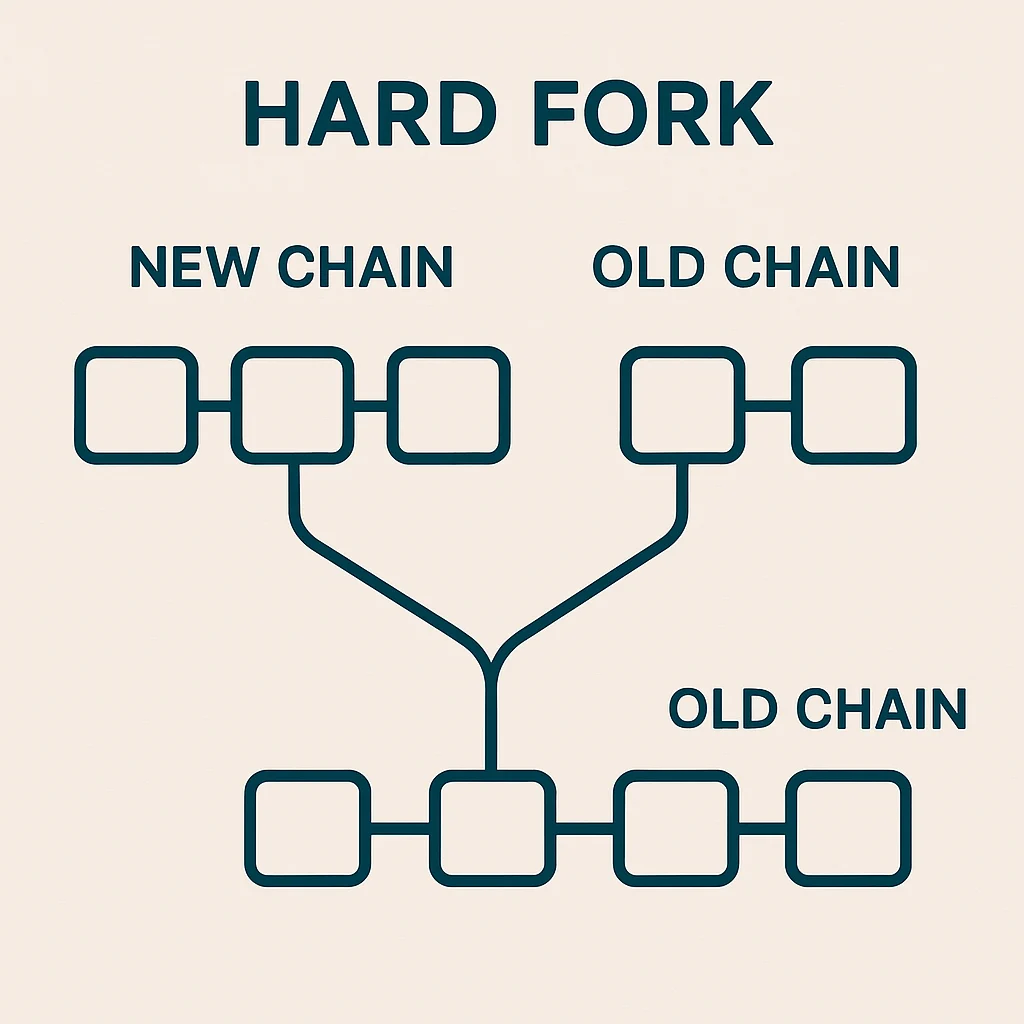
Infographic showing a hard fork with one blockchain splitting into two separate chains labeled "Old Chain" and "New Chain"

Real-World Examples

  • Bitcoin Cash fork – Disagreement over block size led to permanent split creating BCH
  • Ethereum Classic – Original Ethereum chain after the DAO hack hard fork
  • Bitcoin SV – Further split from Bitcoin Cash over technical and philosophical differences

Why Beginners Should Care

Free coins sometimes result from hard forks when you automatically receive tokens on both chains. However, this isn’t guaranteed and requires proper wallet management.

Network disruption during contentious hard forks can cause transaction delays, exchange suspensions, and price volatility as markets figure out which chain has value.

Research required to understand which fork to support, as community splits can be permanent and choosing wrong can mean holding worthless tokens.

Related Terms: Soft Fork, Consensus Mechanism, Node, Chain Split

Back to Crypto Glossary

Similar Posts

  • Network Governance

    Network Governance: Blockchain Decision MakingNetwork governance encompasses the processes and mechanisms for making decisions about blockchain protocol changes and upgrades. It's like the constitutional system that determines how a digital nation changes its laws.Network governance refers to the systems and processes through which blockchain networks make decisions about protocol upgrades, parameter changes, and strategic direction. This…

  • Session Keys

    Session Keys: Temporary Wallet Permissions Session keys provide temporary, limited permissions for applications to perform specific actions without exposing main wallet private keys. It’s like giving valet keys instead of your full car keys. Session keys are temporary cryptographic keys that grant limited permissions to applications for specific time periods or transaction types. They enable…

  • Web3

    Web3: The Decentralized Internet Dream Web3 promises an internet where users own their data, identity, and digital assets instead of tech giants controlling everything. It’s part vision, part reality, part marketing buzzword. Web3 refers to a decentralized version of the internet built on blockchain technology where users control their own data, identity, and assets rather…

  • Capital Preservation

    Capital Preservation: Protecting Investment PrincipalCapital preservation focuses on protecting the original investment amount rather than maximizing returns. It's like choosing a safe over a lottery ticket for your money.Capital preservation is an investment strategy that prioritizes protecting the original principal amount over generating high returns. This conservative approach minimizes downside risk while accepting lower potential upside.How…

  • Multichain Router

    Multichain Router: Cross-Chain Navigation Multichain routers find optimal paths for moving assets between different blockchain networks. They’re like GPS for cross-chain transactions, finding the cheapest and fastest routes. A multichain router is a protocol that automatically finds the best path for transferring assets between different blockchain networks. It compares routes across multiple bridges and chains…

  • DeFi Primitives

    DeFi Primitives: Basic Building BlocksDeFi primitives are fundamental financial functions like lending, borrowing, and trading that serve as building blocks for more complex decentralized finance applications. They're like Lego blocks for financial services.DeFi primitives refer to basic financial functions implemented as smart contracts that can be combined to create more complex financial products and services. These…