
Rug Pull

Rug Pull: When Projects Disappear With Your Money

Rug pulls are crypto’s version of old-fashioned exit scams. Developers build hype, collect investor money, then vanish into the digital night.

A rug pull is when cryptocurrency project developers abandon the project and steal investor funds. The term comes from “pulling the rug out” from under investors who trusted the project.

How Rug Pulls Work

Soft rug pulls involve developers gradually selling their tokens while hyping the project, slowly draining liquidity without obvious theft. The project eventually dies from lack of development.

Hard rug pulls are more dramatic – developers remove all liquidity from trading pools, making tokens worthless overnight. Investors wake up to find their tokens can’t be sold.

Smart contract backdoors allow developers to mint unlimited tokens or drain funds directly from the contract, even after launch. The code looks legitimate but contains hidden functions.
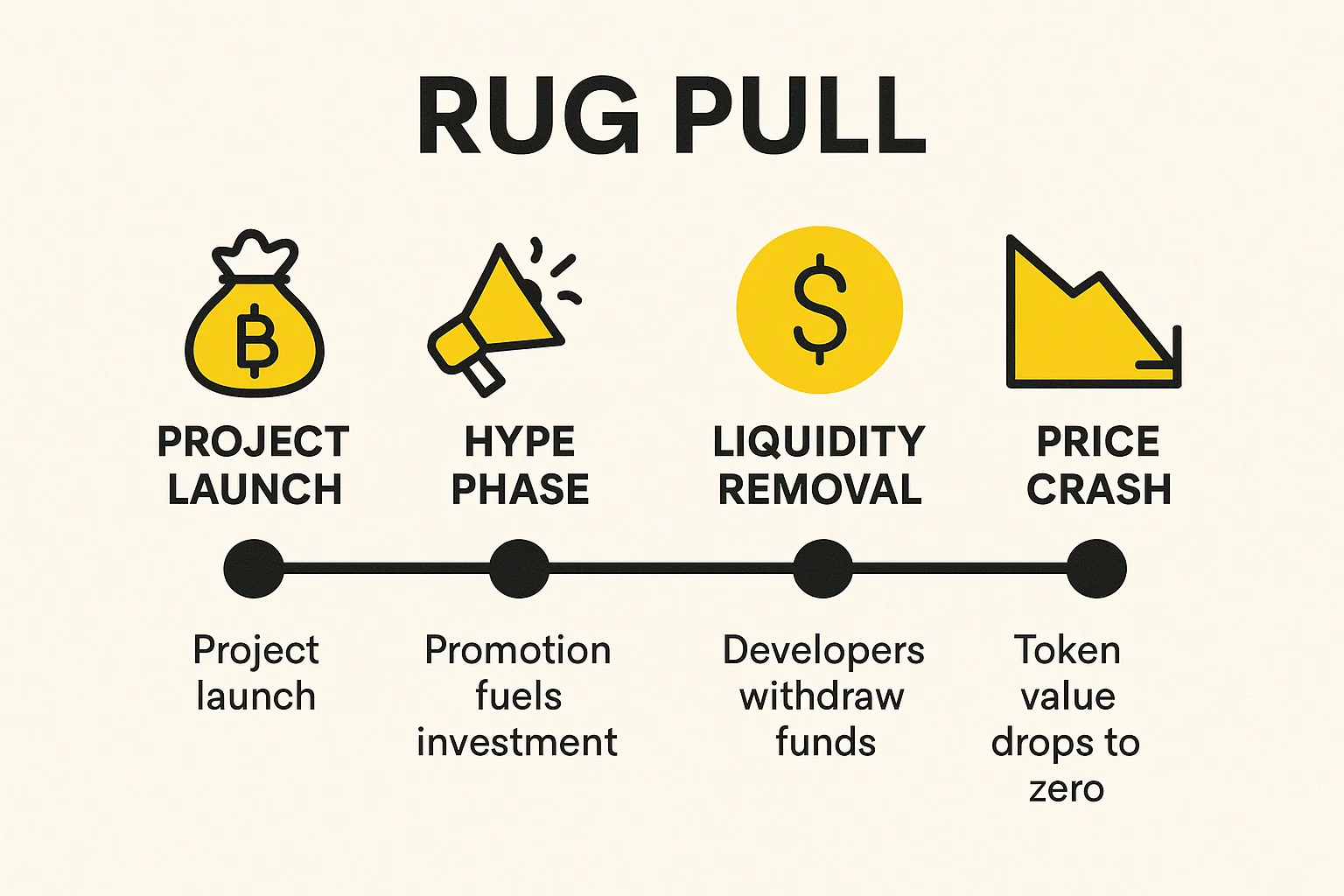
Infographic timeline showing a rug pull process: project launch, hype phase, sudden liquidity removal, and price crash to zero

Real-World Examples

  • Squid Game Token – Gained 2,300% then crashed 99% when developers pulled liquidity
  • AnubisDAO – Raised $60 million then disappeared within 20 hours
  • Meerkat Finance – $31 million “hack” that looked suspiciously like an inside job

Why Beginners Should Care

New DeFi projects launch daily, many created specifically to rug pull investors. If returns seem too good to be true, they probably are.

Research thoroughly before investing in new projects. Check if tokens are locked, if the team is doxxed (publicly known), and if the smart contract has been audited by reputable firms.

Never invest more than you can afford to lose in experimental DeFi projects, especially those promising unrealistic returns.

Related Terms: Smart Contract, Liquidity Pool, Token Lock, Phishing Attack

Back to Crypto Glossary

Similar Posts

  • Tokenomics

    Tokenomics: The Economics of Digital Assets Tokenomics determines how cryptocurrencies create, distribute, and maintain value over time. It’s the difference between digital money and digital monopoly money. Tokenomics refers to the economic design and mechanics of a cryptocurrency token, including supply schedules, distribution methods, utility functions, and incentive structures. Good tokenomics align stakeholder interests while…

  • Decentralized Exchange (DEX)

    Decentralized Exchange (DEX): Trading Without Middlemen DEXs are what happens when you remove the corporate overlords from crypto trading. No account required, no permission needed – just you, your wallet, and the market. A decentralized exchange (DEX) is a cryptocurrency trading platform that operates without a central authority controlling user funds. You trade directly from…

  • Shared Security

    Shared Security: Collective Network ProtectionShared security allows multiple blockchain applications or chains to benefit from common security infrastructure rather than maintaining separate validator sets. It's like having a shared security service for multiple buildings.Shared security refers to security models where multiple blockchain networks or applications are protected by a common set of validators or consensus…

  • Transaction

    Transaction: Moving Value on the BlockchainA cryptocurrency transaction transfers value from one address to another on a blockchain network. It's like writing a check, but with mathematical guarantees instead of trust.A transaction is a digitally signed transfer of cryptocurrency from one wallet address to another, recorded permanently on the blockchain. Every transaction includes sender information, recipient…

  • Network Governance

    Network Governance: Blockchain Decision MakingNetwork governance encompasses the processes and mechanisms for making decisions about blockchain protocol changes and upgrades. It's like the constitutional system that determines how a digital nation changes its laws.Network governance refers to the systems and processes through which blockchain networks make decisions about protocol upgrades, parameter changes, and strategic direction. This…

  • Delegated Proof of Stake (DPoS)

    Delegated Proof of Stake (DPoS): Democratic Validation DPoS lets token holders vote for validators who secure the network on their behalf. It’s like electing representatives to Congress, but for blockchain consensus. Delegated Proof of Stake (DPoS) is a consensus mechanism where token holders vote for a limited number of delegates who validate transactions and secure…